THE CLASSIC COLLECTION✦A dead man’s diaryCLASSIC FREE BOOKS
A dead man’s diary
Coulson Kernahan
THE CLASSIC COLLECTION · 1904
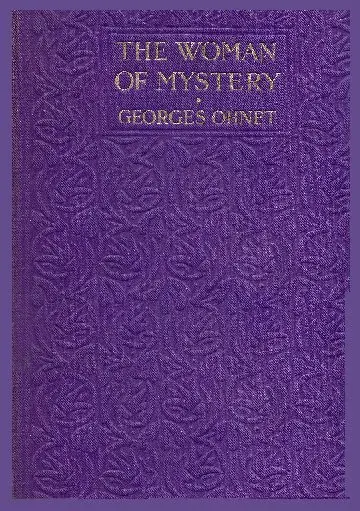
"The Woman of Mystery" by Georges Ohnet is a novel written in the early 20th century. The story revolves around themes of intrigue, political machinations, and the mysterious circumstances surrounding the death of a prominent general. The narrative is set against a backdrop of military and scientific endeavors, hinting at elements of suspense and potential betrayal. The opening of the novel introduces the Minister of War, who is in a state of agitation due to the mysterious explosion at the residence of General de Trémont, which resulted in his death. Colonel Vallenot reports to the Minister about the chaotic scene and strange findings, including a severed arm discovered amidst the ruins. As the investigation unfolds, various characters—including detectives and the General's loyal servant, Baudoin—converge around the sinister elements at play, implying that the tragedy may not have been a mere accident but rather a calculated crime involving espionage. Through this scene, the story sets a tone of intrigue that foreshadows the complex relationships and motivations that will be explored throughout the novel.
Introduction adapted from the source catalogue; source summaries may be automatically generated.
Free to read · English · 106,778 words · No account needed
MAKE TIME FOR A GOOD BOOK
On by default. Untick to stop anonymous reading totals. Each page counts after 10 seconds in view. How this works.
Anonymous counting is on unless you have switched it off.
One winter evening, the valet de chambre, as he entered his master’s room, found Elias leaning over his desk, apparently asleep. Calling him by name, he received no reply. Terrified, he drew nearer, and touched his master. The banker remained motionless, whilst his hand clasped a short letter from his daughter. The few words he had been reading were still moist with the tears he had shed. He was dead, a victim to the only sentiment by which he had ever been vulnerable; the love of a father.
Six months later, at twilight, in the study of the Rue de Provènce, Uncle Graff and Marcel were seated together. After signing all the letters for the evening’s post, Baradier had retired to his own room.
The darkness gradually deepened, and uncle and nephew, seated in their armchairs, without a word, looked like vague, uncertain silhouettes. The clerks had all left, and silence reigned around.
“Are you asleep, Uncle Graff?” asked Marcel.
“No; I was just thinking.”
“What about?”
“About all that has happened the past twelve months. It is no mere
trifle!”
“No, indeed. And what is the result of your reflections?”
“That we have had the most extraordinary luck; we had to deal with enemies who seemed destined to triumph over us time after time; and that we have manifestly been protected by a divine providence.”
“Uncle Graff, you are rather illogical; extraordinary luck on the one hand, and divine providence on the other. They do not go very well together.”
“Oh, you are too sceptical. It is your generation which makes you so. You no longer believe in anything.”
“I do not believe in chance, no!” said Marcel, ironically. Then he added, in tones of sudden gravity, “But I believe in the firm, steadfast will of human beings. If we have been protected, as you say truly enough, it is because it was so willed. But for that—”
Silence followed. The darkness had now become complete.
“It was so willed,” repeated Uncle Graff. “You are alluding to that
woman?”
“I am alluding to ‘that woman.’ It was she who defeated the plans of her acolytes, and saved me.”
“Because she loved you?”
“Because she loved me.”
“Well, then, tell me what passed between you for a woman of this stamp to sacrifice herself for a man she first intended to dupe, and afterwards to rob. For you cannot doubt the fact that she had plans concerning you?”
“I am quite aware of the fact.”
“She had had considerable experience in life, and yet—”
Your reading position is saved on this browser. Take it to another device with a library code. Reading pages adapt to text, rather than matching a printed edition.
BEHIND THE BOOK
This eBook is for the use of anyone anywhere in the United States and most other parts of the world at no cost and with almost no restrictions whatsoever. You may copy it, give it away or re-use it under the terms of the Project Gutenberg License included with this eBook or online at www.gutenberg.org. If you are not located in the United States, you will have to check the laws of the country where you are located before using this eBook. Read the source licence.
The original source file, including credits and licence, is retained by this library. Request an original-format copy at no charge. Please include the book title and Project Gutenberg identifier #69149.
KEEP YOUR CURIOSITY GOING
Coulson Kernahan

Maurice Baring
Frances Wright
Cécile Tormay

Frederic Jesup Stimson

W. H. P. (William Henry Pope) Jarvis