THE CLASSIC COLLECTION✦A dead man’s diaryCLASSIC FREE BOOKS
A dead man’s diary
Coulson Kernahan
THE CLASSIC COLLECTION · 1904
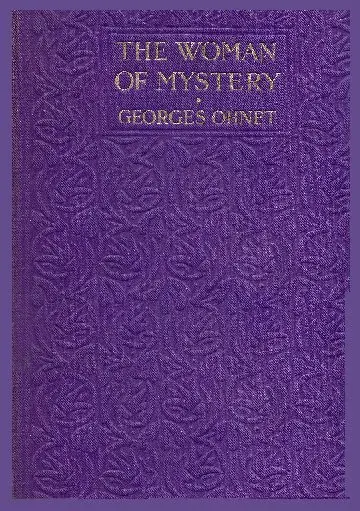
"The Woman of Mystery" by Georges Ohnet is a novel written in the early 20th century. The story revolves around themes of intrigue, political machinations, and the mysterious circumstances surrounding the death of a prominent general. The narrative is set against a backdrop of military and scientific endeavors, hinting at elements of suspense and potential betrayal. The opening of the novel introduces the Minister of War, who is in a state of agitation due to the mysterious explosion at the residence of General de Trémont, which resulted in his death. Colonel Vallenot reports to the Minister about the chaotic scene and strange findings, including a severed arm discovered amidst the ruins. As the investigation unfolds, various characters—including detectives and the General's loyal servant, Baudoin—converge around the sinister elements at play, implying that the tragedy may not have been a mere accident but rather a calculated crime involving espionage. Through this scene, the story sets a tone of intrigue that foreshadows the complex relationships and motivations that will be explored throughout the novel.
Introduction adapted from the source catalogue; source summaries may be automatically generated.
Free to read · English · 106,778 words · No account needed
MAKE TIME FOR A GOOD BOOK
On by default. Untick to stop anonymous reading totals. Each page counts after 10 seconds in view. How this works.
Anonymous counting is on unless you have switched it off.
As the curtain fell amidst a tempest of cheers, and the artists reappeared on the stage to bow their acknowledgments, the lady turned round, in such a way as to face Marcel, who, stupefied, recognized the look of the one he loved. He might have been mistaken in everything else, but not in the languishing look which formed so delightful a contrast with that mocking smile and imperious brow. He examined her attentively, without her being aware that she was observed. But what grief he felt at being obliged to recognize her in such a disguise!
Was not the very fact of this metamorphosis, the most complete of confessionals? Why, if not to disarm curiosity, these changes, in head-dress, in the colour of the hair, and the expression of the face? What was this comedy she was playing, and when? Was it at Ars that she was painted and disguised, or at the opera?
Marcel arose. All around him were leaving their seats. Madame Vignola was no longer in front of the box. Marcel counted the number of boxes. This one was the fourth after the passage. Standing behind a column, he kept watch.
This self-imposed waiting seemed interminable to him. The passers-by irritated him, he replied to a few bows, but avoided shaking hands with any one. Finally, the door of the box opened, and Agostini and an elderly man, wearing the rosette of the Legion d’Honneur, appeared. The count and his companion made their way towards the grand staircase, before Marcel, who had his back turned to them, and disappeared. Then the young man opened the door of the box, and entered.
The spectator was seated on the sofa. Marcel closed the door, and walked up to her. Turning her head, she looked at the intruder, and said, without the faintest agitation—
“You are in the wrong box, sir.”
He replied ironically—
“No, madame, there is no mistake, if I am in the presence of Madame Vignola, unless you are the Baroness Grodsko.”
At these words, the young woman’s face appeared frightfully agitated. Her eyes turned pale, and her lips trembled.
“Whose name is that you have uttered?” she murmured, in unsteady accents.
“Evidently one of your own! So far as I can judge, you change names, according to circumstances, just as you change faces, according to the men you associate with.”
“I do not understand what you mean. Once more I say, you are mistaken,
retire.”
“No! I shall wait here till Count Agostini returns. We will have an explanation in his presence. He, at any rate, will not be able to deny his identity. And that will help to establish yours.”
Your reading position is saved on this browser. Take it to another device with a library code. Reading pages adapt to text, rather than matching a printed edition.
BEHIND THE BOOK
This eBook is for the use of anyone anywhere in the United States and most other parts of the world at no cost and with almost no restrictions whatsoever. You may copy it, give it away or re-use it under the terms of the Project Gutenberg License included with this eBook or online at www.gutenberg.org. If you are not located in the United States, you will have to check the laws of the country where you are located before using this eBook. Read the source licence.
The original source file, including credits and licence, is retained by this library. Request an original-format copy at no charge. Please include the book title and Project Gutenberg identifier #69149.
KEEP YOUR CURIOSITY GOING
Coulson Kernahan

Maurice Baring
Frances Wright
Cécile Tormay

Frederic Jesup Stimson

W. H. P. (William Henry Pope) Jarvis