THE CLASSIC COLLECTION✦A dead man’s diaryCLASSIC FREE BOOKS
A dead man’s diary
Coulson Kernahan
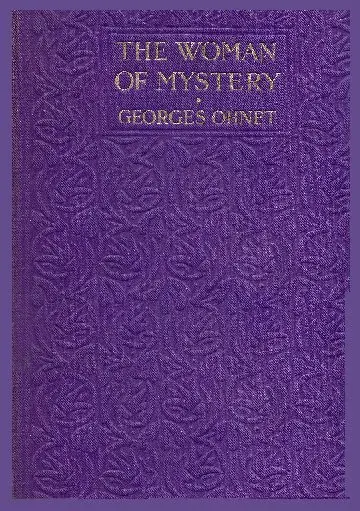
THE CLASSIC COLLECTION · 1904
"The Woman of Mystery" by Georges Ohnet is a novel written in the early 20th century. The story revolves around themes of intrigue, political machinations, and the mysterious circumstances surrounding the death of a prominent general. The narrative is set against a backdrop of military and scientific endeavors, hinting at elements of suspense and potential betrayal. The opening of the novel introduces the Minister of War, who is in a state of agitation due to the mysterious explosion at the residence of General de Trémont, which resulted in his death. Colonel Vallenot reports to the Minister about the chaotic scene and strange findings, including a severed arm discovered amidst the ruins. As the investigation unfolds, various characters—including detectives and the General's loyal servant, Baudoin—converge around the sinister elements at play, implying that the tragedy may not have been a mere accident but rather a calculated crime involving espionage. Through this scene, the story sets a tone of intrigue that foreshadows the complex relationships and motivations that will be explored throughout the novel.
Introduction adapted from the source catalogue; source summaries may be automatically generated.
Free to read · English · 106,778 words · No account needed
MAKE TIME FOR A GOOD BOOK
On by default. Untick to stop anonymous reading totals. Each page counts after 10 seconds in view. How this works.
Anonymous counting is on unless you have switched it off.
“Ah, that is what I have come to speak to the Minister about. I know the
villains.”
Vallenot sat upright.
“Those spies! You know who they are?”
“And you, also, Colonel, without doubt, for this is not their first attempt. The Minister, before now, has had a crow to pick with them. They are professionals in treason!”
The Colonel rose, and, with changed expression, said—
“Ah! Here, at any rate, is something which will distract him! I will risk entering his room without being summoned. Yes, it is possible such news may restore him to good humour again. Wait for me here.”
Opening a door, he left the room. Baudoin, standing near the mantel-piece, stood there a few minutes ‘attentively listening to the hum of voices which proceeded from the next room; then suddenly the door opened, and a voice called—
“Baudoin!”
The old soldier advanced, and, on reaching the threshold of the study, he saw the Minister standing there, a frown on his face, which was even redder than usual.
“Come in!” he said.
Baudoin entered. The General, who wore a black frock-coat and grey trousers, was striding to and fro. Vallenot stood waiting in the embrasure of the window.
“The Colonel informs me that you have very important news to relate concerning the death of M. de Trémont and my agent.”
“Yes, General.”
“You think you know the rascals who have committed these murders?”
“Yes, General.”
“Tell me all about it.”
“I must ask permission to speak in the presence of no one but yourself. It is a secret which interests the lives of those who are too dear to me to warrant my entrusting it to any other than yourself.”
“Not even to Colonel Vallenot?”
“A secret which belongs to several persons,” said Baudoin, coldly, “is no longer a secret. I will tell it either to the Colonel or to yourself.”
“Very good, my friend, you are right. Will you retire, Colonel Vallenot? This good fellow means no offence. I approve of his thoughtfulness.”
Vallenot smiled and saluted. It was evident he would gladly have stayed. But his chief had given the order. A quarter of an hour later the telephone bell rang. Placing the apparatus to his ear, he heard the Minister call out—
“Bring me File Z, No. 3, from the secret press.”
Vallenot opened a large iron safe, and took out a yellow bundle of papers, which he carried into his chief’s room. Baudoin was standing before the desk, and the General was attentively listening to him. Vallenot withdrew. Another interval for a quarter of an hour, then a fresh ring at the telephone—
Your reading position is saved on this browser. Take it to another device with a library code. Reading pages adapt to text, rather than matching a printed edition.
BEHIND THE BOOK
This eBook is for the use of anyone anywhere in the United States and most other parts of the world at no cost and with almost no restrictions whatsoever. You may copy it, give it away or re-use it under the terms of the Project Gutenberg License included with this eBook or online at www.gutenberg.org. If you are not located in the United States, you will have to check the laws of the country where you are located before using this eBook. Read the source licence.
The original source file, including credits and licence, is retained by this library. Request an original-format copy at no charge. Please include the book title and Project Gutenberg identifier #69149.
KEEP YOUR CURIOSITY GOING
Coulson Kernahan

Maurice Baring
Frances Wright
Cécile Tormay

Frederic Jesup Stimson

W. H. P. (William Henry Pope) Jarvis