THE CLASSIC COLLECTION✦A dead man’s diaryCLASSIC FREE BOOKS
A dead man’s diary
Coulson Kernahan
THE CLASSIC COLLECTION · 1904
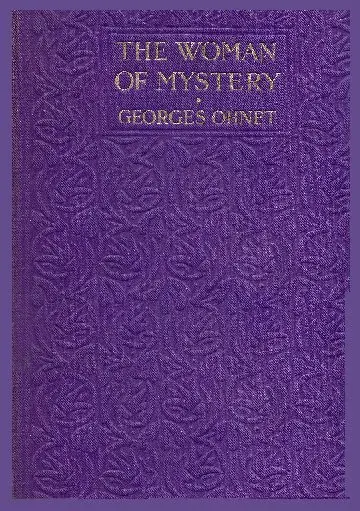
"The Woman of Mystery" by Georges Ohnet is a novel written in the early 20th century. The story revolves around themes of intrigue, political machinations, and the mysterious circumstances surrounding the death of a prominent general. The narrative is set against a backdrop of military and scientific endeavors, hinting at elements of suspense and potential betrayal. The opening of the novel introduces the Minister of War, who is in a state of agitation due to the mysterious explosion at the residence of General de Trémont, which resulted in his death. Colonel Vallenot reports to the Minister about the chaotic scene and strange findings, including a severed arm discovered amidst the ruins. As the investigation unfolds, various characters—including detectives and the General's loyal servant, Baudoin—converge around the sinister elements at play, implying that the tragedy may not have been a mere accident but rather a calculated crime involving espionage. Through this scene, the story sets a tone of intrigue that foreshadows the complex relationships and motivations that will be explored throughout the novel.
Introduction adapted from the source catalogue; source summaries may be automatically generated.
Free to read · English · 106,778 words · No account needed
MAKE TIME FOR A GOOD BOOK
On by default. Untick to stop anonymous reading totals. Each page counts after 10 seconds in view. How this works.
Anonymous counting is on unless you have switched it off.
Leaning towards the nun, he asked calmly—
“How much for the contents of the stall?”
“My dear sir,” stammered Madame Sainte-Alix, astonished.
“Is two thousand francs enough?”
“Oh, that’s nothing! I will give four thousand!”
And Count Cesare Agostini, smiling and elegant, appeared by the side of Mademoiselle Lichtenbach.
“Our father has sent me to you, mademoiselle,” he said, with a bow. “He will be here in a moment, and, really, he would not have tolerated that any one should rob you of the honour of your generosity at so moderate a price.”
Glancing around at those present, and recognizing Marcel he affected a
joyful surprise.
“Ah! Monsieur Baradier! I am delighted to meet you. We have had a great deal of trouble since last I saw you. I heard all about it on my return to call for my sister. I greatly regretted not being able to stay and tell you how sorry we felt for you. You were so kind and gracious to us in that quiet country place.”
He spoke without the slightest hesitation, and with a boldness which stupefied Marcel. As he looked at Agostini he wondered whether he were not dreaming—whether this calm, phlegmatic person speaking to him at this charity bazaar in the heart of Paris, without even thinking of escape, was indeed the man he suspected of having mystified him at Ars, of being, doubtless, the accomplice of murderers and incendiaries; at the very least in collusion with this enigmatical woman whose memory still filled his heart. He listened with astonishment, and replied—
“And your sister, Madame Vignola?”
“Ah! Poor Anetta!” interrupted Cesare. “She is at Venice, engaged in troublesome family affairs. But she will probably come to Paris this summer to assist at my marriage.”
“Ah! You are about to be married, Count?”
“Yes, M. Lichtenbach has given his consent at last.”
This news of the marriage of Agostini into the Lichtenbach family produced an electric effect. Marcel immediately regained full possession of his faculties.
Looking at the Italian from head to foot, he said ironically—
“Ah! you are about to enter the family of M. Lichtenbach. It was to be, and it would have been a pity could it not have taken place!”
“I do not understand very well,” replied Cesare.
“Yes, you understand perfectly. And if you wish further information ask for it from your sister.”
“These are strange words,” said the Italian, arrogantly.
“Every one does as well as he can; all men have not the privilege of being strange in their actions.”
Your reading position is saved on this browser. Take it to another device with a library code. Reading pages adapt to text, rather than matching a printed edition.
BEHIND THE BOOK
This eBook is for the use of anyone anywhere in the United States and most other parts of the world at no cost and with almost no restrictions whatsoever. You may copy it, give it away or re-use it under the terms of the Project Gutenberg License included with this eBook or online at www.gutenberg.org. If you are not located in the United States, you will have to check the laws of the country where you are located before using this eBook. Read the source licence.
The original source file, including credits and licence, is retained by this library. Request an original-format copy at no charge. Please include the book title and Project Gutenberg identifier #69149.
KEEP YOUR CURIOSITY GOING
Coulson Kernahan

Maurice Baring
Frances Wright
Cécile Tormay

Frederic Jesup Stimson

W. H. P. (William Henry Pope) Jarvis