THE CLASSIC COLLECTION✦A dead man’s diaryCLASSIC FREE BOOKS
A dead man’s diary
Coulson Kernahan
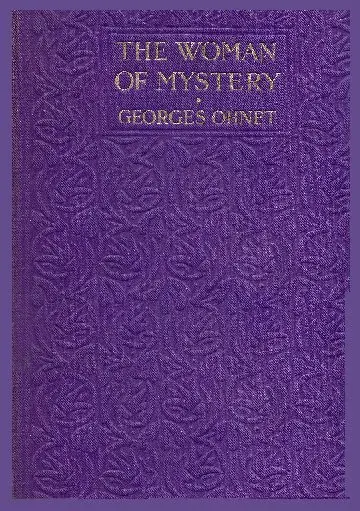
THE CLASSIC COLLECTION · 1904
"The Woman of Mystery" by Georges Ohnet is a novel written in the early 20th century. The story revolves around themes of intrigue, political machinations, and the mysterious circumstances surrounding the death of a prominent general. The narrative is set against a backdrop of military and scientific endeavors, hinting at elements of suspense and potential betrayal. The opening of the novel introduces the Minister of War, who is in a state of agitation due to the mysterious explosion at the residence of General de Trémont, which resulted in his death. Colonel Vallenot reports to the Minister about the chaotic scene and strange findings, including a severed arm discovered amidst the ruins. As the investigation unfolds, various characters—including detectives and the General's loyal servant, Baudoin—converge around the sinister elements at play, implying that the tragedy may not have been a mere accident but rather a calculated crime involving espionage. Through this scene, the story sets a tone of intrigue that foreshadows the complex relationships and motivations that will be explored throughout the novel.
Introduction adapted from the source catalogue; source summaries may be automatically generated.
Free to read · English · 106,778 words · No account needed
MAKE TIME FOR A GOOD BOOK
On by default. Untick to stop anonymous reading totals. Each page counts after 10 seconds in view. How this works.
Anonymous counting is on unless you have switched it off.
At that moment the door opened, and Baudoin appeared. Holding a book in his hand, he approached mysteriously, and said—
“It is useful to make a thorough search. One can never examine too well.”
He laughed as he spoke and held the book aloft—
“Had I done nothing but cast a careless glance over the lady’s bed-chamber, I should not have found this.”
“What is it?” asked Graff.
“A book—a simple book.”
Marcel took it up, looked at the title, and said—
“Yes, it is a book she has been reading lately.”
“Oh! the book in itself signifies nothing,” said Baudoin. “It had fallen down by the side of the bed nearest the wall. In a hurry of departure she did not see it, and it was left there. But there was something between these leaves.”
Baudoin took between his fingers a piece of paper, and showed it to his
masters.
“This envelope, torn in two, and folded to serve as a book-mark. To whom does it belong, if not to the one who has been making use of it? Now on the folded part, there is a line of writing and an address.”
“An address?”
“Look!”
He handed the paper to Marcel, and on the small band, concealed by the folding, the young man read aloud the name: “Madame la Baronne Grodsko.” The bottom of the envelope, on which was doubtless written the street, number and town, had disappeared. On the top, however, a large stamp contained the postmark: “Wien, April 18.”
The rest was effaced.
“Baroness Grodsko,” repeated Marcel. “But her name was Anetta Vignola.”
“Ah!” said Uncle Graff; “these women change their names as easily as their dresses. She has only kept this envelope from the most incredible and imprudent carelessness. And how is it this letter, which came from Vienna a fortnight ago, is now here? It must have been forwarded under another envelope to the name and address she assumed here!”
Baudoin then remarked—
“Perhaps I may be permitted to state that the woman who called on my master on the night of the crime was addressed by him as Baronne—”
Marcel turned pale.
“True,” he murmured, in a low tone. “But what relation is there between Anetta Vignola and the Baroness Grodsko?”
“That is what we must discover, for it is the clue which may guide us through the darkness in which we are now groping. Courage, my child; if this woman is the same who has committed such infamous actions—”
“Ah! Uncle Graff, in that case I should feel no pity whatever for her.”
The uncle shook his nephew’s hand, in sympathetic approval.
Your reading position is saved on this browser. Take it to another device with a library code. Reading pages adapt to text, rather than matching a printed edition.
BEHIND THE BOOK
This eBook is for the use of anyone anywhere in the United States and most other parts of the world at no cost and with almost no restrictions whatsoever. You may copy it, give it away or re-use it under the terms of the Project Gutenberg License included with this eBook or online at www.gutenberg.org. If you are not located in the United States, you will have to check the laws of the country where you are located before using this eBook. Read the source licence.
The original source file, including credits and licence, is retained by this library. Request an original-format copy at no charge. Please include the book title and Project Gutenberg identifier #69149.
KEEP YOUR CURIOSITY GOING
Coulson Kernahan

Maurice Baring
Frances Wright
Cécile Tormay

Frederic Jesup Stimson

W. H. P. (William Henry Pope) Jarvis