THE CLASSIC COLLECTION✦A dead man’s diaryCLASSIC FREE BOOKS
A dead man’s diary
Coulson Kernahan
THE CLASSIC COLLECTION · 1904
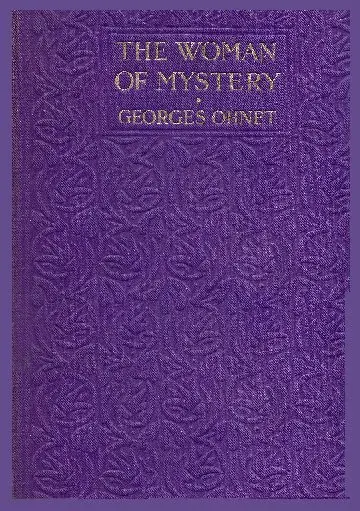
"The Woman of Mystery" by Georges Ohnet is a novel written in the early 20th century. The story revolves around themes of intrigue, political machinations, and the mysterious circumstances surrounding the death of a prominent general. The narrative is set against a backdrop of military and scientific endeavors, hinting at elements of suspense and potential betrayal. The opening of the novel introduces the Minister of War, who is in a state of agitation due to the mysterious explosion at the residence of General de Trémont, which resulted in his death. Colonel Vallenot reports to the Minister about the chaotic scene and strange findings, including a severed arm discovered amidst the ruins. As the investigation unfolds, various characters—including detectives and the General's loyal servant, Baudoin—converge around the sinister elements at play, implying that the tragedy may not have been a mere accident but rather a calculated crime involving espionage. Through this scene, the story sets a tone of intrigue that foreshadows the complex relationships and motivations that will be explored throughout the novel.
Introduction adapted from the source catalogue; source summaries may be automatically generated.
Free to read · English · 106,778 words · No account needed
MAKE TIME FOR A GOOD BOOK
On by default. Untick to stop anonymous reading totals. Each page counts after 10 seconds in view. How this works.
Anonymous counting is on unless you have switched it off.
“Neither are the people of Troyes, nor those of Sainte-Savine, savages, and yet, this very morning, they destroyed everything at the works of Messrs. Tirot and Malapeyre.”
“Hard masters!”
“The question is not whether they are hard or lenient masters, but simply whether they are masters at all. Your presence here, sir, is not absolutely necessary. It would be better if you would go and spend a week in Paris.”
“They would say that I had run away. And old Cardez, who is none too fond of me, will say that I am good for nothing except making chemical experiments! That, when the works are to be defended, I am no longer to be found. No, no! Chance has brought me here, and chance will keep me. I shall even try to arrange everything for the general good.”
“Then you will take all necessary precautions, sir?”
“What precautions?”
“A good revolver on your person, in the first place.”
“What an idea! What would be the use of a revolver, Baudoin? If I have to deal with a crowd of men, I could not attempt to defend myself. With one or two men only, I shall run no danger.”
“At any rate, if you have anything important here, sir, it might be useful to put it in safety.”
They looked at one another in silence. Marcel had understood what the General’s servant meant. He became very serious.
“You allude to the powders, I suppose, Baudoin?”
“Yes, sir, I am aware that you possess the formulæ. Can nothing be stolen which would place the one who should be audacious enough to attempt the coup, in possession of the secret?”
“The powders, even the formulæ might be stolen, Baudoin, without the secret being discovered. There is a peculiar trick of manipulation the General revealed to me, which alone constitutes the real value of the discovery.”
“All the same, it was to obtain possession of the formulæ that my master
was killed.”
“No, Baudoin, he was killed because he refused to tell the proportions of the ingredients. It was madness at finding himself deceived that inspired the murderer’s arm. He imagined he could substitute his own for the genius of the inventor, and find out the mixtures himself. He wished to storm the mystery and brutalize science. It was then the General was struck.”
“Is it not possible he may try again?”
“Is he even alive? Come, Baudoin, are you attempting to discover some relation, however far-fetched, between these disturbances, which are putting the whole district in commotion, and this powder affair?”
Your reading position is saved on this browser. Take it to another device with a library code. Reading pages adapt to text, rather than matching a printed edition.
BEHIND THE BOOK
This eBook is for the use of anyone anywhere in the United States and most other parts of the world at no cost and with almost no restrictions whatsoever. You may copy it, give it away or re-use it under the terms of the Project Gutenberg License included with this eBook or online at www.gutenberg.org. If you are not located in the United States, you will have to check the laws of the country where you are located before using this eBook. Read the source licence.
The original source file, including credits and licence, is retained by this library. Request an original-format copy at no charge. Please include the book title and Project Gutenberg identifier #69149.
KEEP YOUR CURIOSITY GOING
Coulson Kernahan

Maurice Baring
Frances Wright
Cécile Tormay

Frederic Jesup Stimson

W. H. P. (William Henry Pope) Jarvis