THE CLASSIC COLLECTION✦A dead man’s diaryCLASSIC FREE BOOKS
A dead man’s diary
Coulson Kernahan
THE CLASSIC COLLECTION · 1904
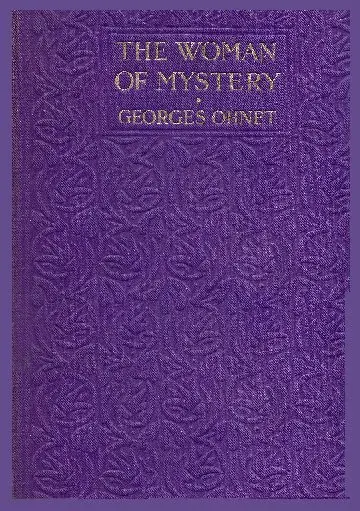
"The Woman of Mystery" by Georges Ohnet is a novel written in the early 20th century. The story revolves around themes of intrigue, political machinations, and the mysterious circumstances surrounding the death of a prominent general. The narrative is set against a backdrop of military and scientific endeavors, hinting at elements of suspense and potential betrayal. The opening of the novel introduces the Minister of War, who is in a state of agitation due to the mysterious explosion at the residence of General de Trémont, which resulted in his death. Colonel Vallenot reports to the Minister about the chaotic scene and strange findings, including a severed arm discovered amidst the ruins. As the investigation unfolds, various characters—including detectives and the General's loyal servant, Baudoin—converge around the sinister elements at play, implying that the tragedy may not have been a mere accident but rather a calculated crime involving espionage. Through this scene, the story sets a tone of intrigue that foreshadows the complex relationships and motivations that will be explored throughout the novel.
Introduction adapted from the source catalogue; source summaries may be automatically generated.
Free to read · English · 106,778 words · No account needed
MAKE TIME FOR A GOOD BOOK
On by default. Untick to stop anonymous reading totals. Each page counts after 10 seconds in view. How this works.
Anonymous counting is on unless you have switched it off.
“We are as well acquainted with foreign affairs, General, as they are with ours,” said the Colonel with less sullen mien. “To sum up, there are always two at the game; it has ever been so. Ay, the very time, in 1812, when Russia was procuring information as to the efficiency of the Emperor’s troops, Caulaincourt sent to Napoleon the engraved copper plates of the map of Russia. I quote this fact of days gone by without alluding to contemporary events. But, taking everything into consideration, General, our secrets are scarcely secrets at all. If, in war, reliance were placed on nothing beyond mysterious preparations—”
“Then we should have to start by abolishing the press,” muttered the
Minister.
“And that is impossible!” said Vallenot. “Still, in this special case before us, we must undertake the task of clearing the moral atmosphere, and employ every means possible, if we would succeed.”
“That concerns the legal authorities now.”
“Officially, General; but we also, on our side, may investigate, in a quiet way, and I have no doubt—”
“The lesson to be learned is that our officers are becoming too gallant!”
“If you know any means, General,” said Vallenot, with a laugh, “of suppressing that, please tell me.”
“To think of this old General! Sixty years old, too! True, he did not appear more than fifty! In what position does he leave his daughter?”
“General de Trémont was a widower?”
“Yes, that is his excuse! But he has a daughter, still at school. She is eighteen years old, and without dowry. Luckily, Baradier is there.”
“You mean Baradier and Graff, the bankers?”
“Certainly. Baradier fought in the war of 1870; he is a true patriot, and his son, Marcel, a fine young fellow, just out of the Central School, has been working with General de Trémont. Marcel Baradier was principally occupied in investigating vegetable dyes, connected with the woollen weaving manufactures his father owns in the Aube. But the General opened his laboratory to him, and probably informed him of his own investigations. We may learn a great deal from this young man, I think.”
“Is the Baradier family in good circumstances?”
“Very wealthy; their fortune daily increases from industrial and from banking operations. It is Graff, Baradier’s step-brother, who deals more specially with finance, whilst Baradier manages the works. Both, however, are busily employed all day long, and the millions roll in, notwithstanding the rivalry of the firm of Lichtenbach, who is a mortal enemy of Baradier and Graff.”
“Business rivalry?”
Your reading position is saved on this browser. Take it to another device with a library code. Reading pages adapt to text, rather than matching a printed edition.
BEHIND THE BOOK
This eBook is for the use of anyone anywhere in the United States and most other parts of the world at no cost and with almost no restrictions whatsoever. You may copy it, give it away or re-use it under the terms of the Project Gutenberg License included with this eBook or online at www.gutenberg.org. If you are not located in the United States, you will have to check the laws of the country where you are located before using this eBook. Read the source licence.
The original source file, including credits and licence, is retained by this library. Request an original-format copy at no charge. Please include the book title and Project Gutenberg identifier #69149.
KEEP YOUR CURIOSITY GOING
Coulson Kernahan

Maurice Baring
Frances Wright
Cécile Tormay

Frederic Jesup Stimson

W. H. P. (William Henry Pope) Jarvis