THE CLASSIC COLLECTION✦A dead man’s diaryCLASSIC FREE BOOKS
A dead man’s diary
Coulson Kernahan
THE CLASSIC COLLECTION · 1904
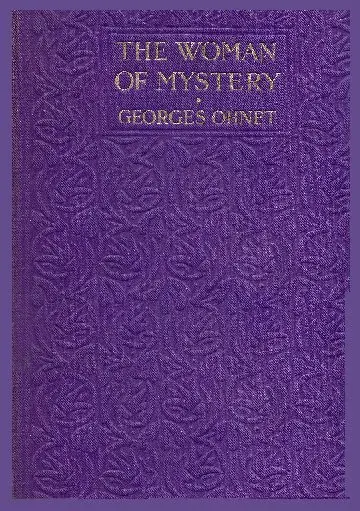
"The Woman of Mystery" by Georges Ohnet is a novel written in the early 20th century. The story revolves around themes of intrigue, political machinations, and the mysterious circumstances surrounding the death of a prominent general. The narrative is set against a backdrop of military and scientific endeavors, hinting at elements of suspense and potential betrayal. The opening of the novel introduces the Minister of War, who is in a state of agitation due to the mysterious explosion at the residence of General de Trémont, which resulted in his death. Colonel Vallenot reports to the Minister about the chaotic scene and strange findings, including a severed arm discovered amidst the ruins. As the investigation unfolds, various characters—including detectives and the General's loyal servant, Baudoin—converge around the sinister elements at play, implying that the tragedy may not have been a mere accident but rather a calculated crime involving espionage. Through this scene, the story sets a tone of intrigue that foreshadows the complex relationships and motivations that will be explored throughout the novel.
Introduction adapted from the source catalogue; source summaries may be automatically generated.
Free to read · English · 106,778 words · No account needed
MAKE TIME FOR A GOOD BOOK
On by default. Untick to stop anonymous reading totals. Each page counts after 10 seconds in view. How this works.
Anonymous counting is on unless you have switched it off.
The Italian bent down his head, and, in contrite tones, said—
“I am indeed sorry you imagined I was not sincere. All you have told me interests me greatly. Doubtless I am not so frivolous as your compatriots, and since you appear to defy me examining your results, with satisfaction to myself, I now ask you to have the kindness to show me them, unless you were joking, in which case I should not have understood you, as I do not always seize all the finesse of your language. In which case I must ask you to pardon me.”
“Indeed, I was not jesting; I was perfectly serious,” said Marcel, gaily. “I still believe you will be punished for your curiosity. But since you insist, follow me; I will show you my laboratory.”
“Many thanks!” exclaimed Cesare. “I was afraid I should vex you.”
“In what way? You would believe in the most marvellous things, did I not show you my poor results. Take care not to soil yourself; everything here is not perfectly clean.”
Opening the door of the summer-house, he introduced the Count into the panelled room, leading to the laboratory, and which he used as a workroom. A blush mounted to Cesare’s temples. He looked eagerly around. On a Louis XVI. bureau, leaning against the wall, were scattered some papers covered with figures. A half-opened drawer exhibited boxes of different sizes and colours, carefully labelled. A massive table supported wide-mouthed jars, on the rough glass of which could be read the indications: sulphuric acid, nitro-benzine, picric acid, and a whole series of chlorates. The Italian, pointing to the table, said—
“Ah! Here are some chemicals you do not make use of for your dyes!”
“No,” said Marcel, evasively; “those are for something else.”
And, as his visitor drew near, stretching out his hand towards one of the
wide-mouthed jars—
“Do not touch these jars—they are dangerous. If, by any chance, you were to upset the contents, both yourself and myself might find ourselves in a very disagreeable position. Come this way!”
Opening the door of the laboratory, he bade him take a seat in the alchemist’s armchair, by the window, as he said—
“Here you may smoke, if you like, without danger; there is nothing
explosive here.”
“Whilst in the next room?” asked the Italian, carelessly.
“In the next room, if you threw down a match in the wrong place, you might explode the whole works!”
“Diavolo! Then I will stop smoking even here, my dear sir, for I have no wish to leave the place by way of the roof.”
Your reading position is saved on this browser. Take it to another device with a library code. Reading pages adapt to text, rather than matching a printed edition.
BEHIND THE BOOK
This eBook is for the use of anyone anywhere in the United States and most other parts of the world at no cost and with almost no restrictions whatsoever. You may copy it, give it away or re-use it under the terms of the Project Gutenberg License included with this eBook or online at www.gutenberg.org. If you are not located in the United States, you will have to check the laws of the country where you are located before using this eBook. Read the source licence.
The original source file, including credits and licence, is retained by this library. Request an original-format copy at no charge. Please include the book title and Project Gutenberg identifier #69149.
KEEP YOUR CURIOSITY GOING
Coulson Kernahan

Maurice Baring
Frances Wright
Cécile Tormay

Frederic Jesup Stimson

W. H. P. (William Henry Pope) Jarvis