The black barque
T. Jenkins (Thornton Jenkins) Hains
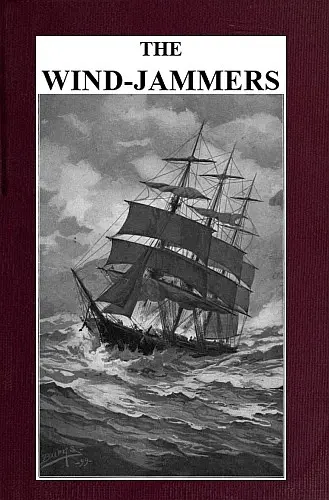
THE CLASSIC COLLECTION · 1894
"The Wind-Jammers" by T. Jenkins Hains is a novel written in the late 19th century. The story appears to center around the life of sailors navigating the treacherous waters around Cape Horn, showcasing their adventures, the conflicts, and the tough conditions they face at sea. The narrative features characters involved in shipbuilding, naval battles, and the rough camaraderie of life aboard a ship. The opening portion of the novel begins with the narrator, a young boy, reflecting on his experiences working in a shipyard and his family's involvement in maritime affairs during a time of war. The focus shifts to the launch of a new frigate named 'Randolph', and the narrative unfolds around the young protagonist's desire to join the crew. We are introduced to various characters, including his father and the figure of Mr. Robinson, who becomes a significant person in the boy's life, particularly as the tensions of war and the responsibilities of naval life begin to take shape. The story promises themes of bravery, adventure, and betrayal, setting the stage for further high-seas drama.
Introduction adapted from the source catalogue; source summaries may be automatically generated.
Free to read · English · 68,128 words · No account needed
MAKE TIME FOR A GOOD BOOK
On by default. Untick to stop anonymous reading totals. Each page counts after 10 seconds in view. How this works.
Anonymous counting is on unless you have switched it off.
With water gaining six inches an hour, the crew manned the pumps with set faces, appalled at the sudden danger in mid-ocean. Suddenly, however, the pumps “sucked.” An investigation showed the ship was rapidly becoming dry.
The water-tanks were examined and found to be empty, but no leaks in
them could be discovered.
To be at sea without water to drink is most dreaded by deep-water sailors, so Jimmy Breeze started his condenser and headed his ship for Buenos Ayres, cursing the fates for the foul luck that would ruin his anticipated quick passage.
His wife consoled him as best she could and lamented her husband’s luck to the passengers. Whereat she received the sympathy of the O’Haras and Mrs. McCloud, and was looked upon as a very unfortunate woman.
“Ah, pore thing! to think av it happening on her honeymoon at that,”
cried Mrs. O’Hara.
“The sweet child, trying all she can to help her husband to forget his lost chances for extra freight money. To think of it, and just married at that,” said Mrs. McCloud.
“Pore young sowl,” said Kate O’Hara.
“’Tis a good wife that sticks to her husband in disthress,” said O’Hara.
“Ye ken it’s a jewel he has to be na thinking of money losses,” said
McCloud.
Finally the ship made port and anchored off the city to take in water and continue her voyage at the earliest opportunity.
Mrs. O’Hara and Mrs. McCloud insisted on being allowed ashore to see the sights. Captain Breeze would hear of no such thing, but finally, when his bride added her voice to the occasion, he relented, and the ladies went ashore together.
Mrs. Breeze pointed out many places of interest, as she admitted having been there before, and at one of the principal hotels she left the party. She told them not to wait for her, as she would stop and see a friend, but to go down to the landing, where the boat might wait for her after she was through her call.
The day passed gayly, but when the party assembled at the landing, Mrs. Breeze was not there. They never saw her again.
The next day Captain Breeze called Mr. Enlis aft and took him below. When he had him in the privacy of his state-room he pointed to his little safe, and asked him to look through it.
This operation took but a moment, for it was almost entirely empty, and when he was through he looked at the skipper.
“What would you do?” asked Jimmy Breeze, huskily.
“Me?” asked the mate, apparently amazed at the question.
“Yes, you.”
Your reading position is saved on this browser. Take it to another device with a library code. Reading pages adapt to text, rather than matching a printed edition.
T. Jenkins (Thornton Jenkins) Hains
T. Jenkins (Thornton Jenkins) Hains
T. Jenkins (Thornton Jenkins) Hains
BEHIND THE BOOK
This eBook is for the use of anyone anywhere in the United States and most other parts of the world at no cost and with almost no restrictions whatsoever. You may copy it, give it away or re-use it under the terms of the Project Gutenberg License included with this eBook or online at www.gutenberg.org. If you are not located in the United States, you will have to check the laws of the country where you are located before using this eBook. Read the source licence.
The original source file, including credits and licence, is retained by this library. Request an original-format copy at no charge. Please include the book title and Project Gutenberg identifier #55274.
KEEP YOUR CURIOSITY GOING
Coulson Kernahan

Maurice Baring
Frances Wright
Cécile Tormay

Frederic Jesup Stimson

W. H. P. (William Henry Pope) Jarvis