THE CLASSIC COLLECTION✦Much Ado About PeterCLASSIC FREE BOOKS
Much Ado About Peter
Jean Webster
THE CLASSIC COLLECTION · 1905
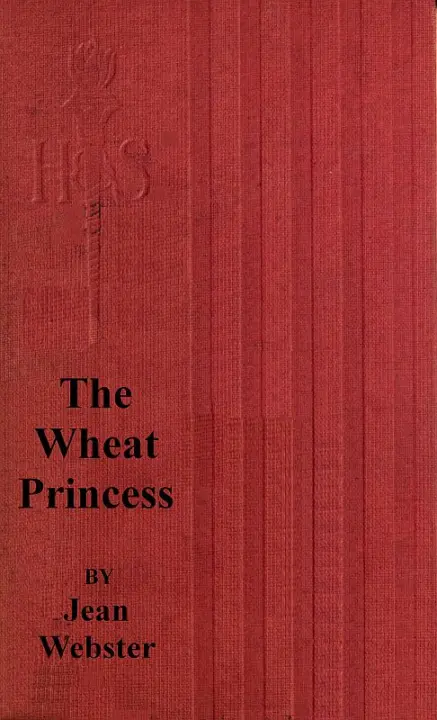
"The Wheat Princess" by Jean Webster is a novel written in the early 20th century. The story revolves around an American family, the Copleys, and their experiences as they spend a summer in an Italian villa, highlighting themes of wealth, privilege, and social responsibility. The main character, Marcia Copley, is introduced as the charming and spirited daughter of a millionaire wheat magnate, navigating her new life amidst the historical and picturesque backdrop of Castel Vivalanti. At the start of the story, we find Marcia and her aunt arriving at a tea gathering, where she is referred to as "the Wheat Princess" due to her family background. The discussions among the guests reveal the social dynamics and perceptions surrounding Marcia, especially in relation to her wealth and potential marriage prospects. We learn about her family's philanthropic efforts leads to mixed feelings among the attendees. The dialogue vividly sets the stage for the contrast between the Copleys' American millionaire lifestyle and the traditional Italian society they are entering, all while hinting at the complexities of identity, cultural expectations, and personal aspirations that are to unfold as Marcia adapts to her new environment.
Introduction adapted from the source catalogue; source summaries may be automatically generated.
Free to read · English · 99,375 words · No account needed
MAKE TIME FOR A GOOD BOOK
On by default. Untick to stop anonymous reading totals. Each page counts after 10 seconds in view. How this works.
Anonymous counting is on unless you have switched it off.
‘That, I suppose you know, is very silly. It’s the price you have to pay, and I haven’t much sympathy to offer. However, you need not let it bother you; for, as a matter of fact, there will not be many men here, who would not be wheat kings themselves if they had the chance—even knowing beforehand all the suffering it was going to bring to this trouble-ridden country. And now, suppose we don’t talk about wheat any more. You’ve thought about it a good deal too much.’
‘You’re not very optimistic,’ she said.
‘Oh, well, I’m not blind. It takes an Italian to be optimistic in this
country.’
‘Do you like the Italians, or don’t you?’ she asked. ‘Sometimes you seem to, and sometimes you act as if you despised them.’
‘Yes, certainly I like them; I was born in Italy.’
‘But you’re an American,’ she said quickly.
He laughed at her tone.
‘You surely want to be an American,’ she insisted.
‘As Henry James says, Miss Marcia, one’s country, like one’s grandmother, is antecedent to choice.’
She studied the fire for some time without speaking, and Sybert, leaning back lazily, studied her. Her next observation surprised him.
‘You said the other day, Mr. Sybert, that every man lived for some idea, and I’ve been wondering what yours was.’
A curious expression flashed over his face.
‘You couldn’t expect me to tell; I’m a diplomatist.’
‘I have an idea that it is not very much connected with diplomacy.’
‘In which case it would be poor diplomacy for me to give it away.’
‘Mr. Sybert, you give a person a queer impression, as if you were acting a part all the time, and didn’t want people to know what you were really like.’
‘An anarchist must be careful; the police——’
‘I believe you are one!’ she cried.
‘Don’t be alarmed. I assure you I am not. But,’ he added, with a little flash of fire, ‘I swear, in a country like this, one would like to be—anything for action! Oh, I’m not a fool,’ he added, in response to her smile. ‘We’re living in the nineteenth century, and not in the thirteenth. Anarchy belongs to the dark ages as much as feudalism.’
‘You’re so difficult to place! I like to know whether people are Democrats or Republicans, and whether they are Presbyterians or Episcopalians. Then one always knows where to find them, and is not in danger of hurting their feelings.’
‘I’m afraid I can’t claim any such respectable connexions as those,’
Sybert laughed.
Your reading position is saved on this browser. Take it to another device with a library code. Reading pages adapt to text, rather than matching a printed edition.
BEHIND THE BOOK
This eBook is for the use of anyone anywhere in the United States and most other parts of the world at no cost and with almost no restrictions whatsoever. You may copy it, give it away or re-use it under the terms of the Project Gutenberg License included with this eBook or online at www.gutenberg.org. If you are not located in the United States, you will have to check the laws of the country where you are located before using this eBook. Read the source licence.
The original source file, including credits and licence, is retained by this library. Request an original-format copy at no charge. Please include the book title and Project Gutenberg identifier #46761.
KEEP YOUR CURIOSITY GOING
Coulson Kernahan

Maurice Baring
Frances Wright
Cécile Tormay

Frederic Jesup Stimson

W. H. P. (William Henry Pope) Jarvis