THE CLASSIC COLLECTION✦Much Ado About PeterCLASSIC FREE BOOKS
Much Ado About Peter
Jean Webster
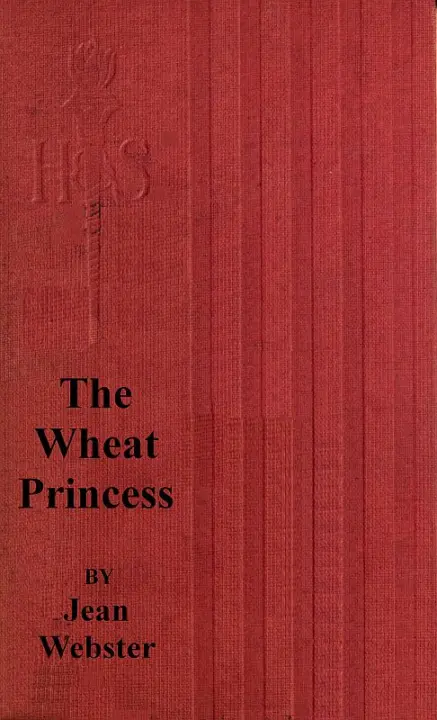
THE CLASSIC COLLECTION · 1905
"The Wheat Princess" by Jean Webster is a novel written in the early 20th century. The story revolves around an American family, the Copleys, and their experiences as they spend a summer in an Italian villa, highlighting themes of wealth, privilege, and social responsibility. The main character, Marcia Copley, is introduced as the charming and spirited daughter of a millionaire wheat magnate, navigating her new life amidst the historical and picturesque backdrop of Castel Vivalanti. At the start of the story, we find Marcia and her aunt arriving at a tea gathering, where she is referred to as "the Wheat Princess" due to her family background. The discussions among the guests reveal the social dynamics and perceptions surrounding Marcia, especially in relation to her wealth and potential marriage prospects. We learn about her family's philanthropic efforts leads to mixed feelings among the attendees. The dialogue vividly sets the stage for the contrast between the Copleys' American millionaire lifestyle and the traditional Italian society they are entering, all while hinting at the complexities of identity, cultural expectations, and personal aspirations that are to unfold as Marcia adapts to her new environment.
Introduction adapted from the source catalogue; source summaries may be automatically generated.
Free to read · English · 99,375 words · No account needed
MAKE TIME FOR A GOOD BOOK
On by default. Untick to stop anonymous reading totals. Each page counts after 10 seconds in view. How this works.
Anonymous counting is on unless you have switched it off.
‘Very condescending of him,’ the young man laughed; ‘and do you accept his responsibilities along with the place?’
‘From the fattore’s account I should say that his responsibilities rest but lightly on the Prince of Vivalanti.’
‘Ah—that’s true enough.’
‘Do you know him?’
‘Only by hearsay. I know the village; and a more desperate little place it would be hard to find in all the Sabine hills. The people’s love for their prince is tempered by the need of a number of improvements which he doesn’t supply.’
‘I dare say they are pretty poor,’ she conceded; ‘but they are unbelievably picturesque! Every person there looks as if he had just walked out of a water-colour sketch. Even Uncle Howard was pleased, and he has lived here so long that he is losing his enthusiasms.’
‘It is a pretty decent sort of a place,’ Copley agreed, ‘though I have a sneaking suspicion that we may find it rather far. But the rest of the family liked it, and my aim in life——’
‘Nonsense, Uncle Howard! you know you were crazy over it yourself. You signed the lease without a protest. Didn’t he, Aunt Katherine?’
‘I signed the lease, my dear Marcia, at the point of the pistol.’
‘The point of the pistol?’
‘You threatened, if we got a mile—an inch, I believe you said—nearer Rome, you would give a party every day; and if that isn’t the point of a pistol to a poor, worn-out man like me, I don’t know what is.’
‘It would certainly seem like it,’ Sybert agreed. And turning to Marcia, he added, ‘I am afraid that you rule with a very despotic hand, Miss Marcia.’
Marcia’s eyebrows went up a barely perceptible trifle, but she laughed and returned: ‘No, indeed, Mr. Sybert; you are mistaken there. It is not I, but Gerald, who plays the part of despot in the Copley household.’
At this point, Granton, Mrs. Copley’s English maid, appeared in the doorway. ‘Marietta is waiting to give Master Gerald his supper,’ she announced.
Gerald fled to his mother and raised a cry of protest.
‘Mamma, please let me stay up to dinner wif you to-night.’
For a moment Mrs. Copley looked as if she might consent, but catching sight of Granton’s relentless face, she returned: ‘No, my dear, you have had enough festivity for one evening. You must have your tea and go to bed like a good little boy.’
Gerald abandoned his mother and entrenched himself behind Sybert. ‘‘Cause Sybert’s here, an’ I like Sybert,’ he wailed desperately.
Your reading position is saved on this browser. Take it to another device with a library code. Reading pages adapt to text, rather than matching a printed edition.
BEHIND THE BOOK
This eBook is for the use of anyone anywhere in the United States and most other parts of the world at no cost and with almost no restrictions whatsoever. You may copy it, give it away or re-use it under the terms of the Project Gutenberg License included with this eBook or online at www.gutenberg.org. If you are not located in the United States, you will have to check the laws of the country where you are located before using this eBook. Read the source licence.
The original source file, including credits and licence, is retained by this library. Request an original-format copy at no charge. Please include the book title and Project Gutenberg identifier #46761.
KEEP YOUR CURIOSITY GOING
Coulson Kernahan

Maurice Baring
Frances Wright
Cécile Tormay

Frederic Jesup Stimson

W. H. P. (William Henry Pope) Jarvis