THE CLASSIC COLLECTION✦Much Ado About PeterCLASSIC FREE BOOKS
Much Ado About Peter
Jean Webster
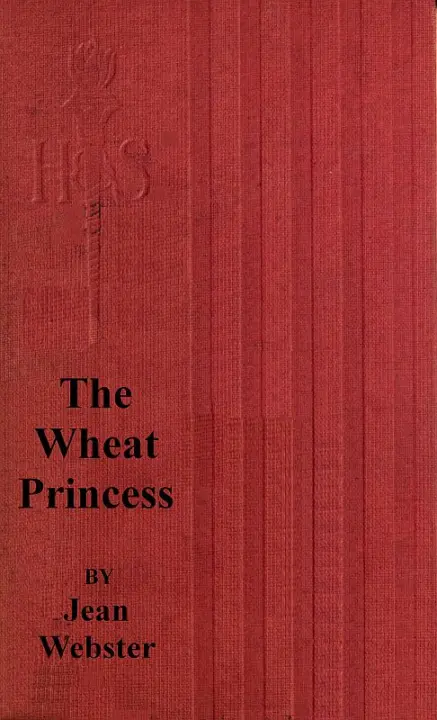
THE CLASSIC COLLECTION · 1905
"The Wheat Princess" by Jean Webster is a novel written in the early 20th century. The story revolves around an American family, the Copleys, and their experiences as they spend a summer in an Italian villa, highlighting themes of wealth, privilege, and social responsibility. The main character, Marcia Copley, is introduced as the charming and spirited daughter of a millionaire wheat magnate, navigating her new life amidst the historical and picturesque backdrop of Castel Vivalanti. At the start of the story, we find Marcia and her aunt arriving at a tea gathering, where she is referred to as "the Wheat Princess" due to her family background. The discussions among the guests reveal the social dynamics and perceptions surrounding Marcia, especially in relation to her wealth and potential marriage prospects. We learn about her family's philanthropic efforts leads to mixed feelings among the attendees. The dialogue vividly sets the stage for the contrast between the Copleys' American millionaire lifestyle and the traditional Italian society they are entering, all while hinting at the complexities of identity, cultural expectations, and personal aspirations that are to unfold as Marcia adapts to her new environment.
Introduction adapted from the source catalogue; source summaries may be automatically generated.
Free to read · English · 99,375 words · No account needed
MAKE TIME FOR A GOOD BOOK
On by default. Untick to stop anonymous reading totals. Each page counts after 10 seconds in view. How this works.
Anonymous counting is on unless you have switched it off.
‘I give him up, Miss Copley.’ The young man shrugged his shoulders and spread out his hands in a gesture purely Italian.
‘Are you talking politics?’ asked Mrs. Copley as she joined the group in company with Mr. and Mrs. Melville.
‘Always politics,’ laughed her niece—‘or is it Mr. Sybert now?’
‘They’re practically interchangeable,’ said Dessart.
‘And did I hear you calling him an anarchist, Miss Marcia?’ Melville
demanded.
She repudiated the charge with a laugh. ‘I’m afraid Mr. Dessart’s the
guilty one.’
‘Here, here! that will never do! Sybert’s a special friend of mine. I can’t allow you to be accusing him of anything like that.’
‘A little applied anarchy wouldn’t be out of place,’ the young man returned. ‘I feel tempted to use some dynamite myself when I see the way this precious government is scattering statues of Victor Emmanuel broadcast through the land.’
‘If you are going to get back into politics,’ said Mrs. Copley, rising, ‘I fear we must leave. I know from experience that it is a long subject.’
The two turned away, escorted to the carriage by Dessart and the Frenchman, while the rest of the group resettled themselves in the empty places. The woman who wrote listened a moment to the badinage and laughter which floated back through the open door; then, ‘Mr. Dessart’s heiress is very attractive,’ she suggested.
‘Why Mr. Dessart’s?’ Melville inquired.
‘Perhaps I was a little premature,’ she conceded—‘though, I venture to prophesy, not incorrect.’
‘My dear lady,’ said Mrs. Melville impressively, ‘you do not know Mrs. Copley. Her niece is more likely to marry an Italian prince than a nameless young artist.’
‘She’s no more likely to marry an Italian prince than she is a South African chief,’ her husband affirmed. ‘Miss Marcia is a young woman who will marry whom she pleases—though,’ he added upon reflection, ‘I am not at all sure it will be Paul Dessart.’
‘She might do worse,’ said his wife. ‘Paul is a nice boy.’
‘Ah—and she might do better. I’ll tell you exactly the man,’ he added, in a burst of enthusiasm, ‘and that is Laurence Sybert.’
The suggestion was met by an amused smile from the ladies and a shrug
from the sculptor.
‘My dear James,’ said Mrs. Melville, ‘you may be a very good business man, but you are no match-maker. That is a matter you would best leave to the women. As for your Laurence Sybert, he hasn’t the ghost of a chance—and he doesn’t want it.’
‘I’m doubting he has other fish to fry just now,’ threw out the
sculptor.
Your reading position is saved on this browser. Take it to another device with a library code. Reading pages adapt to text, rather than matching a printed edition.
BEHIND THE BOOK
This eBook is for the use of anyone anywhere in the United States and most other parts of the world at no cost and with almost no restrictions whatsoever. You may copy it, give it away or re-use it under the terms of the Project Gutenberg License included with this eBook or online at www.gutenberg.org. If you are not located in the United States, you will have to check the laws of the country where you are located before using this eBook. Read the source licence.
The original source file, including credits and licence, is retained by this library. Request an original-format copy at no charge. Please include the book title and Project Gutenberg identifier #46761.
KEEP YOUR CURIOSITY GOING
Coulson Kernahan

Maurice Baring
Frances Wright
Cécile Tormay

Frederic Jesup Stimson

W. H. P. (William Henry Pope) Jarvis