Mary Regan
Leroy Scott
THE CLASSIC COLLECTION · 1905
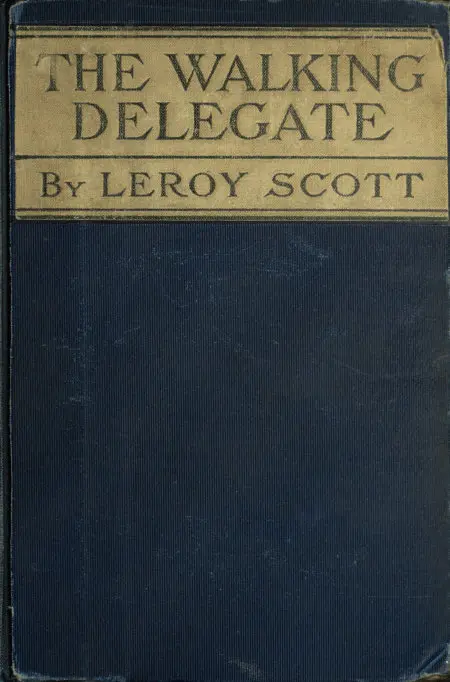
"The Walking Delegate" by Leroy Scott is a novel written in the early 20th century. The story centers around Tom Keating, a foreman in the ironworkers' union, who is embroiled in a power struggle against Buck Foley, the corrupt walking delegate. The narrative delves into themes of labor rights, integrity, and the personal and professional challenges faced by workers in a rapidly industrializing society. At the start of the novel, we find ourselves at the St. Etienne Hotel construction site, where Tom diligently oversees the work of his crew amidst harsh winter winds and the looming presence of Foley. As accidents and tensions mount, it becomes evident that the workers are increasingly frustrated with Foley's iron-fisted control and corruption within the union. The opening chapters introduce key characters and lay the groundwork for the evolving conflict between Tom's desire for honest representation and Foley’s self-serving tactics, setting the stage for a gripping tale of loyalty, struggle, and the quest for justice in the gritty world of labor.
Introduction adapted from the source catalogue; source summaries may be automatically generated.
Free to read · English · 91,212 words · No account needed
MAKE TIME FOR A GOOD BOOK
On by default. Untick to stop anonymous reading totals. Each page counts after 10 seconds in view. How this works.
Anonymous counting is on unless you have switched it off.
Connelly hesitated. It usually took more than a little courage to express a view contrary to Foley's. "I don't know," he said doubtfully. "Baxter knows how we stand. It strikes me if he offers to talk things over with us, that means he realizes he's licked an' is willin' to make concessions."
"Um! Maybe youse're right."
Encouraged by this admission Connelly went on: "It might be worth our while to meet 'em, anyhow. Suppose nothin' does come of it, what have we lost?"
Foley looked half-convinced. "Well, mebbe our committee might as well
talk the letter over."
"Sure thing."
"I suppose then we ought to get together to-night. If we get word to the other three boys, we've got to catch 'em at dinner. Can youse see to that?"
Connelly looked regretfully at his untasted meal. "I guess I can."
"All right. In your office then, say at eight."
The five men were in the office on time, though Connelly, to make it, had to content himself with what he could swallow in a few minutes at a quick lunch counter. The office was a large, square room, a desk in one corner, a few chairs along the sides, a great cuspidor in the center; at the windows were lace curtains, and on one wall was a full-length mirror in a gilt frame--for on nights when Potomac Hall was let for weddings, receptions, and balls, Connelly's office had over its door, "Ladies' Dressing Room."
The five men lit cigars, Foley's cigars, and drew chairs around the cuspidor, which forthwith began to bear the relation of hub to their frequent salivary spokes. "Connelly told youse about the letter from the Civic Federation, that's gettin' so stuck on runnin' God's business they'll soon have him chased off his job," Foley began. "But I guess I might as well read the letter to youse."
"Take the offer, o' course!" declared Pete, when Foley had ended.
"That's what I said," Connelly joined.
Hogan and Brown, knowing how opposed Foley was to the proposition, said
nothing.
"We've wasted enough time on the bosses' committee," Foley objected. "No use talkin' to 'em again till we've put 'em down an' out."
"The trouble with you, Foley, is, you like a fight so well you can't tell when you've licked your man," said Pete in an exasperated tone. "What's the use punchin' a man after he's give in?"
"We've got 'em licked, or they'd never ask to talk things over," urged
Connelly.
Foley looked in scowling meditation at his cigar ash. Then he raised his eyes to Brown and Hogan. "What do youse think?"
Thus directly questioned; they had to admit they stood with Pete and
Connelly.
Your reading position is saved on this browser. Take it to another device with a library code. Reading pages adapt to text, rather than matching a printed edition.
BEHIND THE BOOK
This eBook is for the use of anyone anywhere in the United States and most other parts of the world at no cost and with almost no restrictions whatsoever. You may copy it, give it away or re-use it under the terms of the Project Gutenberg License included with this eBook or online at www.gutenberg.org. If you are not located in the United States, you will have to check the laws of the country where you are located before using this eBook. Read the source licence.
The original source file, including credits and licence, is retained by this library. Request an original-format copy at no charge. Please include the book title and Project Gutenberg identifier #41154.
KEEP YOUR CURIOSITY GOING
Coulson Kernahan

Maurice Baring
Frances Wright
Cécile Tormay

Frederic Jesup Stimson

W. H. P. (William Henry Pope) Jarvis