Mary Regan
Leroy Scott
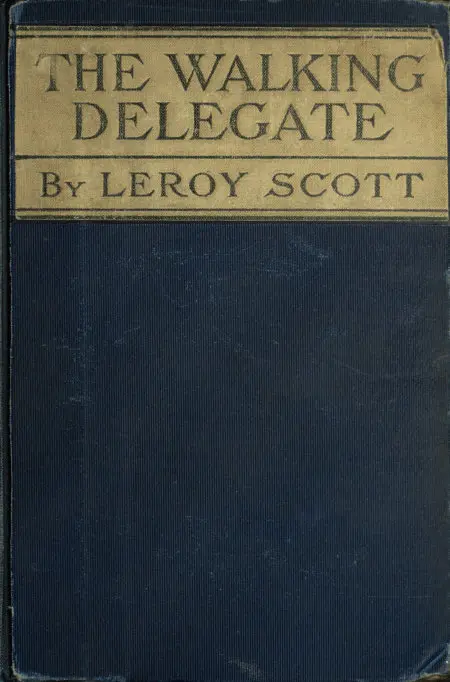
THE CLASSIC COLLECTION · 1905
"The Walking Delegate" by Leroy Scott is a novel written in the early 20th century. The story centers around Tom Keating, a foreman in the ironworkers' union, who is embroiled in a power struggle against Buck Foley, the corrupt walking delegate. The narrative delves into themes of labor rights, integrity, and the personal and professional challenges faced by workers in a rapidly industrializing society. At the start of the novel, we find ourselves at the St. Etienne Hotel construction site, where Tom diligently oversees the work of his crew amidst harsh winter winds and the looming presence of Foley. As accidents and tensions mount, it becomes evident that the workers are increasingly frustrated with Foley's iron-fisted control and corruption within the union. The opening chapters introduce key characters and lay the groundwork for the evolving conflict between Tom's desire for honest representation and Foley’s self-serving tactics, setting the stage for a gripping tale of loyalty, struggle, and the quest for justice in the gritty world of labor.
Introduction adapted from the source catalogue; source summaries may be automatically generated.
Free to read · English · 91,212 words · No account needed
MAKE TIME FOR A GOOD BOOK
On by default. Untick to stop anonymous reading totals. Each page counts after 10 seconds in view. How this works.
Anonymous counting is on unless you have switched it off.
Late in the afternoon, as Tom lay stretched in glowering melancholy on the greasy, dirt-browned board that did service as chair and bed to the transitory tenants of the cell, steps paused in the corridor without and a key rattled in his door. He rose dully out of his dejection. A scowling officer admitted a man, round and short and with side whiskers, and locked the door upon his back.
"This is a pretty how-to-do!" growled the man, coming forward.
Tom stared at his visitor. "Why, Mr. Driscoll!" he cried.
"That's who the most of my friends say I am," the contractor admitted
gruffly.
He deposited himself upon the bench that had seated and bedded so much unwashed misfortune, and, his back against the cement wall, turned his sour face about the bare room. "This is what I call a pretty poor sort of hospitality to offer a visitor," he commented, in his surly voice. "Not even a chair to sit on."
"There is also the floor; you may take your choice," Tom returned, nettled by the other's manner. He himself took the bench.
Mr. Driscoll stared at him with blinking eyes, and he stared back defiantly. In Tom's present mood of wrath and depression his temper was tinder waiting another man's spark.
"Huh!" Mr. Driscoll ran his pudgy forefinger easefully about between his collar and his neck, and removing his spectacles mopped his purple face. "What's this funny business you've been up to now?" he asked.
"What do you mean?" Tom demanded, his irritation mounting.
"You ought to read the papers and keep posted on what you do. I just saw a Star. There's half a page of your face, and about a pint of red ink."
Tom groaned, and his jaws clamped ragefully.
"What I read gave me the impression you'd been having a sort of private Fourth of July celebration," Mr. Driscoll pursued.
Tom turned on the contractor half savagely. "See here! I don't know what you came here for, but if it was for this kind of talk--well, you can guess how welcome you are!"
Mr. Driscoll emitted a little chuckling sound, or Tom thought for an instant he did. But a glance at that sour face, with its straight pouting mouth, corrected Tom's ears.
"Now, what was your fool idea in blowing up the Avon?"
Tom uprose wrathfully. "Do you mean to say you believe the lies those blackguards told this morning?"
"I only know what I read in the papers."
"If you swallow everything you see in the papers, you must have an awful
maw!"
"Yes, I suppose you have got some sort of a story you put up."
Your reading position is saved on this browser. Take it to another device with a library code. Reading pages adapt to text, rather than matching a printed edition.
BEHIND THE BOOK
This eBook is for the use of anyone anywhere in the United States and most other parts of the world at no cost and with almost no restrictions whatsoever. You may copy it, give it away or re-use it under the terms of the Project Gutenberg License included with this eBook or online at www.gutenberg.org. If you are not located in the United States, you will have to check the laws of the country where you are located before using this eBook. Read the source licence.
The original source file, including credits and licence, is retained by this library. Request an original-format copy at no charge. Please include the book title and Project Gutenberg identifier #41154.
KEEP YOUR CURIOSITY GOING
Coulson Kernahan

Maurice Baring
Frances Wright
Cécile Tormay

Frederic Jesup Stimson

W. H. P. (William Henry Pope) Jarvis