Mary Regan
Leroy Scott
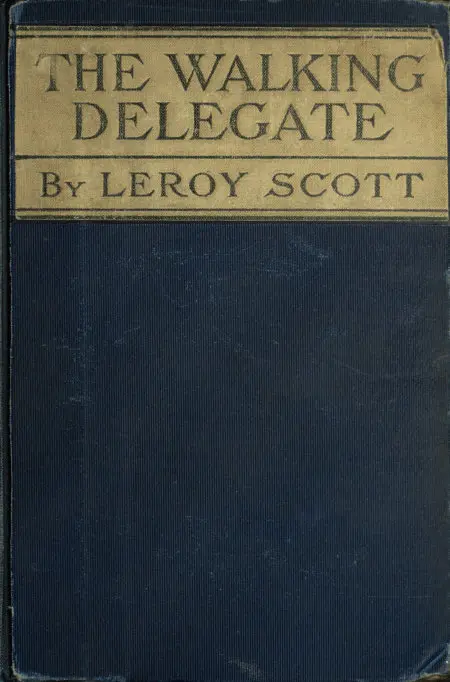
THE CLASSIC COLLECTION · 1905
"The Walking Delegate" by Leroy Scott is a novel written in the early 20th century. The story centers around Tom Keating, a foreman in the ironworkers' union, who is embroiled in a power struggle against Buck Foley, the corrupt walking delegate. The narrative delves into themes of labor rights, integrity, and the personal and professional challenges faced by workers in a rapidly industrializing society. At the start of the novel, we find ourselves at the St. Etienne Hotel construction site, where Tom diligently oversees the work of his crew amidst harsh winter winds and the looming presence of Foley. As accidents and tensions mount, it becomes evident that the workers are increasingly frustrated with Foley's iron-fisted control and corruption within the union. The opening chapters introduce key characters and lay the groundwork for the evolving conflict between Tom's desire for honest representation and Foley’s self-serving tactics, setting the stage for a gripping tale of loyalty, struggle, and the quest for justice in the gritty world of labor.
Introduction adapted from the source catalogue; source summaries may be automatically generated.
Free to read · English · 91,212 words · No account needed
MAKE TIME FOR A GOOD BOOK
On by default. Untick to stop anonymous reading totals. Each page counts after 10 seconds in view. How this works.
Anonymous counting is on unless you have switched it off.
Foley did not take the opening. "That's the question," he said blandly.
It was a few seconds before Baxter went on. "I judge that we do not. You
have----"
"Excuse me," said Foley, rising, "but I got weak eyes, an' this light hurts 'em. Suppose me an' youse changes chairs." He calmly stepped over to Baxter's side and waited.
There was nothing for Baxter but to yield the seat, which he did. Foley sat down, tilted back against the window sill, and hooked his heels over a chair rung.
"Your union has perhaps a million dollars at stake," Baxter continued at the same even pitch. "We have--a great deal, and the owners stand to lose heavily. If by talking an hour we can devise a plan by which this can be saved, it's worth while, is it not?"
"Sure. Speakin' as an individual, I'm willin' to talk twice as long for half as much," Foley drawled.
There was a silence. The three men, their elbows on the polished table, looked on as though spectators at a play.
"I wonder if you have anything to propose?" asked Baxter guardedly.
"Me? I come to use my ears, not my tongue."
The two men watched each other narrowly. The advantage, if there could be advantage in the case of two faces under perfect control, was all with Foley. The contractor had caught no sign revealing whether his insinuative words were having effect.
"But you perhaps have thought of some plan that is worth considering,"
he went on.
Foley hesitated, for the first time. "Well--yes."
"What is it?"
"I----" He broke off, and seemed to listen with suspicion.
Baxter's face quickened--the least trifle. The three men leaned further across the table, excitement tugging in their faces.
"You are perfectly safe," Baxter assured him. "No one can hear."
"The plan's dead simple. But mebbe it's occurred to youse."
"Go on!" said Baxter. The men hardly breathed.
"The quickest way o' settlin' the strike is for"--he paused--"youse
bosses to give in."
Baxter's face went a little pale. Something very like a snarl came from
the spectators.
Foley gave a prolonged chuckle. "If youse'll pay me for my time, I'm willin' to play tag in the dark so long's the coin lasts. But if youse ain't, come to business, or I'll go."
"I don't understand," returned Baxter blankly.
"Oh, tell the truth now an' then, Baxter. It sorter gives contrast to the other things youse say. Youse understand all right enough."
Baxter continued his blank look.
Your reading position is saved on this browser. Take it to another device with a library code. Reading pages adapt to text, rather than matching a printed edition.
BEHIND THE BOOK
This eBook is for the use of anyone anywhere in the United States and most other parts of the world at no cost and with almost no restrictions whatsoever. You may copy it, give it away or re-use it under the terms of the Project Gutenberg License included with this eBook or online at www.gutenberg.org. If you are not located in the United States, you will have to check the laws of the country where you are located before using this eBook. Read the source licence.
The original source file, including credits and licence, is retained by this library. Request an original-format copy at no charge. Please include the book title and Project Gutenberg identifier #41154.
KEEP YOUR CURIOSITY GOING
Coulson Kernahan

Maurice Baring
Frances Wright
Cécile Tormay

Frederic Jesup Stimson

W. H. P. (William Henry Pope) Jarvis