
Love Letters of a Violinist, and Other Poems
Eric Mackay
THE CLASSIC COLLECTION · 1703
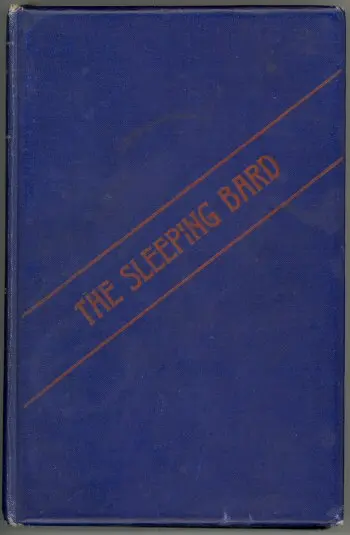
"The Visions of the Sleeping Bard" by Ellis Wynne is a poetic allegory written during the early 18th century. The work presents a meditation on moral and spiritual themes, exploring human frailty through vivid dream-like sequences that personify vice and virtue. The narratives follow the Bard, a character experiencing various visions of the world, death, and hell, as he embarks on a quest for understanding and salvation. At the start of the text, the Bard ascends a mountain and falls into a deep sleep, initiating fantastical visions that illuminate his perception of worldly affairs and moral decay. Through his dreams, he encounters fairies and angels, witnessing the "City of Destruction" governed by the malevolent Prince Belial and his enchanting daughters, who symbolize pride, pleasure, and wealth. The protagonist's journey reveals the vices of humanity, such as hypocrisy and greed, while contrasting them against the ideal of a higher calling represented by the City of Emmanuel. The opening sets the stage for a rich tapestry of social critique intertwined with spiritual reflection, inviting readers to ponder the nature of their choices and existence.
Introduction adapted from the source catalogue; source summaries may be automatically generated.
Free to read · English · 42,618 words · No account needed
MAKE TIME FOR A GOOD BOOK
On by default. Untick to stop anonymous reading totals. Each page counts after 10 seconds in view. How this works.
Anonymous counting is on unless you have switched it off.
But before I had time to notice any more of these innumerable doors, I heard a voice bidding me by name to be dissolved, and at the word I felt myself beginning to melt like a snowball in the heat of the sun; then my master gave me a sleeping draught, so that I slumbered; and when I awoke, he had taken me by some road or other far away on the other side of the castle. I perceived myself in a pitch-dark vale of infinite radius, methought, and shortly, I saw by a few bluish lights, like the flickering flame of a candle, countless, ah! countless shades of men, some afoot and some on horseback, rushing back and fro like the wind, in awful silence and solemnity; the land was barren, bleak and blasted, without either grass or hay, trees or animals, save deadly beasts and poisonous vermin of every kind—serpents, snakes, lice, frogs, worms, locusts, gids and all such that exist on man’s corruption. Through a myriad shades and reptiles, graves, churchyards and tombs, we made our way to view the land unmolested, until I happened to see some turning round and looking at me; in an instant, notwithstanding the prevailing silence, a whisper passed from one to another that there was a man from earth there. “A man from earth!” cried one, “a man from earth,” exclaimed another, while they crowded round me, like caterpillars, from every quarter. “Which way came you, sirrah?” asked a morkin of a death-imp. “Indeed, sir,” said I, “I know not any more than you do.” “What is your name?” he asked. “Call me here in your own country what ye will, but at home I am called the Sleeping Bard.”
At that word I could see an ancient mannikin, bent double, head to feet, like a bramble, straightening himself, and looking at me more malignantly than the red devil, and without a word he hurled a big skull at my head, but, thanks to a sheltering tombstone, missed me. “Truce, sir, I pray you,” cried I, “to a stranger who was never here before, and will never come again, could I but once find the way home.” “I’ll make you remember you’ve been here,” quoth he, and, again setting upon me with a thighbone, he beat me most unmercifully, while I dodged about as best as I could. “Ho ho!” I cried, “this country is very unmannerly towards strangers; is there no justice of the peace here?” “Peace, indeed,” said he, “thou, surely, hast no right to sue for peace, who disturbest the dead in their graves.” “Pray, sir, might I know your name, for I wot not that I have ever molested anyone from this country?” “Sirrah!” cried he, “know then that I, and not you, am the Sleeping Bard, and have been left in peace these nine centuries by all but you,” and again he set upon me. “Withhold, brother,” said Merlin {48a} who stood near, “be not too hasty; thank him rather for that he hath kept your name in respected memory on earth.” “In great respect, forsooth,” quoth he, “by such a blockhead as this. Are you, sirrah, versed in the four and twenty metres? Can you trace the line of Gog and Magog and of Brutus son of Silvius {48b} down to a century before the destruction of Troy? Can you prophesy when, and how the wars between the lion and the eagle, and between the stag and the red deer will end? Can you?” “Ho there! let me ask him a question,” said another who stood by a huge seething cauldron, {48c} “draw near, and tell me the meaning of this:—
Your reading position is saved on this browser. Take it to another device with a library code. Reading pages adapt to text, rather than matching a printed edition.
BEHIND THE BOOK
This eBook is for the use of anyone anywhere in the United States and most other parts of the world at no cost and with almost no restrictions whatsoever. You may copy it, give it away or re-use it under the terms of the Project Gutenberg License included with this eBook or online at www.gutenberg.org. If you are not located in the United States, you will have to check the laws of the country where you are located before using this eBook. Read the source licence.
The original source file, including credits and licence, is retained by this library. Request an original-format copy at no charge. Please include the book title and Project Gutenberg identifier #5671.
KEEP YOUR CURIOSITY GOING
Eric Mackay
Edmund Gosse
Sophia Margaretta Hensley
Gilbert Parker
George MacDonald

Elizabeth Bibesco