
Love Letters of a Violinist, and Other Poems
Eric Mackay
THE CLASSIC COLLECTION · 1703
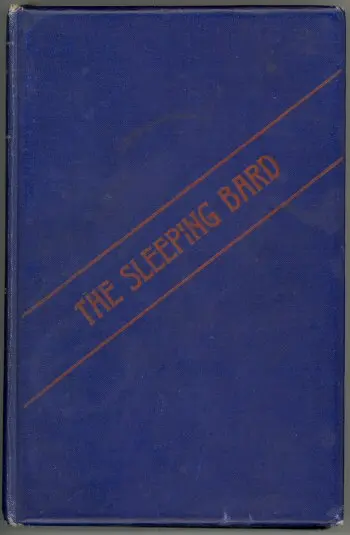
"The Visions of the Sleeping Bard" by Ellis Wynne is a poetic allegory written during the early 18th century. The work presents a meditation on moral and spiritual themes, exploring human frailty through vivid dream-like sequences that personify vice and virtue. The narratives follow the Bard, a character experiencing various visions of the world, death, and hell, as he embarks on a quest for understanding and salvation. At the start of the text, the Bard ascends a mountain and falls into a deep sleep, initiating fantastical visions that illuminate his perception of worldly affairs and moral decay. Through his dreams, he encounters fairies and angels, witnessing the "City of Destruction" governed by the malevolent Prince Belial and his enchanting daughters, who symbolize pride, pleasure, and wealth. The protagonist's journey reveals the vices of humanity, such as hypocrisy and greed, while contrasting them against the ideal of a higher calling represented by the City of Emmanuel. The opening sets the stage for a rich tapestry of social critique intertwined with spiritual reflection, inviting readers to ponder the nature of their choices and existence.
Introduction adapted from the source catalogue; source summaries may be automatically generated.
Free to read · English · 42,618 words · No account needed
MAKE TIME FOR A GOOD BOOK
On by default. Untick to stop anonymous reading totals. Each page counts after 10 seconds in view. How this works.
Anonymous counting is on unless you have switched it off.
Then away we went over hills and through forests, across seas and valleys, over castles and towers, rivers and rocks, and where should we alight but at one of the gates of the daughters of Belial, at the rear of the City of Destruction, where I noticed that the three gateways of Destruction contracted into one at the back, and opened upon the same place—a murky, vaporous, pestilent place, full of noisome mists, and terrible lowering clouds. “Prithee, good sir,” asked I, “what place be this?” “The chambers of Death,” replied Sleep. And no sooner had I asked than I could hear some wailing, groaning, and sighing; some deliriously muttering to themselves or feebly moaning, others in great travail, and with all the signs of man’s departure from life; and, now and then, would one give a long-drawn gasp, and lapse into silence. At that moment, I heard a key being turned in a lock, and at the noise I looked around for the door, and gazing steadfastly, perceived thousands upon thousands of doors, seemingly afar off but really close at hand. “Please, Master Sleep, where do these doors open upon?” asked I. “Upon the land of Oblivion,” was the answer, “an extensive domain {44} under the sceptre of my brother Death, and this great rampart is the boundary of vast Eternity.” By this I could see that there was a little death-imp at every door, each one bearing arms, and a name different from that of his fellows; though it was evident that they, one and all, were the ministers of the same king. Nevertheless they were continually quarrelling about the sick; one would snatch the patient to take him as a gift through his own door, while another strove to take him through his.
On our approach, I observed that over each door the name of the Death who kept it was written, and also that at each door were an hundred various things left all of a heap, showing plainly that those who went through were in haste. Over one door I saw “Hunger,” and yet on the floor close by were full purses, and bags, and brass-nailed trunks. “This is the Porch of Misers,” said Sleep. “Whom do those rags belong to?” “To the misers, mostly,” he replied, “but there are some which belong to idlers, gossipmongers and others, who, poor in everything except in spirit, preferred to die of hunger rather than ask for help.” Next door was Death-by-Cold, and when I came opposite him I could hear much shuddering and shivering, and at his door, were many books, pots and flagons, a few sticks and bludgeons, compasses, cords and ship’s tackle. “Scholars have gone this way,” said I. “Yea, lonely and helpless, far from the succour of those who loved them, their very garments stolen from them. Those,” he continued, pointing to the pots, “are relics of the boon companions, whose feet were benumbed under the benches, while their heads were seething in drink and noise; those things over there belonged to those who journeyed amid snow-clad mountains, and to North Sea traders.” The next was a lanky skeleton called Fear-Death—so transparent you could see he had no heart; at his door, too, there were bags and chests, bars and strongholds. Through this one went userers and traitors, oppressors and murderers, though many of these last called at the next door, at which was a Death named Gallows, with a rope ready round his neck. Next to him was Love-Death, and at his feet thousands of musical instruments and song-books, love-letters, spots and pigments to beautify the face, and hundreds of tinselled toys for the same purpose, together with a few swords: “With these rivals have fought duels for their mistresses, and some have killed themselves,” said Sleep. I could see that this Death was sandblind. At the next door was a Death whose colour was worst of all, and whose liver was entirely gone—his name was Envy. “This is the Death,” said Sleep, “which brings hither those who have lost money, slanderers, and a rideress or two, who are jealous of the law which demands that a wife should submit herself unto her husband.” “Pray, sir, what is a rideress?” “A rideress is a woman who will over-ride her husband, her neighbourhood, and the whole country if she can, and by dint of long riding, at last, rides a devil from that door down to the bottomless pit.” Next was the door of Ambition-Death for those who hold their heads high, and break their necks, for want of looking on the ground they tread on; at this door lay crowns, sceptres, standards, petitions for offices, and all manner of arms of heraldry and war.
Your reading position is saved on this browser. Take it to another device with a library code. Reading pages adapt to text, rather than matching a printed edition.
BEHIND THE BOOK
This eBook is for the use of anyone anywhere in the United States and most other parts of the world at no cost and with almost no restrictions whatsoever. You may copy it, give it away or re-use it under the terms of the Project Gutenberg License included with this eBook or online at www.gutenberg.org. If you are not located in the United States, you will have to check the laws of the country where you are located before using this eBook. Read the source licence.
The original source file, including credits and licence, is retained by this library. Request an original-format copy at no charge. Please include the book title and Project Gutenberg identifier #5671.
KEEP YOUR CURIOSITY GOING
Eric Mackay
Edmund Gosse
Sophia Margaretta Hensley
Gilbert Parker
George MacDonald

Elizabeth Bibesco