THE CLASSIC COLLECTION✦The Countess FannyCLASSIC FREE BOOKS
The Countess Fanny
Marjorie Bowen
THE CLASSIC COLLECTION · 1906
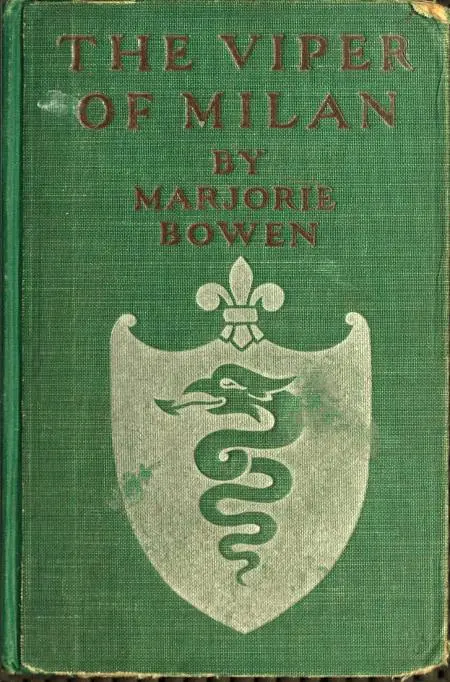
"The Viper of Milan: A Romance of Lombardy" by Marjorie Bowen is a historical novel written in the early 20th century. Set in the tumultuous and politically charged environment of 14th-century Italy, the narrative focuses on the rise of Gian Galeazzo Maria Visconti, the Duke of Milan, and intertwines themes of tyranny, romance, and rebellion. The story follows characters caught in the gripping turmoil of their time, particularly highlighting the experiences of young travelers Tomaso and Vittore, as well as the infamous Visconti family. At the start of the novel, readers are introduced to the beauty of Lombardy, juxtaposed with the stark reality of peasant life under the oppressive rule of the Visconti. The opening scene captures a moment of tension as a cavalcade led by the Duke passes a group of downtrodden peasants, eliciting fear and awe. Young Tomaso is injured during a harrowing encounter with the Duke's enforcers, thrusting his cousin Vittore into a desperate search for help. The visceral emotions of hopelessness and longing for freedom set the tone for the unfolding drama, while establishing the malevolent presence of the Visconti as a catalyst for the characters' struggles.
Introduction adapted from the source catalogue; source summaries may be automatically generated.
Free to read · English · 96,562 words · No account needed
MAKE TIME FOR A GOOD BOOK
On by default. Untick to stop anonymous reading totals. Each page counts after 10 seconds in view. How this works.
Anonymous counting is on unless you have switched it off.
But well Della Scala knew that neither honor, nor pity, nor shame, but fear alone, would restrain Gian Maria Visconti from venting his hatred on Isotta d'Este.
Still, he kept up a stout heart. Visconti dare not! To make assurance doubly sure, he used all his influence at the court of Rome to procure the aid of the Church against the Duke of Milan.
Many a time had he rendered powerful help to the Pope, and, as his present position stood, might do so yet again; and the result of his appeal was a grave embassy from the Pope to Visconti, threatening him with excommunication and the sword of the Church should he dare to touch Isotta d'Este.
For the first, Visconti cared little; twice had the Church thrown him out, and each time he had laughed at it and emerged triumphant; but now his position was more perilous than it had ever been since he mounted the throne of Milan, and he dare not treat this mandate of the Church as he had done the others.
The Pope's temporal power too was great; were that once turned against him, even with the Empire's aid he could hardly stand; so Visconti answered them with fair words, pledging his honor for the Duchess of Verona's life.
One bright summer morning, Visconti sat at the open window of his
palace, thinking.
At the other end of the room the Duke d'Orleans and Tisio were playing at chess; between these two, during the Duke's enforced stay in Milan, a friendship had sprung up, and Visconti, weary of his foolish guest, was well pleased a foolish brother should take him off his hands.
The Frenchman was prepared at once to carry out the contract, marry Valentine, and depart for France, but Visconti's pride would not permit. The Duke d'Orleans had witnessed a reverse, he should behold a triumph. Valentine should leave Italy as befitted his sister, not fly from it as a fugitive; and the French prince, who in a few weeks had yielded to Gian's subtle influence and learned both to fear and obey Visconti, assented meekly to delay, and whiled away the time as best he might.
Visconti sat so motionless and silent that the chess-players were forgetful of his presence, and their voices rose high.
"My move," said Tisio gleefully. "See, the rook take your knight."
"Your rook could take my knight," returned d'Orleans, "if it were your move, but as it is mine----"
"You are not watching the game," was the angry rejoinder.
"Your pardon, my move," said the Frenchman calmly, and, with a smile on his vacant face, he swept up one of Tisio's men.
"My move--and--mate, M'sieu."
Your reading position is saved on this browser. Take it to another device with a library code. Reading pages adapt to text, rather than matching a printed edition.
Marjorie Bowen
Marjorie Bowen
Marjorie Bowen
Marjorie Bowen
BEHIND THE BOOK
This eBook is for the use of anyone anywhere in the United States and most other parts of the world at no cost and with almost no restrictions whatsoever. You may copy it, give it away or re-use it under the terms of the Project Gutenberg License included with this eBook or online at www.gutenberg.org. If you are not located in the United States, you will have to check the laws of the country where you are located before using this eBook. Read the source licence.
The original source file, including credits and licence, is retained by this library. Request an original-format copy at no charge. Please include the book title and Project Gutenberg identifier #48963.
KEEP YOUR CURIOSITY GOING
Cécile Tormay

Moritz Busch
Coulson Kernahan
John L. Ransom

Maurice Baring
Frances Wright