THE CLASSIC COLLECTION✦The Countess FannyCLASSIC FREE BOOKS
The Countess Fanny
Marjorie Bowen
THE CLASSIC COLLECTION · 1906
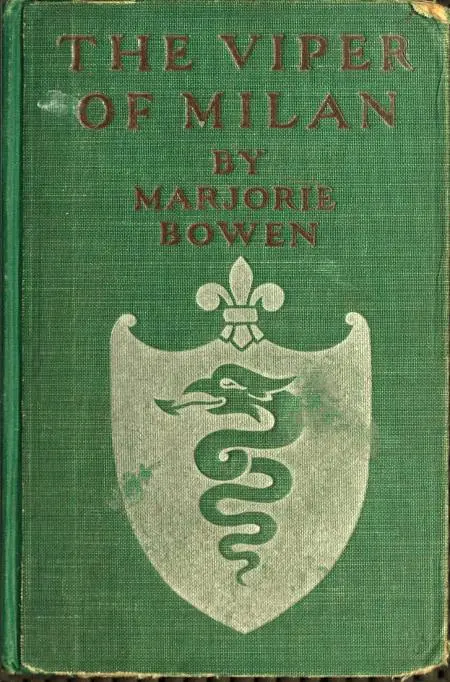
"The Viper of Milan: A Romance of Lombardy" by Marjorie Bowen is a historical novel written in the early 20th century. Set in the tumultuous and politically charged environment of 14th-century Italy, the narrative focuses on the rise of Gian Galeazzo Maria Visconti, the Duke of Milan, and intertwines themes of tyranny, romance, and rebellion. The story follows characters caught in the gripping turmoil of their time, particularly highlighting the experiences of young travelers Tomaso and Vittore, as well as the infamous Visconti family. At the start of the novel, readers are introduced to the beauty of Lombardy, juxtaposed with the stark reality of peasant life under the oppressive rule of the Visconti. The opening scene captures a moment of tension as a cavalcade led by the Duke passes a group of downtrodden peasants, eliciting fear and awe. Young Tomaso is injured during a harrowing encounter with the Duke's enforcers, thrusting his cousin Vittore into a desperate search for help. The visceral emotions of hopelessness and longing for freedom set the tone for the unfolding drama, while establishing the malevolent presence of the Visconti as a catalyst for the characters' struggles.
Introduction adapted from the source catalogue; source summaries may be automatically generated.
Free to read · English · 96,562 words · No account needed
MAKE TIME FOR A GOOD BOOK
On by default. Untick to stop anonymous reading totals. Each page counts after 10 seconds in view. How this works.
Anonymous counting is on unless you have switched it off.
"Then in a few days I will march on Verona!" cried Mastino, "and with thy generous aid I shall recover it! My heart is too full. I cannot speak my thanks," he continued, "but by my honor and my sword I swear, thou d'Este, thou Carrara, and thou lady, shall never regret thy trust in me."
In the courtyard of the painter Agnolo's house in Milan, the sunshine fell strong and golden, sparkling on the fountain that rose in the center from its rough stone basin, and throwing the waxen blossoms of the chestnut into brilliant relief against the sapphire sky.
The courtyard was of stone. Around three sides ran the wall, one with its door into the street; opposite was a large garden, entered by an archway, the wicket in which stood always ajar.
The fourth side of the quadrangle was formed by the dwelling-house, which stood with its back to the ivied walls, itself a long, low building, the upper half of which, jutting above the lower, was supported on pillars of carved stone.
Around the bottom wall ran a wide border of plants, some climbing, others heavy with brilliant blossoms, trailing along the ground, and in the cool, blue shadows in the recess formed by the projecting story were large pots of spreading ferns, vivid green, mingled with the spikes of bright scarlet flowers.
The basin of the fountain in the center was velvet green with moss, and over the limpid water there spread the flat leaves of water-lilies. Above the wall rose the sweet-smelling chestnuts, spreading their fan-like foliage and snowy blossoms, tier upon tier, against the brilliant sky, and through the low arch, trellised with roses, the garden stretched, a bewildering mass of color, white, mauve, yellow, pink, blue and red, into the soft distance, a swaying mass of trees. It was late afternoon, and the shadows were lengthening, as out of the house, the door of which stood open, came the little painter. He stepped into the sunshine, mopping his face and shaking his clothes.
From head to foot he was a mass of green slime, his doublet torn, his hands scratched, his face hot and perspiring. After a few vain attempts to remove the dirt that clung to him, he looked around with a rueful countenance.
"Graziosa!" he called. "Graziosa!"
The lattice of an upper window was thrown open, and Graziosa looked out.
At sight of her father she laughed. "Hast thou been down thy passage again, father?" she called from the window.
Agnolo made a wry face good-humoredly. "That I have," he returned, "and fell into a pond at the other end."
Your reading position is saved on this browser. Take it to another device with a library code. Reading pages adapt to text, rather than matching a printed edition.
Marjorie Bowen
Marjorie Bowen
Marjorie Bowen
Marjorie Bowen
BEHIND THE BOOK
This eBook is for the use of anyone anywhere in the United States and most other parts of the world at no cost and with almost no restrictions whatsoever. You may copy it, give it away or re-use it under the terms of the Project Gutenberg License included with this eBook or online at www.gutenberg.org. If you are not located in the United States, you will have to check the laws of the country where you are located before using this eBook. Read the source licence.
The original source file, including credits and licence, is retained by this library. Request an original-format copy at no charge. Please include the book title and Project Gutenberg identifier #48963.
KEEP YOUR CURIOSITY GOING
Cécile Tormay

Moritz Busch
Coulson Kernahan
John L. Ransom

Maurice Baring
Frances Wright