THE CLASSIC COLLECTION✦The Countess FannyCLASSIC FREE BOOKS
The Countess Fanny
Marjorie Bowen
THE CLASSIC COLLECTION · 1906
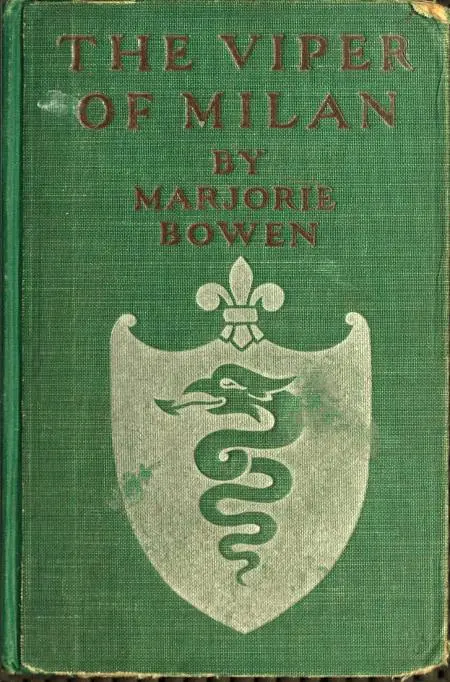
"The Viper of Milan: A Romance of Lombardy" by Marjorie Bowen is a historical novel written in the early 20th century. Set in the tumultuous and politically charged environment of 14th-century Italy, the narrative focuses on the rise of Gian Galeazzo Maria Visconti, the Duke of Milan, and intertwines themes of tyranny, romance, and rebellion. The story follows characters caught in the gripping turmoil of their time, particularly highlighting the experiences of young travelers Tomaso and Vittore, as well as the infamous Visconti family. At the start of the novel, readers are introduced to the beauty of Lombardy, juxtaposed with the stark reality of peasant life under the oppressive rule of the Visconti. The opening scene captures a moment of tension as a cavalcade led by the Duke passes a group of downtrodden peasants, eliciting fear and awe. Young Tomaso is injured during a harrowing encounter with the Duke's enforcers, thrusting his cousin Vittore into a desperate search for help. The visceral emotions of hopelessness and longing for freedom set the tone for the unfolding drama, while establishing the malevolent presence of the Visconti as a catalyst for the characters' struggles.
Introduction adapted from the source catalogue; source summaries may be automatically generated.
Free to read · English · 96,562 words · No account needed
MAKE TIME FOR A GOOD BOOK
On by default. Untick to stop anonymous reading totals. Each page counts after 10 seconds in view. How this works.
Anonymous counting is on unless you have switched it off.
"I know not, my lord," said Giannotto. "Luisa brought it, but dared not
leave her post."
His own narrow escape of a moment since had tied up Giannotto's tongue.
"It will not be hard to discover," said Visconti. "Some one who did not bribe Luisa high enough."
"Mastino della Scala lives," he read again. He handed the parchment back
to the secretary.
"Let the Lady Isotta have it," he said. "It may keep her alive. It looks to me that she may die, Giannotto, of the bad air and the confinement," and he smiled. "I would certainly not have her death. Give her the parchment." And he handed the parchment back, dismissing Giannotto with the gesture.
Clearly Visconti was in a mood that held neither comment nor reward, but one the secretary was glad to escape from so easily. With a deep obeisance he departed.
"Who bribes the woman to comfort Isotta d'Este? The soldiers are to be trusted," mused Visconti. "Once I know I will remember it."
He drew from his doublet the velvet gloves of turquoise hue and laid
them on the table.
They were beautiful in their perfect workmanship, huge gauntlets fringed with pearl and gold, and tasseled at the points with rubies. On the back was a rich design also in pearl and gold, and they were lined with white satin, covered in fine silk lace.
Truly they were a work of art. Visconti raised them delicately by the tassels and looked long at their rich blue, admiringly, and with a curious expression.
In the council chamber of the Estes' summer palace at Ferrara were gathered the heads of the reigning families of Lombardy.
At a long table, set across one end of the apartment, two men were seated talking to one another in low voices. They were Ippolito d'Este and Giacomo Carrara, Duke of Padua. D'Este, a stern, gray-haired man of fifty or so, with keen eyes and a hard mouth, was talking rapidly, tapping the while his fingers nervously upon the table.
Carrara, florid, pleasant-mannered, with brilliant black eyes, black hair, and a ready smile, leaned forward and listened, observing him keenly. Opposite them, but the length of the table away, a lady with tired eyes and a patient mouth leaned back in her chair, motionless, watching the trees seen through the window.
She was Julia Gonzaga, the representative in this gathering in the name of her infant nephew, of the city of Mantua and its domains, the head of the fourth and last great family of Lombardy who dared to raise a hand against the encroachments and the power of Visconti.
Your reading position is saved on this browser. Take it to another device with a library code. Reading pages adapt to text, rather than matching a printed edition.
Marjorie Bowen
Marjorie Bowen
Marjorie Bowen
Marjorie Bowen
BEHIND THE BOOK
This eBook is for the use of anyone anywhere in the United States and most other parts of the world at no cost and with almost no restrictions whatsoever. You may copy it, give it away or re-use it under the terms of the Project Gutenberg License included with this eBook or online at www.gutenberg.org. If you are not located in the United States, you will have to check the laws of the country where you are located before using this eBook. Read the source licence.
The original source file, including credits and licence, is retained by this library. Request an original-format copy at no charge. Please include the book title and Project Gutenberg identifier #48963.
KEEP YOUR CURIOSITY GOING
Cécile Tormay

Moritz Busch
Coulson Kernahan
John L. Ransom

Maurice Baring
Frances Wright