THE CLASSIC COLLECTION✦The Countess FannyCLASSIC FREE BOOKS
The Countess Fanny
Marjorie Bowen
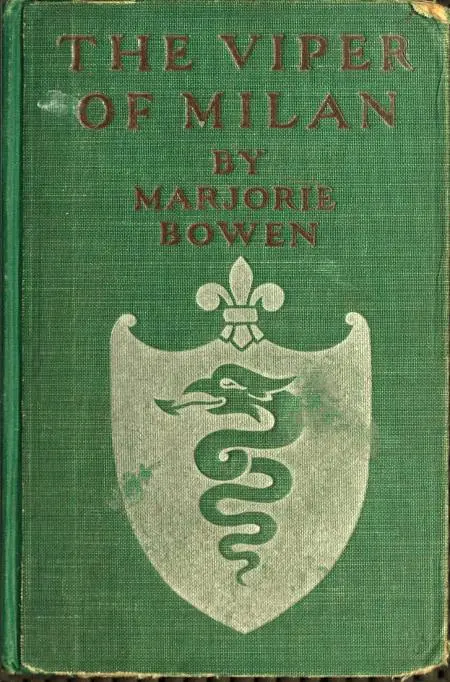
THE CLASSIC COLLECTION · 1906
"The Viper of Milan: A Romance of Lombardy" by Marjorie Bowen is a historical novel written in the early 20th century. Set in the tumultuous and politically charged environment of 14th-century Italy, the narrative focuses on the rise of Gian Galeazzo Maria Visconti, the Duke of Milan, and intertwines themes of tyranny, romance, and rebellion. The story follows characters caught in the gripping turmoil of their time, particularly highlighting the experiences of young travelers Tomaso and Vittore, as well as the infamous Visconti family. At the start of the novel, readers are introduced to the beauty of Lombardy, juxtaposed with the stark reality of peasant life under the oppressive rule of the Visconti. The opening scene captures a moment of tension as a cavalcade led by the Duke passes a group of downtrodden peasants, eliciting fear and awe. Young Tomaso is injured during a harrowing encounter with the Duke's enforcers, thrusting his cousin Vittore into a desperate search for help. The visceral emotions of hopelessness and longing for freedom set the tone for the unfolding drama, while establishing the malevolent presence of the Visconti as a catalyst for the characters' struggles.
Introduction adapted from the source catalogue; source summaries may be automatically generated.
Free to read · English · 96,562 words · No account needed
MAKE TIME FOR A GOOD BOOK
On by default. Untick to stop anonymous reading totals. Each page counts after 10 seconds in view. How this works.
Anonymous counting is on unless you have switched it off.
The secretary was in a better humor than his master; that Mastino della Scala should live to vex Visconti, that he should have snatched von Schulembourg, one of his dearest victims, back from underneath his very hand, pleased Giannotto, as did anything that annoyed Visconti, save when his master's rage was such that his secretary felt its working. The Duke he knew to be alone. The brief audience he accorded was long over. Visconti had no friends; they, who must, sought him in the morning in the audience-room. For the rest, like the others of his tainted race, he lived alone.
He paused outside Visconti's door, and the secretary smoothed a smile from his face, and, tapping slightly, entered with a silent, cringing movement.
The chamber was dark, although it was full noonday. Visconti had no love for the sunlight, and even the narrow windows were obscured and shrouded in dark purple.
The walls were paneled in carved wood, but, apart from the stiff chairs, the sole furniture of the apartment was a long low chest, set open, and showing silver goblets and curious bottles and glasses twisted into strange shapes, and colored. At the farther end were two doors close together, and between them sat Visconti, huddled up against the wall, gazing at the floor with strained, wide-open eyes.
Giannotto, entering softly, noticed in his hand a bracelet, fashioned as a snake, emerald green, of striking workmanship.
"A messenger from the Bologna embassy, my lord," he said, closing the door behind him, "has entreated me to ask thy attention to them."
Visconti looked up quickly, and put out of sight the bracelet with a
snap of anger.
"What, do the Bolognese trouble me?" he said fiercely.
"They only follow the example of the Pavians, my lord," returned the secretary smoothly. "They would have thy mediation between the rival factions in their state."
"My mediation! Pavia asked it, as thou say'st, and so did Bergamo; yet do the twain who then appealed to me reign in either city now? The Bolognese are foolish," said Visconti.
Giannotto shrugged his shoulders. "That need not trouble thee, my lord. Bologna is a wealthy town. Thy lordship will think of it?"
The secretary's eyes were on the ground. Gian Galeazzo slipped his bracelet into his doublet and rose.
"Aye, I will think of it," he said, "but for the moment there are more precious things to do even than using the Bolognese against themselves."
Giannotto waited. The Duke paced to and fro a moment, then broke into the subject next his heart.
Your reading position is saved on this browser. Take it to another device with a library code. Reading pages adapt to text, rather than matching a printed edition.
Marjorie Bowen
Marjorie Bowen
Marjorie Bowen
Marjorie Bowen
BEHIND THE BOOK
This eBook is for the use of anyone anywhere in the United States and most other parts of the world at no cost and with almost no restrictions whatsoever. You may copy it, give it away or re-use it under the terms of the Project Gutenberg License included with this eBook or online at www.gutenberg.org. If you are not located in the United States, you will have to check the laws of the country where you are located before using this eBook. Read the source licence.
The original source file, including credits and licence, is retained by this library. Request an original-format copy at no charge. Please include the book title and Project Gutenberg identifier #48963.
KEEP YOUR CURIOSITY GOING
Cécile Tormay

Moritz Busch
Coulson Kernahan
John L. Ransom

Maurice Baring
Frances Wright