THE CLASSIC COLLECTION✦The Countess FannyCLASSIC FREE BOOKS
The Countess Fanny
Marjorie Bowen
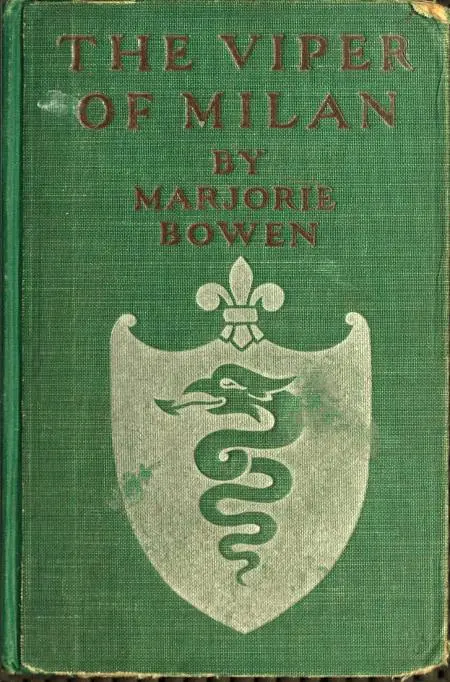
THE CLASSIC COLLECTION · 1906
"The Viper of Milan: A Romance of Lombardy" by Marjorie Bowen is a historical novel written in the early 20th century. Set in the tumultuous and politically charged environment of 14th-century Italy, the narrative focuses on the rise of Gian Galeazzo Maria Visconti, the Duke of Milan, and intertwines themes of tyranny, romance, and rebellion. The story follows characters caught in the gripping turmoil of their time, particularly highlighting the experiences of young travelers Tomaso and Vittore, as well as the infamous Visconti family. At the start of the novel, readers are introduced to the beauty of Lombardy, juxtaposed with the stark reality of peasant life under the oppressive rule of the Visconti. The opening scene captures a moment of tension as a cavalcade led by the Duke passes a group of downtrodden peasants, eliciting fear and awe. Young Tomaso is injured during a harrowing encounter with the Duke's enforcers, thrusting his cousin Vittore into a desperate search for help. The visceral emotions of hopelessness and longing for freedom set the tone for the unfolding drama, while establishing the malevolent presence of the Visconti as a catalyst for the characters' struggles.
Introduction adapted from the source catalogue; source summaries may be automatically generated.
Free to read · English · 96,562 words · No account needed
MAKE TIME FOR A GOOD BOOK
On by default. Untick to stop anonymous reading totals. Each page counts after 10 seconds in view. How this works.
Anonymous counting is on unless you have switched it off.
"It was a miracle, was it not?" said Tomaso eagerly. "He has come to join us. He owes thee thanks, Messer Francisco, as do we."
And all this time his father had not spoken. Tomaso wondered at it, and now, when Ligozzi came forward shrinkingly, Francisco raised his hand as if to keep him back, or warn him, or restrain.
"No thanks are needed," he said quickly. "I am Francisco di Coldra, from Verona, and ever ready to serve those whom Visconti hates!"
Ligozzi stood bare-headed, as if dazed.
Francisco spoke again, with meaning. "Thy travel hath confused thee, sir," he said; "thou thinkest thou art still at the Duke of Verona's court, that thou standest thus humble?"
At this, Ligozzi roused himself. "Tomaso has told me--" he began. But again Francisco stopped him.
"We must to horse!" he cried. "To horse! Too much time has already been shamelessly wasted," and he strode out, motioning to them to follow.
By the horses stood Conrad Sigismund, bringing them one by one under review, in the scanty gleam of light afforded by the lantern, and that flickered upon them through the space that answered for a window.
"A roan!" he cried gaily, "I ever loved a roan charger. I will have this one, Francisco." He spoke airily, as if ten minutes since Francisco had not lashed him with his tongue, and threatened him even with death, should his foolhardiness endanger them again.
"Thou wilt ride the black," said Francisco coldly.
"Because I love the roan?" asked the other with a laugh.
"Because I say so," returned Francisco.
A mocking answer rose to Conrad's lips, but it was never spoken. With a gesture, Francisco motioned him to silence. He turned and listened.
"Horses! And coming hither!" he said. "Soldiers!"
The others, grouped close by, ready to mount, stopped paralyzed--yes, Francisco's ears had caught the sound aright, the tramp of horsemen, and coming upon them from the road.
Escape with horses any other way there was none, though Conrad madly urged they should mount and fly.
But Francisco turned on him threateningly.
"Am I to run thee through?" he said; "these horses mean more to me than thy life, or my own. Where shall we ride? Into the water? No, go back into the hut." He turned to Ligozzi. "Aid me tether these beasts where they may be unnoticed. These men perchance are only riding through."
It was done in silence and with expedition. The soldiers' voices were now plain, and the jangle of their arms.
Your reading position is saved on this browser. Take it to another device with a library code. Reading pages adapt to text, rather than matching a printed edition.
Marjorie Bowen
Marjorie Bowen
Marjorie Bowen
Marjorie Bowen
BEHIND THE BOOK
This eBook is for the use of anyone anywhere in the United States and most other parts of the world at no cost and with almost no restrictions whatsoever. You may copy it, give it away or re-use it under the terms of the Project Gutenberg License included with this eBook or online at www.gutenberg.org. If you are not located in the United States, you will have to check the laws of the country where you are located before using this eBook. Read the source licence.
The original source file, including credits and licence, is retained by this library. Request an original-format copy at no charge. Please include the book title and Project Gutenberg identifier #48963.
KEEP YOUR CURIOSITY GOING
Cécile Tormay

Moritz Busch
Coulson Kernahan
John L. Ransom

Maurice Baring
Frances Wright