THE CLASSIC COLLECTION✦The Countess FannyCLASSIC FREE BOOKS
The Countess Fanny
Marjorie Bowen
THE CLASSIC COLLECTION · 1906
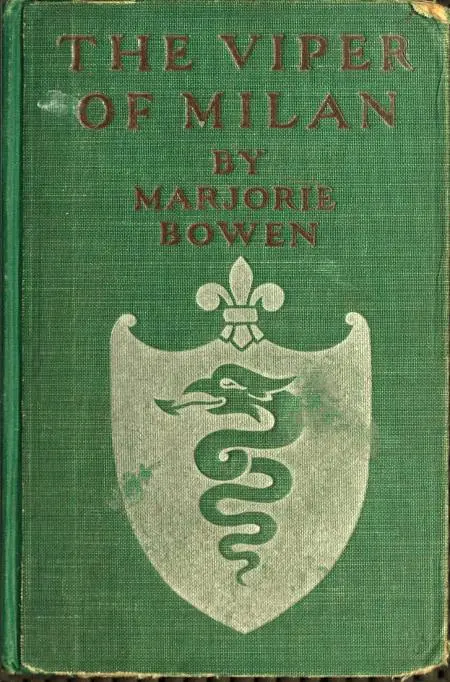
"The Viper of Milan: A Romance of Lombardy" by Marjorie Bowen is a historical novel written in the early 20th century. Set in the tumultuous and politically charged environment of 14th-century Italy, the narrative focuses on the rise of Gian Galeazzo Maria Visconti, the Duke of Milan, and intertwines themes of tyranny, romance, and rebellion. The story follows characters caught in the gripping turmoil of their time, particularly highlighting the experiences of young travelers Tomaso and Vittore, as well as the infamous Visconti family. At the start of the novel, readers are introduced to the beauty of Lombardy, juxtaposed with the stark reality of peasant life under the oppressive rule of the Visconti. The opening scene captures a moment of tension as a cavalcade led by the Duke passes a group of downtrodden peasants, eliciting fear and awe. Young Tomaso is injured during a harrowing encounter with the Duke's enforcers, thrusting his cousin Vittore into a desperate search for help. The visceral emotions of hopelessness and longing for freedom set the tone for the unfolding drama, while establishing the malevolent presence of the Visconti as a catalyst for the characters' struggles.
Introduction adapted from the source catalogue; source summaries may be automatically generated.
Free to read · English · 96,562 words · No account needed
MAKE TIME FOR A GOOD BOOK
On by default. Untick to stop anonymous reading totals. Each page counts after 10 seconds in view. How this works.
Anonymous counting is on unless you have switched it off.
"The Lady Valentine," he said, following his own train of thought, rather than addressing his companion, "does she ever think of me?"
Tomaso inwardly wondered how much he thought of her. Save when telling his tale to Francisco, this was the only time he had named her. It seemed as if his sufferings and his love alike were to lie lightly on his mind.
"They say in Milan Lady Valentine is to marry the Duke of Orleans,"
Tomaso ventured presently.
"They say!" echoed Conrad with scorn. "The Frenchman is not even yet in Italy. Much may have happened ere he is."
Tomaso rose and looked from the doorway anxiously.
"It is close on sundown," he said, "it is time Francisco came."
"It is intolerably wearisome," yawned Conrad. "I would I had gone with our friend--'twould have been more enlivening than this."
Tomaso's face ill concealed his scorn.
"'Tis a matter of life and death, Count Conrad; even now the soldiers
may at any time return."
With a pleasant smile Von Schulembourg leaped from the table.
"Pardon me, if I vex thee with my seeming carelessness," he said, with the charm of manner that could always win him friends. "I owe too large a debt to all of you, to really be so heedless as I seem; but methinks there is no single thing----"
"Save keep ourselves in readiness, my lord," said Tomaso. "Francisco charged us to be so disposed that we could leap into the saddle without a breath's delay."
"I remember," said Count Conrad, lapsing again into an idle mood. "Methinks our Veronese deliverer issues commands as if well used to it."
The youth made no reply; he was gazing eagerly along the chestnut-bordered path, sorely impatient for Francisco's return.
"Canst thou play chess?" asked Conrad suddenly.
Tomaso looked around at him in surprise. Did the German noble jest?
Von Schulembourg was again seated on the table, admiring his shapely hand, which he held against the light.
"Play chess?" repeated Tomaso. "No, my lord."
Count Conrad crossed his legs daintily and sighed.
"It were a splendid chance to teach thee--had we but the men. Thou hast read old romance, boy? And must remember how the knights and ladies play at chess? 'Tis a royal game."
He sighed again, and glanced with disdain down at his leather doublet.
"Yet 'twere strange to play chess in this garb," he added, and kicked the table with his heels in discontent.
Silence again fell, Tomaso still at the door, unheeding of the Count's complaints, watching anxiously through the gathering dusk.
Your reading position is saved on this browser. Take it to another device with a library code. Reading pages adapt to text, rather than matching a printed edition.
Marjorie Bowen
Marjorie Bowen
Marjorie Bowen
Marjorie Bowen
BEHIND THE BOOK
This eBook is for the use of anyone anywhere in the United States and most other parts of the world at no cost and with almost no restrictions whatsoever. You may copy it, give it away or re-use it under the terms of the Project Gutenberg License included with this eBook or online at www.gutenberg.org. If you are not located in the United States, you will have to check the laws of the country where you are located before using this eBook. Read the source licence.
The original source file, including credits and licence, is retained by this library. Request an original-format copy at no charge. Please include the book title and Project Gutenberg identifier #48963.
KEEP YOUR CURIOSITY GOING
Cécile Tormay

Moritz Busch
Coulson Kernahan
John L. Ransom

Maurice Baring
Frances Wright