THE CLASSIC COLLECTION✦The Countess FannyCLASSIC FREE BOOKS
The Countess Fanny
Marjorie Bowen
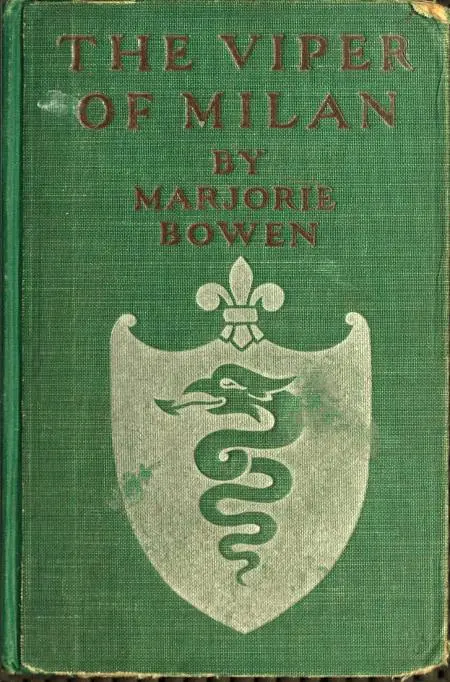
THE CLASSIC COLLECTION · 1906
"The Viper of Milan: A Romance of Lombardy" by Marjorie Bowen is a historical novel written in the early 20th century. Set in the tumultuous and politically charged environment of 14th-century Italy, the narrative focuses on the rise of Gian Galeazzo Maria Visconti, the Duke of Milan, and intertwines themes of tyranny, romance, and rebellion. The story follows characters caught in the gripping turmoil of their time, particularly highlighting the experiences of young travelers Tomaso and Vittore, as well as the infamous Visconti family. At the start of the novel, readers are introduced to the beauty of Lombardy, juxtaposed with the stark reality of peasant life under the oppressive rule of the Visconti. The opening scene captures a moment of tension as a cavalcade led by the Duke passes a group of downtrodden peasants, eliciting fear and awe. Young Tomaso is injured during a harrowing encounter with the Duke's enforcers, thrusting his cousin Vittore into a desperate search for help. The visceral emotions of hopelessness and longing for freedom set the tone for the unfolding drama, while establishing the malevolent presence of the Visconti as a catalyst for the characters' struggles.
Introduction adapted from the source catalogue; source summaries may be automatically generated.
Free to read · English · 96,562 words · No account needed
MAKE TIME FOR A GOOD BOOK
On by default. Untick to stop anonymous reading totals. Each page counts after 10 seconds in view. How this works.
Anonymous counting is on unless you have switched it off.
"I take him for what he calls himself," the boy replied. "I owe him my life. I would die to serve him, nor would I question him."
"But would remind me that I owe him something too?" laughed Conrad. "When the time comes to show it, I shall not prove ungrateful."
He seated himself on the table, and idly swinging his legs, looked around the hut with lazy distaste and seemed to think of dozing.
"Remember we travel to-night, my lord," said Tomaso, annoyed at such
indifference.
"If our good friend gets the horses."
"There is no 'if,' unless we wish to perish," flashed Tomaso. "If Francisco gets no horses, we must from here on foot."
"I do not oppose it. Rather than be taken into Milan, I will travel on foot in any other direction till I drop," laughed the Count.
"Thou takest it lightly, my lord," said Tomaso, "thou dost not seem as eager for revenge as thou wert. Think of the death Visconti doomed thee to. Thou hast great wrongs to right--wilt thou not return to Milan to avenge them? Or wilt thou ride away and forget?"
The laugh faded from Count Conrad's face, and his eyes flashed.
"No, Tomaso, I shall not forget," he said; "too well do I recall that night when I crept down the palace steps with my Lady Valentine. Visconti met us; parted us; ah, when I think of her face!--she was forced back to the horror of her life again: I, carried off to die of slow starvation in my own villa. Yes, yes; if his wrongs are like mine, Francisco did well the other night when we dashed on Milan; such wrongs put madness into one. Think of it, Tomaso; bound, gagged, half-crazed at the misfortune, I was hurried hither, secretly, at night, to be left to a dog's death in my own villa. Death was what I expected, but I nerved myself to meet it as a noble should. There is a long low room in yonder villa, with narrow windows I could scarce get my hand through--all of stone, and meant for cool in summer heat; into this I was forced, unbound, left with mock ceremony, and the door locked upon me. Ah! the sound of that key, Tomaso; they seemed to turn it in my heart, for I guessed its meaning. I had heard too often of Visconti letting his prisoners die of hunger, and, as I listened to the soldiers' footsteps fading in the distance, the cold horror of the truth seized my heart. At first it seemed impossible that I could starve in my own dwelling. I mocked my fears; I could force, I could break the window! I laugh now at my own absurdities. I could do neither, I could do nothing! Terrible hours followed, Tomaso, terrible hours and terrible days. Still I would not own the truth, and still, as no one came, I knew it to be true! I thought of the Lady Valentine, and wondered what her fate might be. I thought of Germany, and wept to think I should never see it more! Then one evening, as I lay, I think, half-senseless, I heard the key turn in the lock, and Visconti entered, followed by Giannotto; two white hounds slunk at his heels: well I remember. Dear Lord! I was fallen so low in my misery, I fell at his feet and begged for mercy, for pity, or speedy death! And he--smiled on me, and bade Giannotto bring food!
Your reading position is saved on this browser. Take it to another device with a library code. Reading pages adapt to text, rather than matching a printed edition.
Marjorie Bowen
Marjorie Bowen
Marjorie Bowen
Marjorie Bowen
BEHIND THE BOOK
This eBook is for the use of anyone anywhere in the United States and most other parts of the world at no cost and with almost no restrictions whatsoever. You may copy it, give it away or re-use it under the terms of the Project Gutenberg License included with this eBook or online at www.gutenberg.org. If you are not located in the United States, you will have to check the laws of the country where you are located before using this eBook. Read the source licence.
The original source file, including credits and licence, is retained by this library. Request an original-format copy at no charge. Please include the book title and Project Gutenberg identifier #48963.
KEEP YOUR CURIOSITY GOING
Cécile Tormay

Moritz Busch
Coulson Kernahan
John L. Ransom

Maurice Baring
Frances Wright