THE CLASSIC COLLECTION✦The Countess FannyCLASSIC FREE BOOKS
The Countess Fanny
Marjorie Bowen
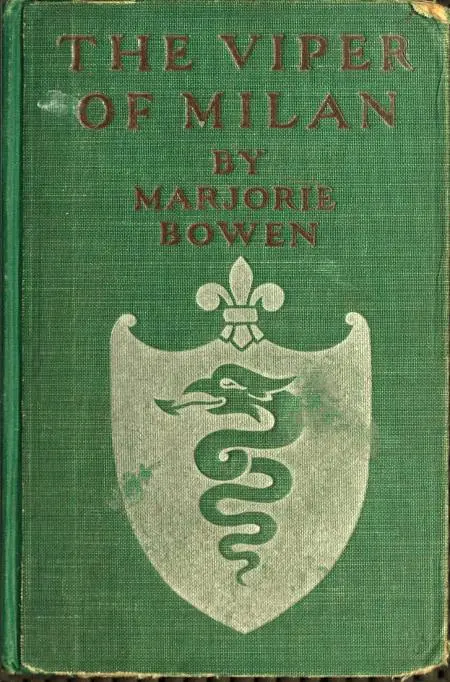
THE CLASSIC COLLECTION · 1906
"The Viper of Milan: A Romance of Lombardy" by Marjorie Bowen is a historical novel written in the early 20th century. Set in the tumultuous and politically charged environment of 14th-century Italy, the narrative focuses on the rise of Gian Galeazzo Maria Visconti, the Duke of Milan, and intertwines themes of tyranny, romance, and rebellion. The story follows characters caught in the gripping turmoil of their time, particularly highlighting the experiences of young travelers Tomaso and Vittore, as well as the infamous Visconti family. At the start of the novel, readers are introduced to the beauty of Lombardy, juxtaposed with the stark reality of peasant life under the oppressive rule of the Visconti. The opening scene captures a moment of tension as a cavalcade led by the Duke passes a group of downtrodden peasants, eliciting fear and awe. Young Tomaso is injured during a harrowing encounter with the Duke's enforcers, thrusting his cousin Vittore into a desperate search for help. The visceral emotions of hopelessness and longing for freedom set the tone for the unfolding drama, while establishing the malevolent presence of the Visconti as a catalyst for the characters' struggles.
Introduction adapted from the source catalogue; source summaries may be automatically generated.
Free to read · English · 96,562 words · No account needed
MAKE TIME FOR A GOOD BOOK
On by default. Untick to stop anonymous reading totals. Each page counts after 10 seconds in view. How this works.
Anonymous counting is on unless you have switched it off.
Making no way for Tisio, and motioning curtly to his men, he strode up the stairs, a stalwart figure, overdressed in splendid armor, and swung into the antechamber of the Visconti's audience-room. It was deserted. Alberic, astonished, paused on the threshold, looking around in amazement for the crowd--courtiers, servants, seekers, soldiers--wont to fill it.
Opposite was the closed door of the Visconti's room, but even Alberic dare not knock there unannounced. He was turning away to seek enlightenment, when a dark form he had passed unnoticed in the distant shadows of the great room rose, and he recognized, as it advanced, the secretary's stooping figure.
"What has happened here?" demanded the soldier.
"Is there need to ask?" answered Giannotto. "The Duke has had the room cleared. He will see no one." Alberic half-laughed, and shrugged his shoulders.
"The madness is on him at Count von Schulembourg's escape. Is that it?" he asked. "But art even thou excluded?" he continued in surprise, for Giannotto was the one man who could come and go unannounced, unbidden, the one man who knew Visconti's secrets.
The secretary smiled, the slow smile that men's lips learned in the
Visconti palace.
"It is best for the Duke to be alone, and for me that he should be," he said. "The news that Count Conrad has escaped hath galled him much; it came at a bad moment too, following on those parchments twice found within the grounds"--he paused. "Thou wert sent to find the writer, or the one who put them there; art thou successful?"
Alberic shook his head. "I return as I went. Beyond finding that doorway forced in the wall, messer secretary, there is no token whatsoever of how the Count escaped. But after so long a fast, messer," Alberic showed his teeth, "it is not likely that it was alone."
"The one who aided him is he who inscribed those parchments?"
"'Twould seem so," answered Alberic. "We have searched anew among the huts from which we drove Count Conrad's German dogs; on the threshold of the largest there was--this."
He drew out of his breast a parchment, a long narrow strip, scrawled across in irregular writing, and handed it to Giannotto.
"What does it say?" he asked.
Giannotto glanced at it hastily, his eyes on the Duke's door.
He read, "Della Scala lives!"
The captain whistled softly. "Now, thou may'st hand that to the Duke
instead of me," he said.
Giannotto searched the writing keenly. "Della Scala cannot live; 'tis some trick of the Torriani."
Alberic laughed harshly. "Whate'er it be, I say thou shalt have the pleasure of showing it the Duke!"
Your reading position is saved on this browser. Take it to another device with a library code. Reading pages adapt to text, rather than matching a printed edition.
Marjorie Bowen
Marjorie Bowen
Marjorie Bowen
Marjorie Bowen
BEHIND THE BOOK
This eBook is for the use of anyone anywhere in the United States and most other parts of the world at no cost and with almost no restrictions whatsoever. You may copy it, give it away or re-use it under the terms of the Project Gutenberg License included with this eBook or online at www.gutenberg.org. If you are not located in the United States, you will have to check the laws of the country where you are located before using this eBook. Read the source licence.
The original source file, including credits and licence, is retained by this library. Request an original-format copy at no charge. Please include the book title and Project Gutenberg identifier #48963.
KEEP YOUR CURIOSITY GOING
Cécile Tormay

Moritz Busch
Coulson Kernahan
John L. Ransom

Maurice Baring
Frances Wright