THE CLASSIC COLLECTION✦The Countess FannyCLASSIC FREE BOOKS
The Countess Fanny
Marjorie Bowen
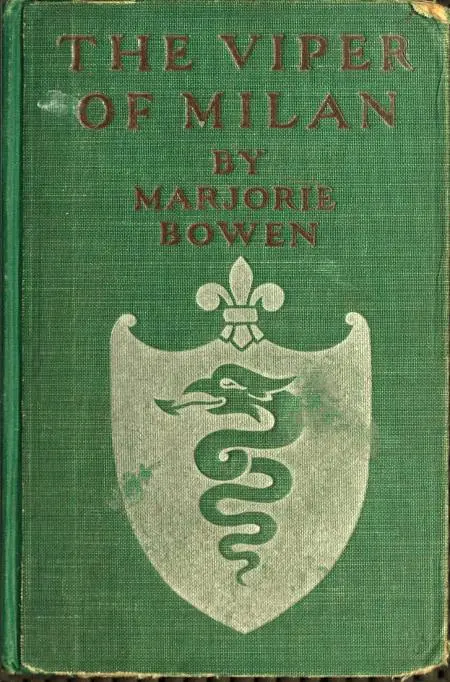
THE CLASSIC COLLECTION · 1906
"The Viper of Milan: A Romance of Lombardy" by Marjorie Bowen is a historical novel written in the early 20th century. Set in the tumultuous and politically charged environment of 14th-century Italy, the narrative focuses on the rise of Gian Galeazzo Maria Visconti, the Duke of Milan, and intertwines themes of tyranny, romance, and rebellion. The story follows characters caught in the gripping turmoil of their time, particularly highlighting the experiences of young travelers Tomaso and Vittore, as well as the infamous Visconti family. At the start of the novel, readers are introduced to the beauty of Lombardy, juxtaposed with the stark reality of peasant life under the oppressive rule of the Visconti. The opening scene captures a moment of tension as a cavalcade led by the Duke passes a group of downtrodden peasants, eliciting fear and awe. Young Tomaso is injured during a harrowing encounter with the Duke's enforcers, thrusting his cousin Vittore into a desperate search for help. The visceral emotions of hopelessness and longing for freedom set the tone for the unfolding drama, while establishing the malevolent presence of the Visconti as a catalyst for the characters' struggles.
Introduction adapted from the source catalogue; source summaries may be automatically generated.
Free to read · English · 96,562 words · No account needed
MAKE TIME FOR A GOOD BOOK
On by default. Untick to stop anonymous reading totals. Each page counts after 10 seconds in view. How this works.
Anonymous counting is on unless you have switched it off.
"Say rather that his altar-piece draws him away from thee," laughed the painter, "and thou wilt be nearer to the truth. The altar-piece has all his time; thou but a few meager hours a week! Still, they love each other, messer, and are happy, so we never care whether Ambrogio paint well or ill." Graziosa seated herself under the blue sail, and looked up with radiant eyes.
"I am very happy," she laughed softly, "so never mind whether he paint the best or the second best in Italy."
The painter grasped the oars and pushed out into the stream: "Good-bye," he called, and Graziosa waved a hand; then something in the stranger's aspect made the little painter pause again.
"Gladly would we offer our poor hospitality, messer," he said, "only the gates are sternly barred to any stranger...." But Graziosa, glancing also at the strong, commanding figure, and the stern set face, checked her father's impulse.
"We are too humble, father," she said gently, "but if there were any service we could render, any message--? We live at the sign of Lo Scudo, the armorer's, near to the western gate."
"I will remember it," said Francisco simply.
Graziosa drew her blue cloth hood about her smiling face, and, with gentle strokes from the painter's paddle, the boat disappeared.
When Francisco found himself alone again, momentary misgiving seized him that he had lost an opportunity.
Could these folk have been of service? They were of a sort unknown to him; courtiers, soldiers, burghers, merchants, with all such he was at home, but these plebeians of kindly natures and good speech, of humble rank and careless happiness, were new to him. The painter's talk of his craft had had no meaning for Francisco, it had passed from his mind for craziness; but the girl had said they dwelt near the western gate--could they perchance have been of service? But presently he dismissed the notion; they were too simple for his purpose.
Raging in the pain of rekindled memory and present helplessness,
Francisco paced to and fro, waiting for Vittore's figure in the
distance.
Suddenly his eyes rested again on the great clump of yellow lichen, and
he stopped, arrested.
In the midst of it he had seen something that interested him, something very much its color, but not quite its kind.
He approached, and thrusting his hand in among the great tufts, touched the rusty iron of a disused bolt. There was a door here, then, that led into the grounds of the deserted villa!
Francisco's heart beat strongly.
Your reading position is saved on this browser. Take it to another device with a library code. Reading pages adapt to text, rather than matching a printed edition.
Marjorie Bowen
Marjorie Bowen
Marjorie Bowen
Marjorie Bowen
BEHIND THE BOOK
This eBook is for the use of anyone anywhere in the United States and most other parts of the world at no cost and with almost no restrictions whatsoever. You may copy it, give it away or re-use it under the terms of the Project Gutenberg License included with this eBook or online at www.gutenberg.org. If you are not located in the United States, you will have to check the laws of the country where you are located before using this eBook. Read the source licence.
The original source file, including credits and licence, is retained by this library. Request an original-format copy at no charge. Please include the book title and Project Gutenberg identifier #48963.
KEEP YOUR CURIOSITY GOING
Cécile Tormay

Moritz Busch
Coulson Kernahan
John L. Ransom

Maurice Baring
Frances Wright