THE CLASSIC COLLECTION✦The Countess FannyCLASSIC FREE BOOKS
The Countess Fanny
Marjorie Bowen
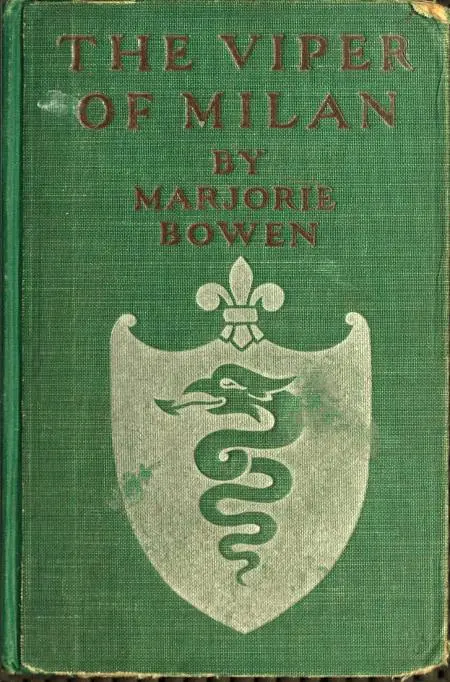
THE CLASSIC COLLECTION · 1906
"The Viper of Milan: A Romance of Lombardy" by Marjorie Bowen is a historical novel written in the early 20th century. Set in the tumultuous and politically charged environment of 14th-century Italy, the narrative focuses on the rise of Gian Galeazzo Maria Visconti, the Duke of Milan, and intertwines themes of tyranny, romance, and rebellion. The story follows characters caught in the gripping turmoil of their time, particularly highlighting the experiences of young travelers Tomaso and Vittore, as well as the infamous Visconti family. At the start of the novel, readers are introduced to the beauty of Lombardy, juxtaposed with the stark reality of peasant life under the oppressive rule of the Visconti. The opening scene captures a moment of tension as a cavalcade led by the Duke passes a group of downtrodden peasants, eliciting fear and awe. Young Tomaso is injured during a harrowing encounter with the Duke's enforcers, thrusting his cousin Vittore into a desperate search for help. The visceral emotions of hopelessness and longing for freedom set the tone for the unfolding drama, while establishing the malevolent presence of the Visconti as a catalyst for the characters' struggles.
Introduction adapted from the source catalogue; source summaries may be automatically generated.
Free to read · English · 96,562 words · No account needed
MAKE TIME FOR A GOOD BOOK
On by default. Untick to stop anonymous reading totals. Each page counts after 10 seconds in view. How this works.
Anonymous counting is on unless you have switched it off.
The rower was a dark-haired man of middle age, clothed in a plain brown robe. Lean and vivacious, eager-eyed, he appeared one of those people who are always talking and moving; even seated and rowing he gave the impression of restlessness; of the good humor common to the people too. His companion was a young girl dressed in a simple blue gown. She was a delicate blonde, very young, very slender; the curls of her amber hair were blown across a round dimpled face; eyes of a dancing blue; a sweet small mouth curled in laughter, a fine chin and throat, a slack young figure. This was her principal characteristic, the floating yellow hair like a veil about her.
Coming abreast of Francisco, the man paused on his oars with a friendly
greeting.
"Good day, messer," he called. "So thou hast found our secret haunt. Graziosa and I had thought this place our own," and as he spoke he waved his hand around him at the water.
The boat rocked now alongside the path, and Francisco courteously
approached.
"I am a stranger here," he said.
The other glanced at him anew, and with the awakening of a little
friendly wonder.
"A stranger? Ah, then, this is new to thee--this most beautiful part of Italy. I assure thee," he continued excitedly, "I have been through the fairest parts of Tuscany, I have wandered about Naples, but never have I seen such colors, such lights as here!" Again he waved his all-inclusive hand. "Thou, messer, as a stranger, must see how wonderfully fair it is?"
He paddled the boat nearer among the reeds in his eagerness to obtain
new sympathy.
"I have not been used to judge lands by their beauty," returned Francisco. "Yet methinks I have seen spots as beautiful and easier to hold in time of need."
The other twisted his mouth in contempt. The girl leaned forward, laughing. "You forget, father," she said, "everyone is not a painter."
But the little man, as if he had found a sudden mission, secured the boat, and, still in silence, stepped ashore, helping his daughter to follow him. Francisco, preoccupied and mistrustful, saw this with uneasiness, and would gladly have withdrawn. Moreover, the smiling face of the happy girl was an added sting to a burning thought.
The enthusiast, however, had no idea of giving up a possible convert, and swept aside the other's protestations while he commenced pointing out the beauties of the yellow lichen against the villa wall, the sight of which had restored all his good humor.
"See!" he exclaimed. "How bright it is! See the contrast of the yew--so brilliant, yet so in harmony, so--you do not paint?"
Your reading position is saved on this browser. Take it to another device with a library code. Reading pages adapt to text, rather than matching a printed edition.
Marjorie Bowen
Marjorie Bowen
Marjorie Bowen
Marjorie Bowen
BEHIND THE BOOK
This eBook is for the use of anyone anywhere in the United States and most other parts of the world at no cost and with almost no restrictions whatsoever. You may copy it, give it away or re-use it under the terms of the Project Gutenberg License included with this eBook or online at www.gutenberg.org. If you are not located in the United States, you will have to check the laws of the country where you are located before using this eBook. Read the source licence.
The original source file, including credits and licence, is retained by this library. Request an original-format copy at no charge. Please include the book title and Project Gutenberg identifier #48963.
KEEP YOUR CURIOSITY GOING
Cécile Tormay

Moritz Busch
Coulson Kernahan
John L. Ransom

Maurice Baring
Frances Wright