THE CLASSIC COLLECTION✦The Countess FannyCLASSIC FREE BOOKS
The Countess Fanny
Marjorie Bowen
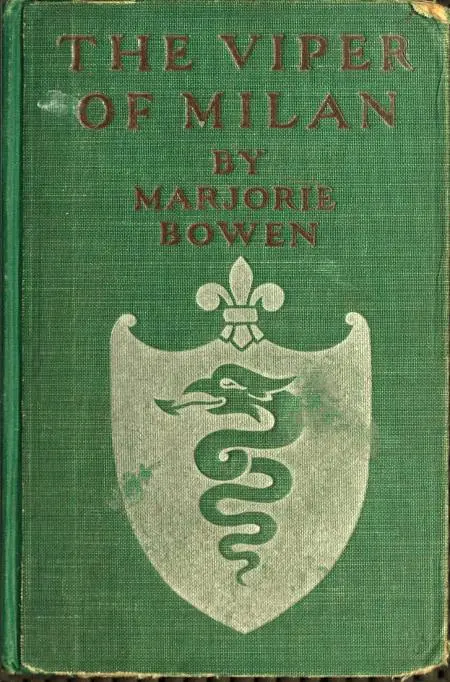
THE CLASSIC COLLECTION · 1906
"The Viper of Milan: A Romance of Lombardy" by Marjorie Bowen is a historical novel written in the early 20th century. Set in the tumultuous and politically charged environment of 14th-century Italy, the narrative focuses on the rise of Gian Galeazzo Maria Visconti, the Duke of Milan, and intertwines themes of tyranny, romance, and rebellion. The story follows characters caught in the gripping turmoil of their time, particularly highlighting the experiences of young travelers Tomaso and Vittore, as well as the infamous Visconti family. At the start of the novel, readers are introduced to the beauty of Lombardy, juxtaposed with the stark reality of peasant life under the oppressive rule of the Visconti. The opening scene captures a moment of tension as a cavalcade led by the Duke passes a group of downtrodden peasants, eliciting fear and awe. Young Tomaso is injured during a harrowing encounter with the Duke's enforcers, thrusting his cousin Vittore into a desperate search for help. The visceral emotions of hopelessness and longing for freedom set the tone for the unfolding drama, while establishing the malevolent presence of the Visconti as a catalyst for the characters' struggles.
Introduction adapted from the source catalogue; source summaries may be automatically generated.
Free to read · English · 96,562 words · No account needed
MAKE TIME FOR A GOOD BOOK
On by default. Untick to stop anonymous reading totals. Each page counts after 10 seconds in view. How this works.
Anonymous counting is on unless you have switched it off.
"I cannot tell, only there is a dead lady in the garden; she is laid as if sleeping on the grass, quite dead."
Visconti rose so suddenly that the sweep of his long sleeve sent the glasses crashing to the ground, and made Arezzo start.
"It is Isotta d'Este!" he cried. "Mastino's wife!"
"Isotta dead?" cried de Lana, and the words echoed around the room. "How should she be here, and dead?"
"The dead only can answer you," said Visconti. "Now I can recall what 'twas Mastino said--something about her! Still, it may not be his duchess. As you say, how should she be dead, and here?"
"How should she be dead?" asked de Lana again. "Yet truly what else----" he paused, keeping back his words, and his glance met the secretary's.
Giannotto was remembering something: the figure of Visconti standing sullen, with a moody face, thinking on another dead woman; "Had she lived I would not have done it!" he had said. The secretary rose; now he understood.
In this triumphant Visconti there was no sign of the spirit that had prompted that murmur, but the secretary understood.
Close behind Giannotto was a fresco painting, a panel between the windows--St Sebastian in a glory, smiling, transfixed with arrows, brilliant against a background of blue.
Giannotto, standing there half-dazed with his new thought, noticed it, and clutched the wooden ribbing underneath with something like a prayer on his lips. Might the saints and martyrs remember to him he had had no share in this!
Visconti turned to leave the table, and with a clinking of armor and a dazzling display of scarlet and blue the nobles moved back; the sunshine was now golden and filling the room.
"Can he be going to look at her?" thought the secretary, dully; then, stumbling over something as he moved forward, he glanced down and started. The next moment he looked round sharply to see if any eye was upon him, stooped quickly, and picked it up.
It was a little stiletto, a thing dropped, perhaps last night, and overlooked, a tiny thing with a long, glittering blade. Giannotto slipped it into his dress, he hardly knew why--it gave him a feeling of security; it was a long time since Visconti's secretary had been armed, even by so much as this.
"With good horses," said Visconti, drawing on his gloves, "we reach
Magenta--when, de Lana?"
"In two days, my lord."
"And Turin?"
"If there is no resistance----" began de Lana.
Visconti laughed.
"Resistance? Lombardy is ours, my good de Lana! Resistance----"
"Is hardly wise," put in da Ribera.
"And quite useless," said della Torre, with a low bow.
Your reading position is saved on this browser. Take it to another device with a library code. Reading pages adapt to text, rather than matching a printed edition.
Marjorie Bowen
Marjorie Bowen
Marjorie Bowen
Marjorie Bowen
BEHIND THE BOOK
This eBook is for the use of anyone anywhere in the United States and most other parts of the world at no cost and with almost no restrictions whatsoever. You may copy it, give it away or re-use it under the terms of the Project Gutenberg License included with this eBook or online at www.gutenberg.org. If you are not located in the United States, you will have to check the laws of the country where you are located before using this eBook. Read the source licence.
The original source file, including credits and licence, is retained by this library. Request an original-format copy at no charge. Please include the book title and Project Gutenberg identifier #48963.
KEEP YOUR CURIOSITY GOING
Cécile Tormay

Moritz Busch
Coulson Kernahan
John L. Ransom

Maurice Baring
Frances Wright