THE CLASSIC COLLECTION✦The Countess FannyCLASSIC FREE BOOKS
The Countess Fanny
Marjorie Bowen
THE CLASSIC COLLECTION · 1906
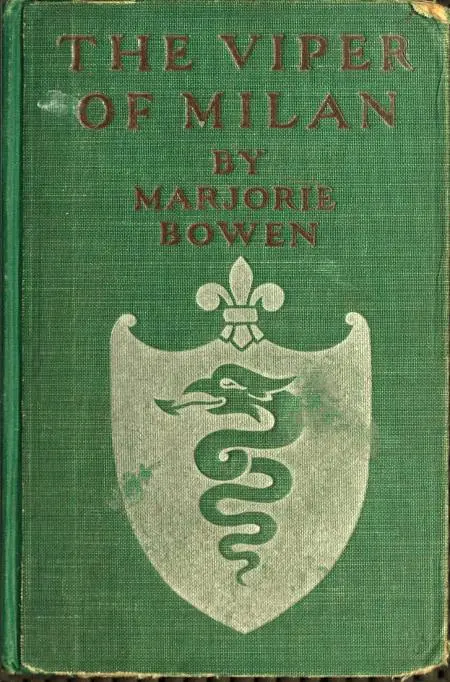
"The Viper of Milan: A Romance of Lombardy" by Marjorie Bowen is a historical novel written in the early 20th century. Set in the tumultuous and politically charged environment of 14th-century Italy, the narrative focuses on the rise of Gian Galeazzo Maria Visconti, the Duke of Milan, and intertwines themes of tyranny, romance, and rebellion. The story follows characters caught in the gripping turmoil of their time, particularly highlighting the experiences of young travelers Tomaso and Vittore, as well as the infamous Visconti family. At the start of the novel, readers are introduced to the beauty of Lombardy, juxtaposed with the stark reality of peasant life under the oppressive rule of the Visconti. The opening scene captures a moment of tension as a cavalcade led by the Duke passes a group of downtrodden peasants, eliciting fear and awe. Young Tomaso is injured during a harrowing encounter with the Duke's enforcers, thrusting his cousin Vittore into a desperate search for help. The visceral emotions of hopelessness and longing for freedom set the tone for the unfolding drama, while establishing the malevolent presence of the Visconti as a catalyst for the characters' struggles.
Introduction adapted from the source catalogue; source summaries may be automatically generated.
Free to read · English · 96,562 words · No account needed
MAKE TIME FOR A GOOD BOOK
On by default. Untick to stop anonymous reading totals. Each page counts after 10 seconds in view. How this works.
Anonymous counting is on unless you have switched it off.
"Had I been in Milan, Barbarossa himself would have burned in the midst of it," said Visconti, sweeping back the glass and silver before him. "The town had weeks to prepare."
"Had you been there, Milan would not have burned at all, my lord!" said
a flattering voice.
"Maybe it would not. It was certainly before the Visconti's rule began," and he looked down the table with a smile at the dark face of Martin della Torre.
"And now the plans, de Lana--Novara to Magenta, Magenta to Vercelli."
He swept the glasses still further back, and spread the parchment de Lana handed him on the colored marble table.
"Vercelli--we hold Vercelli, de Lana?" The officers moved up closer,
leaning over the table.
"We hold Vercelli--and Magenta."
Visconti placed a silver goblet to keep the parchment down, and traced the route with the point of his dagger.
"To Turin--to Cuneo--as near as we dare to the stiff-necked Genoese, and we have circled Piedmont."
"And these same Genoese?"
"Let them keep quiet," said Visconti, sheathing his dagger and leaning back, "and they may keep Genoa; we have larger game in view--the Empire. From the walls of Novara the Alps are to be seen, from the walls of Magenta they hide half the sky, from Turin one may touch them, and so we go closer----"
"And hold the Empire in check," said de Lana, with excited eyes. "Ah, my lord, it was almost worth it----"
Visconti turned to him sharply.
"What do you say, de Lana?"
There was a second's pause. This was the first, even vague, reference to what had happened earlier that same night; it seemed weeks since, and yet the sun had not risen on it.
Visconti looked at de Lana and laughed.
"Almost worth it--almost worth what, de Lana?"
The soldier, recovering himself, returned his glance.
"The extinction of four noble families, my lord."
"Did my lord do it?" cried another.
"Did he ask the d'Estes to burn Novara?"
"No," smiled Visconti. "But had they not, I had done it for them, as I will burn Mantua, and the Gonzagas in it. We will have no seditious spots in the Lombardy I rule. There will be one capital and one ruler," he added sternly. "The d'Estes knew enough to anticipate it."
De Lana was silent.
"And these prisoners, my lord?" asked da Ribera. "What of them?"
"They choke the camp," said another.
"They are partisans of Mastino della Scala, naturally," said Visconti. It was the first time the name had been mentioned, and Visconti's eyes flared to see that there was silence at it.
"Mastino della Scala, I said--they favored him."
"Yes, my lord; him, or the Estes."
Your reading position is saved on this browser. Take it to another device with a library code. Reading pages adapt to text, rather than matching a printed edition.
Marjorie Bowen
Marjorie Bowen
Marjorie Bowen
Marjorie Bowen
BEHIND THE BOOK
This eBook is for the use of anyone anywhere in the United States and most other parts of the world at no cost and with almost no restrictions whatsoever. You may copy it, give it away or re-use it under the terms of the Project Gutenberg License included with this eBook or online at www.gutenberg.org. If you are not located in the United States, you will have to check the laws of the country where you are located before using this eBook. Read the source licence.
The original source file, including credits and licence, is retained by this library. Request an original-format copy at no charge. Please include the book title and Project Gutenberg identifier #48963.
KEEP YOUR CURIOSITY GOING
Cécile Tormay

Moritz Busch
Coulson Kernahan
John L. Ransom

Maurice Baring
Frances Wright