THE CLASSIC COLLECTION✦The Countess FannyCLASSIC FREE BOOKS
The Countess Fanny
Marjorie Bowen
THE CLASSIC COLLECTION · 1906
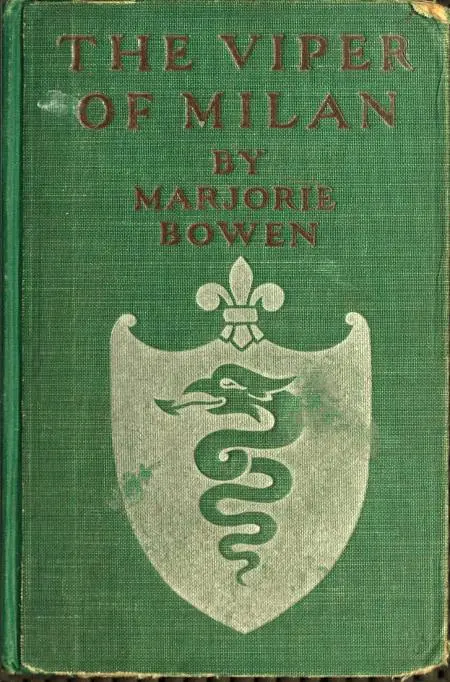
"The Viper of Milan: A Romance of Lombardy" by Marjorie Bowen is a historical novel written in the early 20th century. Set in the tumultuous and politically charged environment of 14th-century Italy, the narrative focuses on the rise of Gian Galeazzo Maria Visconti, the Duke of Milan, and intertwines themes of tyranny, romance, and rebellion. The story follows characters caught in the gripping turmoil of their time, particularly highlighting the experiences of young travelers Tomaso and Vittore, as well as the infamous Visconti family. At the start of the novel, readers are introduced to the beauty of Lombardy, juxtaposed with the stark reality of peasant life under the oppressive rule of the Visconti. The opening scene captures a moment of tension as a cavalcade led by the Duke passes a group of downtrodden peasants, eliciting fear and awe. Young Tomaso is injured during a harrowing encounter with the Duke's enforcers, thrusting his cousin Vittore into a desperate search for help. The visceral emotions of hopelessness and longing for freedom set the tone for the unfolding drama, while establishing the malevolent presence of the Visconti as a catalyst for the characters' struggles.
Introduction adapted from the source catalogue; source summaries may be automatically generated.
Free to read · English · 96,562 words · No account needed
MAKE TIME FOR A GOOD BOOK
On by default. Untick to stop anonymous reading totals. Each page counts after 10 seconds in view. How this works.
Anonymous counting is on unless you have switched it off.
From the street below rose a great uproar; there was some panic among the people; the country folk were pressing through the gates, fire and sword behind them--Visconti was on the march! Wild, frightened screams, and the hurry of feet, rose to the gloomy room, and Vincenzo sprang up; he wished his father had not left him, he wished he were not alone.
For his thoughts were bitter, and hard to bear alone. His life would be different, he thought, if he lived it again: not wasted, flung away. For the first time he felt he loved his father dearly, for the first time he realized how Mastino loved his wife--he understood. Was all knowledge coming to him so late, things to be made clear only to be darkened forever?
Ah, well, it was all over now; there were only a few moments to--what? He shuddered a little--to what? He wished his father would return, passionately he wished it; he did not want to think--for the first time and the last. He stood there with tight-clasped hands, his eyes on the door, holding desperately onto his control.
And at last Ippolito entered, quietly, closing it behind him. He held a missal in his hand, and a parchment. As he laid them on the table, Vincenzo noticed the last was sealed with the seal of Verona, the ladder of the Scaligeri.
"Mastino?" he whispered.
"Mastino is dead," said d'Este, in a calm voice, and he crumpled the
parchment in his hand.
On it was written: "I have betrayed you for Isotta's life," and it was signed with the proudest name in Lombardy--"Mastino Orazio della Scala."
"That shall not destroy the glory of Vincenzo's death," thought d'Este sternly, and he flung it from him, into the room beyond, among the powder--something only fit to be consumed.
The castle within was built largely of wood, and Vincenzo, looking into the darkness with a painful eagerness, watched the powder laid carefully about the walls, extending in a long train to tanks of oil, while fire boughs, dry and leafless, lay scattered thickly. D'Este had not been taken unprepared. Vincenzo's flesh stirred and shrank; he remembered snatching a bat once from the camp fire, and how the pain in his hurt hand had tortured him.
"'Tis a fearful death!" he murmured.
Ippolito turned a drawn face toward him.
"What didst thou say, my son?"
"Naught, father," answered Vincenzo bravely, though his heart was beating hot and thick. "Naught, save that that cannot fail us."
"No, Vincenzo; the wind blows eastward across the town," said d'Este, with a calmness that was almost brutal. "There will be none for Visconti to take back to Milan."
Your reading position is saved on this browser. Take it to another device with a library code. Reading pages adapt to text, rather than matching a printed edition.
Marjorie Bowen
Marjorie Bowen
Marjorie Bowen
Marjorie Bowen
BEHIND THE BOOK
This eBook is for the use of anyone anywhere in the United States and most other parts of the world at no cost and with almost no restrictions whatsoever. You may copy it, give it away or re-use it under the terms of the Project Gutenberg License included with this eBook or online at www.gutenberg.org. If you are not located in the United States, you will have to check the laws of the country where you are located before using this eBook. Read the source licence.
The original source file, including credits and licence, is retained by this library. Request an original-format copy at no charge. Please include the book title and Project Gutenberg identifier #48963.
KEEP YOUR CURIOSITY GOING
Cécile Tormay

Moritz Busch
Coulson Kernahan
John L. Ransom

Maurice Baring
Frances Wright