THE CLASSIC COLLECTION✦The Countess FannyCLASSIC FREE BOOKS
The Countess Fanny
Marjorie Bowen
THE CLASSIC COLLECTION · 1906
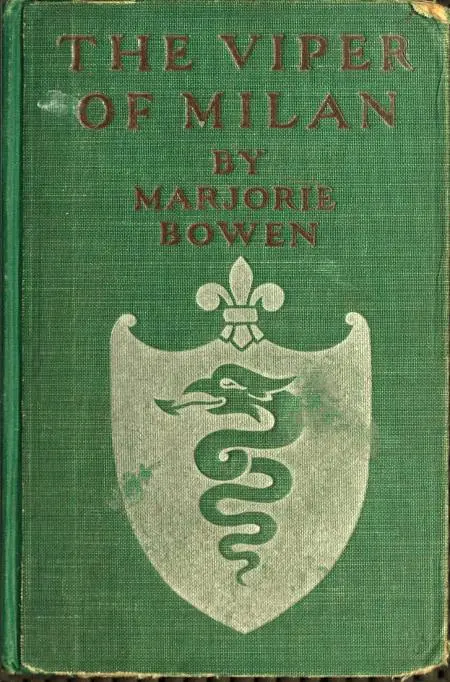
"The Viper of Milan: A Romance of Lombardy" by Marjorie Bowen is a historical novel written in the early 20th century. Set in the tumultuous and politically charged environment of 14th-century Italy, the narrative focuses on the rise of Gian Galeazzo Maria Visconti, the Duke of Milan, and intertwines themes of tyranny, romance, and rebellion. The story follows characters caught in the gripping turmoil of their time, particularly highlighting the experiences of young travelers Tomaso and Vittore, as well as the infamous Visconti family. At the start of the novel, readers are introduced to the beauty of Lombardy, juxtaposed with the stark reality of peasant life under the oppressive rule of the Visconti. The opening scene captures a moment of tension as a cavalcade led by the Duke passes a group of downtrodden peasants, eliciting fear and awe. Young Tomaso is injured during a harrowing encounter with the Duke's enforcers, thrusting his cousin Vittore into a desperate search for help. The visceral emotions of hopelessness and longing for freedom set the tone for the unfolding drama, while establishing the malevolent presence of the Visconti as a catalyst for the characters' struggles.
Introduction adapted from the source catalogue; source summaries may be automatically generated.
Free to read · English · 96,562 words · No account needed
MAKE TIME FOR A GOOD BOOK
On by default. Untick to stop anonymous reading totals. Each page counts after 10 seconds in view. How this works.
Anonymous counting is on unless you have switched it off.
Count Conrad had ridden away. Vincenzo stood silent in the great patch of sunlight that lay along the floor till Conrad's bridle bells were quite lost in the distance; then he turned, with something like a sigh.
He was not alone long--Ippolito re-entered with a calm face, and yet one his son was startled by.
"Count Conrad's news has been confirmed," he said; "a messenger has returned." He paused a moment. "All the country is in Visconti's hands."
"The saints save us!" cried Vincenzo.
"Aye, the saints, for there is no hope in man!"
"We must get arms--and succor into the city----"
Ippolito looked at him with a proud affection.
"Follow me, Vincenzo."
He opened one of the small doors; it led to a twisting flight of steps, and the two mounted in silence.
At the head of the stairway was a chamber used as an outlook
toward--Milan.
"Gaze yonder," said Ippolito, pointing through the narrow arched window.
Vincenzo obeyed, and looking out over the great wide plain, with its white campaniles dazzling in the sunlight, at first saw nothing.
But on the horizon was a silver light, a light that danced and quivered, flecked here and there with red, and dotted about with curious faint smoke wreaths, fires in broad day.
"Visconti's army!" said d'Este. "And those fires the forts and villages Della Scala held--held but yesterday!"
Their doom was in those words and in what they saw; there was no need
for more.
"Santa Maria save us!" murmured Vincenzo, with a blanched face. It was all he said--words were poor, there was little enough time for action, none for comment.
Outside could be heard the steady tramp of the sentries, and the hurry of more soldiers to the walls.
"Do they know?" asked Vincenzo, as they descended.
"The soldiers--yes--they are Modenese. The townsfolk--poor wretches--why
tell them?"
They watched the other chamber, and after a silence Vincenzo spoke
incredulously.
"Conrad said Modena had fallen?"
"It is true," said his father, in a low voice. "And Ferrara--oh!--my
cities!"
Vincenzo gave a little gasp of pain.
"And Verona?"
"That too."
The younger d'Este looked out blankly at the sunshine, all hope faded
from his face.
"And Mastino, father?"
Ippolito was silent, a silence worse than speech. Vincenzo was awed.
"So we are abandoned--defenseless, resistance hopeless! Oh, my lord! my father! We cannot fall into Visconti's hands! We--the Estes!"
Your reading position is saved on this browser. Take it to another device with a library code. Reading pages adapt to text, rather than matching a printed edition.
Marjorie Bowen
Marjorie Bowen
Marjorie Bowen
Marjorie Bowen
BEHIND THE BOOK
This eBook is for the use of anyone anywhere in the United States and most other parts of the world at no cost and with almost no restrictions whatsoever. You may copy it, give it away or re-use it under the terms of the Project Gutenberg License included with this eBook or online at www.gutenberg.org. If you are not located in the United States, you will have to check the laws of the country where you are located before using this eBook. Read the source licence.
The original source file, including credits and licence, is retained by this library. Request an original-format copy at no charge. Please include the book title and Project Gutenberg identifier #48963.
KEEP YOUR CURIOSITY GOING
Cécile Tormay

Moritz Busch
Coulson Kernahan
John L. Ransom

Maurice Baring
Frances Wright