THE CLASSIC COLLECTION✦The Countess FannyCLASSIC FREE BOOKS
The Countess Fanny
Marjorie Bowen
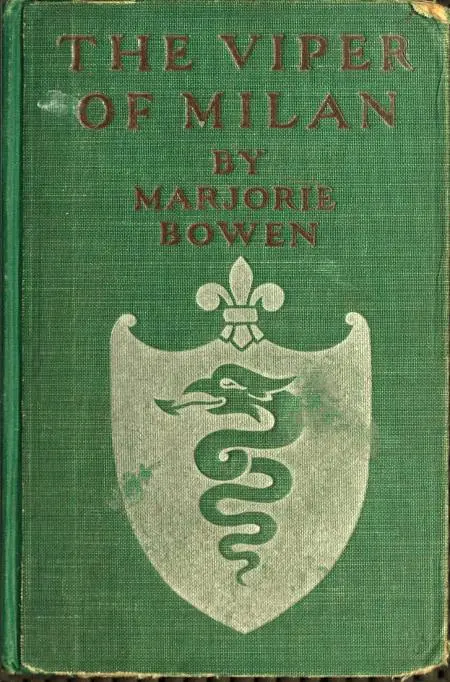
THE CLASSIC COLLECTION · 1906
"The Viper of Milan: A Romance of Lombardy" by Marjorie Bowen is a historical novel written in the early 20th century. Set in the tumultuous and politically charged environment of 14th-century Italy, the narrative focuses on the rise of Gian Galeazzo Maria Visconti, the Duke of Milan, and intertwines themes of tyranny, romance, and rebellion. The story follows characters caught in the gripping turmoil of their time, particularly highlighting the experiences of young travelers Tomaso and Vittore, as well as the infamous Visconti family. At the start of the novel, readers are introduced to the beauty of Lombardy, juxtaposed with the stark reality of peasant life under the oppressive rule of the Visconti. The opening scene captures a moment of tension as a cavalcade led by the Duke passes a group of downtrodden peasants, eliciting fear and awe. Young Tomaso is injured during a harrowing encounter with the Duke's enforcers, thrusting his cousin Vittore into a desperate search for help. The visceral emotions of hopelessness and longing for freedom set the tone for the unfolding drama, while establishing the malevolent presence of the Visconti as a catalyst for the characters' struggles.
Introduction adapted from the source catalogue; source summaries may be automatically generated.
Free to read · English · 96,562 words · No account needed
MAKE TIME FOR A GOOD BOOK
On by default. Untick to stop anonymous reading totals. Each page counts after 10 seconds in view. How this works.
Anonymous counting is on unless you have switched it off.
"Yet she loved me," thought Visconti; and it roused his wrath that he must think of her--the house by the western gate--the sweet face, the white roses.
"Giannotto," he said moodily, "had she lived, I would not have done it--on my soul I would not have done it!"
"Done what, my lord?" asked the startled secretary, looking up at his
dark, musing face.
"Ah, I forgot," said Visconti. "You do not know."
"No news! So many days, and still no news!"
Ippolito d'Este spoke in an anxious voice, leaning in the wide-cut window of the watch-tower that rose above the gates of Novara.
"I would we had not sent those last men," said Vincenzo gloomily.
He was seated at the table, his head resting in his hands. The chamber was large and dark, built of rough stone for strength and defense, fixed with narrow windows, and set with three doors--one into the narrow stairs, standing open, one on either side of it, shut. The walls were bare of arras. Vincenzo's armor lay piled in a corner, and a great crucifix, a red praying hassock beneath, hung near one of the windows.
"How many have we, my father?" asked Vincenzo, rising.
"Six hundred trained soldiers," was the brief answer.
"And the townsfolk?"
"Are the townsfolk," replied d'Este--"and useless."
Novara had been stormed and taken from Visconti some months ago, and the Estes, fixing their headquarters there, had foraged the country around as far as the ramparts of Magenta, a large town held by Visconti's men.
For these last fatal ten days, disaster after disaster had reduced the Modenese soldiers to a mere handful; and when Mastino, sending word he was in desperate straits, had called out all of the Veronese that manned the town, they were left practically defenseless, in the midst of a country where Visconti's arms were everywhere triumphant.
They dared not leave the town; behind its walls was the only chance of safety. They knew not what positions Visconti held, nor what positions Della Scala. Since that last appeal for aid, they had had no message, no sign from him. Scouts sent out had not returned; one company, advancing from the walls, to find no sign or trace of Mastino, was surrounded and cut to pieces--the few who escaped returning to Novara with ghastly tales. Visconti's arms seemed everywhere victorious. The country was laid waste--and not by their allies.
But the Estes' hope was still in Della Scala. Urgent messages were sent to his camp outside Milan, and when neither answer nor messengers returned, the Duke of Modena grew sick at heart indeed.
Your reading position is saved on this browser. Take it to another device with a library code. Reading pages adapt to text, rather than matching a printed edition.
Marjorie Bowen
Marjorie Bowen
Marjorie Bowen
Marjorie Bowen
BEHIND THE BOOK
This eBook is for the use of anyone anywhere in the United States and most other parts of the world at no cost and with almost no restrictions whatsoever. You may copy it, give it away or re-use it under the terms of the Project Gutenberg License included with this eBook or online at www.gutenberg.org. If you are not located in the United States, you will have to check the laws of the country where you are located before using this eBook. Read the source licence.
The original source file, including credits and licence, is retained by this library. Request an original-format copy at no charge. Please include the book title and Project Gutenberg identifier #48963.
KEEP YOUR CURIOSITY GOING
Cécile Tormay

Moritz Busch
Coulson Kernahan
John L. Ransom

Maurice Baring
Frances Wright