THE CLASSIC COLLECTION✦The Countess FannyCLASSIC FREE BOOKS
The Countess Fanny
Marjorie Bowen
THE CLASSIC COLLECTION · 1906
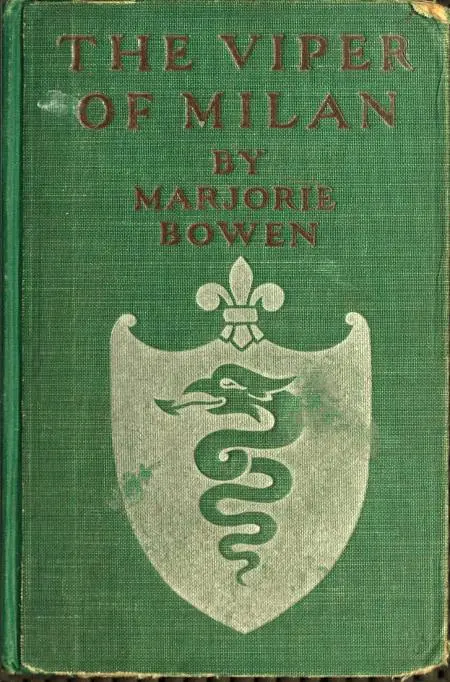
"The Viper of Milan: A Romance of Lombardy" by Marjorie Bowen is a historical novel written in the early 20th century. Set in the tumultuous and politically charged environment of 14th-century Italy, the narrative focuses on the rise of Gian Galeazzo Maria Visconti, the Duke of Milan, and intertwines themes of tyranny, romance, and rebellion. The story follows characters caught in the gripping turmoil of their time, particularly highlighting the experiences of young travelers Tomaso and Vittore, as well as the infamous Visconti family. At the start of the novel, readers are introduced to the beauty of Lombardy, juxtaposed with the stark reality of peasant life under the oppressive rule of the Visconti. The opening scene captures a moment of tension as a cavalcade led by the Duke passes a group of downtrodden peasants, eliciting fear and awe. Young Tomaso is injured during a harrowing encounter with the Duke's enforcers, thrusting his cousin Vittore into a desperate search for help. The visceral emotions of hopelessness and longing for freedom set the tone for the unfolding drama, while establishing the malevolent presence of the Visconti as a catalyst for the characters' struggles.
Introduction adapted from the source catalogue; source summaries may be automatically generated.
Free to read · English · 96,562 words · No account needed
MAKE TIME FOR A GOOD BOOK
On by default. Untick to stop anonymous reading totals. Each page counts after 10 seconds in view. How this works.
Anonymous counting is on unless you have switched it off.
The newcomer laid his hand on Valentine's shoulder, she standing calm and erect, and turned his face to Graziosa.
"From me?" he said, and his voice was very sweet. "From me, Graziosa?"
"Ambrogio! Ambrogio!" cried the girl. "What do you here?"
Valentine would have spoken scornfully, but Visconti turned his eyes on her, and she dared not. The courtyard was full of armed men.
"Ambrogio!" repeated the painter in dismay. "What does this mean?"
Visconti laughed pleasantly, but his hand tightened on his sister's
shoulder.
"It means, thy daughter hath found a lover worthy of her in Visconti."
Visconti! As in a flash the little painter saw explained a thousand things that had perplexed him. Visconti! His quickly working brain had grasped it and summed it up before Graziosa could even realize she heard aright. She stared there silent, with a piteous look upon her face. Visconti turned to his prisoners.
"Take Isotta d'Este back to her prison," he said, curtly, and a group of
soldiers advanced.
Isotta clung to Valentine in an agony.
"At last!" said Visconti, in her ear, "at last thy calm fails thee!"
And then he stood aside watching, while she implored in turn Valentine and Agnolo to save her, in incoherent words of anguish.
"I cannot bear it!" she cried. "I have borne it too long! O God, have pity on me! Have pity on me, I have not the courage to face it again. I have not the courage!"
Visconti turned to her in a savage triumph of hate he scarcely troubled
to conceal.
"Find thy courage again, where thou found'st it before," he said. "Thy husband is not dead, although he leaves thee to pine in prison. He may remember thee even yet."
Isotta sprang up at the taunt, wild-eyed.
"Keep thy face away from me!" she shrieked. "Ye have slain him! Kill me
too!"
Then, seeing resistance useless, and those who would have saved her helpless, Della Scala's unhappy wife surrendered quietly; only, as she crossed the courtyard with her guard, and saw the tree-tops wave above the walls and the sky that was outside Milan, a cry rose that made the hardened soldiers wince.
"Mastino! Oh, Mastino!"
Visconti watched her out of sight, then turned again to Graziosa, his hand still on his sister's shoulder.
"Graziosa," he murmured.
But the girl made no answer; she was huddled on the bench that ran along the wall, looking out with frightened eyes.
As he spoke she shuddered, and crouched closer to the wall.
But Agnolo answered, and Visconti, serene in his pride, did not notice
the painter's tone.
Your reading position is saved on this browser. Take it to another device with a library code. Reading pages adapt to text, rather than matching a printed edition.
Marjorie Bowen
Marjorie Bowen
Marjorie Bowen
Marjorie Bowen
BEHIND THE BOOK
This eBook is for the use of anyone anywhere in the United States and most other parts of the world at no cost and with almost no restrictions whatsoever. You may copy it, give it away or re-use it under the terms of the Project Gutenberg License included with this eBook or online at www.gutenberg.org. If you are not located in the United States, you will have to check the laws of the country where you are located before using this eBook. Read the source licence.
The original source file, including credits and licence, is retained by this library. Request an original-format copy at no charge. Please include the book title and Project Gutenberg identifier #48963.
KEEP YOUR CURIOSITY GOING
Cécile Tormay

Moritz Busch
Coulson Kernahan
John L. Ransom

Maurice Baring
Frances Wright