THE CLASSIC COLLECTION✦The Countess FannyCLASSIC FREE BOOKS
The Countess Fanny
Marjorie Bowen
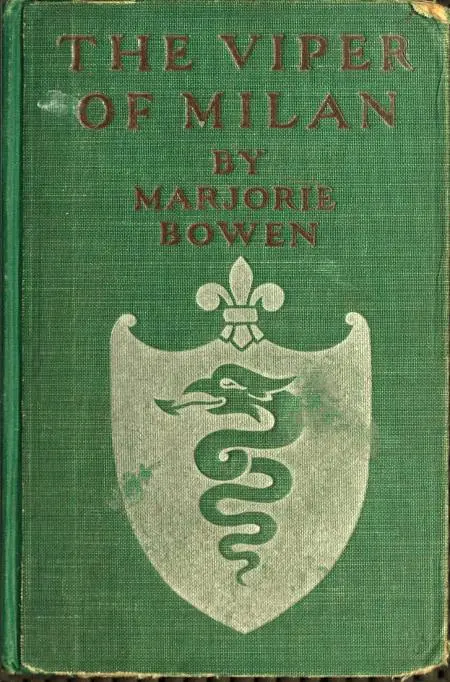
THE CLASSIC COLLECTION · 1906
"The Viper of Milan: A Romance of Lombardy" by Marjorie Bowen is a historical novel written in the early 20th century. Set in the tumultuous and politically charged environment of 14th-century Italy, the narrative focuses on the rise of Gian Galeazzo Maria Visconti, the Duke of Milan, and intertwines themes of tyranny, romance, and rebellion. The story follows characters caught in the gripping turmoil of their time, particularly highlighting the experiences of young travelers Tomaso and Vittore, as well as the infamous Visconti family. At the start of the novel, readers are introduced to the beauty of Lombardy, juxtaposed with the stark reality of peasant life under the oppressive rule of the Visconti. The opening scene captures a moment of tension as a cavalcade led by the Duke passes a group of downtrodden peasants, eliciting fear and awe. Young Tomaso is injured during a harrowing encounter with the Duke's enforcers, thrusting his cousin Vittore into a desperate search for help. The visceral emotions of hopelessness and longing for freedom set the tone for the unfolding drama, while establishing the malevolent presence of the Visconti as a catalyst for the characters' struggles.
Introduction adapted from the source catalogue; source summaries may be automatically generated.
Free to read · English · 96,562 words · No account needed
MAKE TIME FOR A GOOD BOOK
On by default. Untick to stop anonymous reading totals. Each page counts after 10 seconds in view. How this works.
Anonymous counting is on unless you have switched it off.
And he stretched out his arms to the figure in an exaltation of trust and hope. "Even as I spare those who betray, so wilt thou spare her, O Christ!" He flung himself from his knees, face downward on the stones, in a tumult of hope and trust. Around the folds of Mastino's cloak lay the leaves of some dead roses that had fluttered at his movement, from forgotten wreaths, hanging brown against the wall.
Mastino rose, eager for some answer--some assent. But the dead Christ was silent. Mastino could see the cracking paint on the ribs, the tawdry gold of the halo, and he came still nearer in a strange desperation.
Half-hidden in shadow, two faces looked down on him--expressionless, stone, the angels on the wall.
Mastino looked from them to the crucifix, and his fervent faith sank,
chilled.
"Stone," he murmured in his heart. "Stone and paint," and he noticed the empty lamps that should be blazing with eternal fire, and he cried aloud in bitterness. "Men keep those alight, and without them the eternal fire dies! Stone angels and a painted God! What help in them?" And he dropped again upon the floor. "The lamps burn bright on Visconti's altars, and his saints smile--for the painter limned them so."
He turned from the dismantled chapel and rushed up the three steps, half
distraught.
In the outer chamber the sunlight dropped strong and golden, and Mastino shut the door of the dark and gloomy chapel behind him with a shudder.
"Lord!" cried an eager voice. "Lord!"
It was Tomaso and his father.
"Did ye fear for me, Ligozzi?" said Della Scala kindly. "I have been praying for a patient heart." And the two who loved him looked at him awhile and could say nothing.
"My lord," began Tomaso again with a timid eagerness, "there is
news----"
"Tomaso," said his father, "thy news can wait."
Mastino picked up his gauntlet from the deep window-seat where he had laid it down, and fastening it on, looked at Ligozzi.
"What hast thou to say, Ligozzi? Have any of the men returned?"
Ligozzi stood fidgeting with his cap, looking uneasily at the ground.
"Come," and Mastino smiled sadly, "I am used to bad news, Ligozzi."
"Some few men have indeed returned from Giacomo's army, my lord, some
fourscore----"
"Some fourscore!" repeated Della Scala. "Are there so many as fourscore that will not serve Visconti?"
"They have strange tales, my lord. They say Carrara himself is dead."
"Carrara dead!" cried Mastino with a sudden fierceness, savage as a
bite. "Now, I had promised myself to kill Carrara. Who has forestalled
me?"
"It is said--Visconti himself--they do not know."
Your reading position is saved on this browser. Take it to another device with a library code. Reading pages adapt to text, rather than matching a printed edition.
Marjorie Bowen
Marjorie Bowen
Marjorie Bowen
Marjorie Bowen
BEHIND THE BOOK
This eBook is for the use of anyone anywhere in the United States and most other parts of the world at no cost and with almost no restrictions whatsoever. You may copy it, give it away or re-use it under the terms of the Project Gutenberg License included with this eBook or online at www.gutenberg.org. If you are not located in the United States, you will have to check the laws of the country where you are located before using this eBook. Read the source licence.
The original source file, including credits and licence, is retained by this library. Request an original-format copy at no charge. Please include the book title and Project Gutenberg identifier #48963.
KEEP YOUR CURIOSITY GOING
Cécile Tormay

Moritz Busch
Coulson Kernahan
John L. Ransom

Maurice Baring
Frances Wright