THE CLASSIC COLLECTION✦A dead man’s diaryCLASSIC FREE BOOKS
A dead man’s diary
Coulson Kernahan
THE CLASSIC COLLECTION · 1908
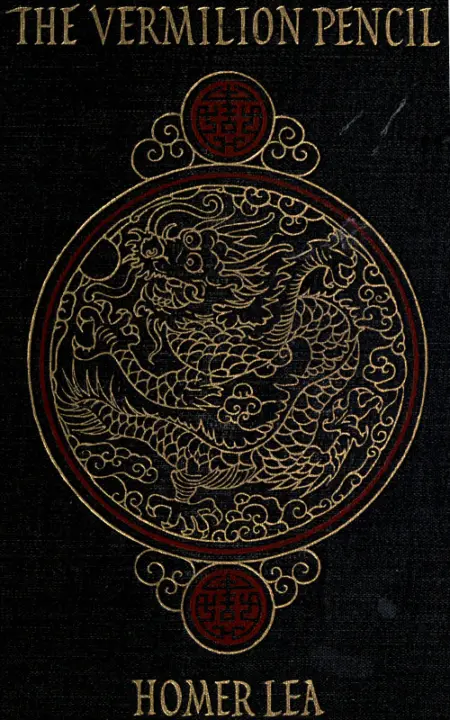
"The Vermilion Pencil: A Romance of China" by Homer Lea is a novel written in the early 20th century. The story explores themes of fate, desire, and the complexities of human relationships against the backdrop of China’s rich landscape and tumultuous history. The narrative introduces intriguing characters such as a passionate tea-farmer's daughter, a determined mandarin, and two priests from the French Mission in Yingching, each entangled in their destinies within a beautifully and vividly described Chinese setting. The opening of the book begins with a prolog that sets the stage dramatically through a typhoon, signaling significant change and upheaval. It quickly shifts to the serene yet captivating Valley of the Fountain, introducing the vibrant and independent daughter of a tea farmer, who captures the attention of a mandarin longing for her talent and presence. The narrative is imbued with rich descriptions of the landscape, cultural elements, and the characters' inner thoughts, establishing an atmosphere of tension and anticipation that will likely draw readers into the unfolding romance and conflict as they navigate personal desires and societal expectations. The complex interplay of fate and individual will is suggested as central to the storyline, promising a thoughtful exploration of these themes.
Introduction adapted from the source catalogue; source summaries may be automatically generated.
Free to read · English · 66,959 words · No account needed
MAKE TIME FOR A GOOD BOOK
On by default. Untick to stop anonymous reading totals. Each page counts after 10 seconds in view. How this works.
Anonymous counting is on unless you have switched it off.
“I suppose you pray all the time?” she asked with mock compassion.
“Yes; ad Jesum crucifixion.”
“I never heard of Him,” she commented lightly.
“Our Lord, who was crucified.”
“Indeed! And what had He been doing?”
“He died to save men.”
“How useless!” she sighed.
“From the crucifix came the cross; from torture, salvation.”
“Dreadful! And you pray to Him?”
“Yes; to Jesus crucified,” he answered softly.
“Let me hear you,” she commanded unconcernedly as though thinking of
other things.
The Breton, bowing his head, began in a low monotonous tone. “Eu, amantissime Jesu, qui sponsae sanguinum mihi esse voluisti ad pedes tuos prosternor, ut meum in te amorem debitamque gratitudinem contester. Sed quid rependam tibi mi Jesu——”
After the first few words of the Breton’s prayer the wife began to laugh, at first softly to herself, but as the Breton continued, her merriment increased until the music peals of her laughter stopped him completely.
“What a noise you are making!” she exclaimed. “I never heard such sounds!” And she fell again to laughing. “You must not mind my laughter,” she said, breathless, “I cannot help it. You never laugh?” she inquired when her merriment had subsided.
“No.”
“I did not think so. I laugh all the time. But then you are a priest,” she added consolingly. “Are you going to finish your prayer?”
The Breton looked hesitantly at the screen, then resumed his prayer. “Mi Jesu, qui usque in finem dilexisti me? Manibus ac pedibus imo et cordi tuo inscripsisti me, magno sane et conspicuo charactere. Quis mihi hoc tribuat ut sicut tu me, ita et ego te cordi meo inscriptum circumferam. O Jesu——”
“No,” interrupted the wife meditatively, “I would not say that your hands were disagreeable to look at. My honourable husband told me that the hands of foreigners were speckled and covered with red hairs like the wood spider—just think of it! But I should say that your hands are—you can put on that ring, if you wish.”
The Breton did not touch the pearl in his lap.
“I said you could put on that ring,” she enjoined imperiously. “No, on the other hand; yes—— Now, go on with your prayer.”
And once more the Breton began his prayer to the crucified Christ.
“O Jesus quam profuso mi charitatis effectu complexus es qui non tantum manus et pedes, verum et opulentissimum pectus mihi operiri voluisti, ut inexhausto bonorum coelestium affluentia desiderium meum expleas——”
Your reading position is saved on this browser. Take it to another device with a library code. Reading pages adapt to text, rather than matching a printed edition.
BEHIND THE BOOK
This eBook is for the use of anyone anywhere in the United States and most other parts of the world at no cost and with almost no restrictions whatsoever. You may copy it, give it away or re-use it under the terms of the Project Gutenberg License included with this eBook or online at www.gutenberg.org. If you are not located in the United States, you will have to check the laws of the country where you are located before using this eBook. Read the source licence.
The original source file, including credits and licence, is retained by this library. Request an original-format copy at no charge. Please include the book title and Project Gutenberg identifier #54950.
KEEP YOUR CURIOSITY GOING
Coulson Kernahan

Maurice Baring
Frances Wright
Cécile Tormay

Frederic Jesup Stimson

W. H. P. (William Henry Pope) Jarvis