THE CLASSIC COLLECTION✦A dead man’s diaryCLASSIC FREE BOOKS
A dead man’s diary
Coulson Kernahan
THE CLASSIC COLLECTION · 1908
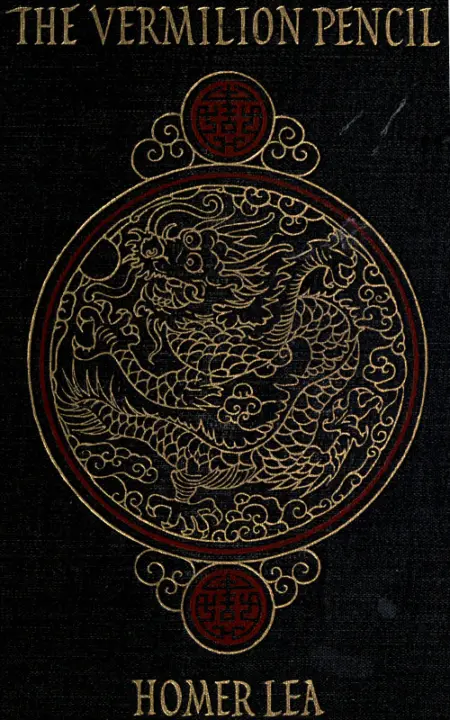
"The Vermilion Pencil: A Romance of China" by Homer Lea is a novel written in the early 20th century. The story explores themes of fate, desire, and the complexities of human relationships against the backdrop of China’s rich landscape and tumultuous history. The narrative introduces intriguing characters such as a passionate tea-farmer's daughter, a determined mandarin, and two priests from the French Mission in Yingching, each entangled in their destinies within a beautifully and vividly described Chinese setting. The opening of the book begins with a prolog that sets the stage dramatically through a typhoon, signaling significant change and upheaval. It quickly shifts to the serene yet captivating Valley of the Fountain, introducing the vibrant and independent daughter of a tea farmer, who captures the attention of a mandarin longing for her talent and presence. The narrative is imbued with rich descriptions of the landscape, cultural elements, and the characters' inner thoughts, establishing an atmosphere of tension and anticipation that will likely draw readers into the unfolding romance and conflict as they navigate personal desires and societal expectations. The complex interplay of fate and individual will is suggested as central to the storyline, promising a thoughtful exploration of these themes.
Introduction adapted from the source catalogue; source summaries may be automatically generated.
Free to read · English · 66,959 words · No account needed
MAKE TIME FOR A GOOD BOOK
On by default. Untick to stop anonymous reading totals. Each page counts after 10 seconds in view. How this works.
Anonymous counting is on unless you have switched it off.
“Priest,” said the wife presently, her voice still gentle with wonder, “if your eyes were not so soft, I would say they were sapphires; were they not so strangely bright, I would say they were as the sky when the moon loiters behind the mountains. So these are the eyes of devils——”
The Breton took no notice of her comments.
“And you are the priest,” she drawled presently.
“Yes,” he answered softly, “a priest of God.”
“And what have you come to teach me, priest?” she inquired, mockery and laughter trembling in her demure tones.
“As the bishop has ordered.”
“Indeed!” she commented disdainfully. “And what did he order?”
“To save your soul,” replied the Breton reverently, “for the glory——”
The laughter of the wife interrupted him.
“And he sent you to do it?”
“Yes,” he apologised, “the bishop has sent me.”
“How thoughtful of him! No doubt you will succeed!”
“Yes, God will be here,” he answered simply.
“Why did not the bishop send someone else?”
“I do not know.”
“You did not ask to come?”
“No.”
“Indeed! If he asked you to go elsewhere to-morrow, would you go?”
“Yes.”
“Oh, very well. I may not want you any more. I am not at all firm in my desire, and you are so young. My last teacher, who had had the learning of seventy winters, said the ignorance of youth was really pitiable, especially in men. No; I don’t think you will do,” she commented with candour, “not at all.”
The Breton gazed dreamily through the half-opened shell-latticed window, and only the restless hopping and chirp of the thrushes in the golden bamboo cages broke the silence, or sometimes a dulled sound, which was the noise of the surrounding city in its labour.
“Priest,” her voice came from just above him, and as he turned his head, a ring set with a large pear-shaped pearl dropped from the crevices into his lap. He looked up and tried to speak. His lips moved, but that was all, for just overhead a little pink finger tip clung to the edge of the crevices.
“Oh, you need not thank me,” she exclaimed coldly, “that ring is not for you. It is for your bishop, who wishes to save my soul.”
“Yes, he wishes it,” the Breton answered thoughtfully, as he fingered
the ring in his lap.
“And you?”
“I shall pray for you.”
“Indeed!”
“Yes, I will teach you,” he added gently, oblivious of her mockery.
“What?”
“To love God and——”
“How monotonous you are, priest,” she interrupted impatiently.
“No,” he answered, looking gravely up to the crevices, “to love God is not monotonous; to pray to Him is happiness.”
Your reading position is saved on this browser. Take it to another device with a library code. Reading pages adapt to text, rather than matching a printed edition.
BEHIND THE BOOK
This eBook is for the use of anyone anywhere in the United States and most other parts of the world at no cost and with almost no restrictions whatsoever. You may copy it, give it away or re-use it under the terms of the Project Gutenberg License included with this eBook or online at www.gutenberg.org. If you are not located in the United States, you will have to check the laws of the country where you are located before using this eBook. Read the source licence.
The original source file, including credits and licence, is retained by this library. Request an original-format copy at no charge. Please include the book title and Project Gutenberg identifier #54950.
KEEP YOUR CURIOSITY GOING
Coulson Kernahan

Maurice Baring
Frances Wright
Cécile Tormay

Frederic Jesup Stimson

W. H. P. (William Henry Pope) Jarvis