THE CLASSIC COLLECTION✦A dead man’s diaryCLASSIC FREE BOOKS
A dead man’s diary
Coulson Kernahan
THE CLASSIC COLLECTION · 1908
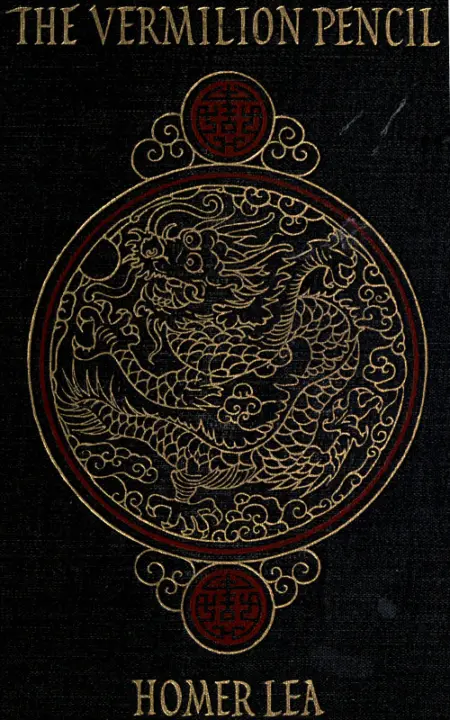
"The Vermilion Pencil: A Romance of China" by Homer Lea is a novel written in the early 20th century. The story explores themes of fate, desire, and the complexities of human relationships against the backdrop of China’s rich landscape and tumultuous history. The narrative introduces intriguing characters such as a passionate tea-farmer's daughter, a determined mandarin, and two priests from the French Mission in Yingching, each entangled in their destinies within a beautifully and vividly described Chinese setting. The opening of the book begins with a prolog that sets the stage dramatically through a typhoon, signaling significant change and upheaval. It quickly shifts to the serene yet captivating Valley of the Fountain, introducing the vibrant and independent daughter of a tea farmer, who captures the attention of a mandarin longing for her talent and presence. The narrative is imbued with rich descriptions of the landscape, cultural elements, and the characters' inner thoughts, establishing an atmosphere of tension and anticipation that will likely draw readers into the unfolding romance and conflict as they navigate personal desires and societal expectations. The complex interplay of fate and individual will is suggested as central to the storyline, promising a thoughtful exploration of these themes.
Introduction adapted from the source catalogue; source summaries may be automatically generated.
Free to read · English · 66,959 words · No account needed
MAKE TIME FOR A GOOD BOOK
On by default. Untick to stop anonymous reading totals. Each page counts after 10 seconds in view. How this works.
Anonymous counting is on unless you have switched it off.
“Why don’t you answer me?” she pleaded, turning to the Breton.
“Yes.”
“Will you never learn to talk?”
“No.”
“Why?”
“I would interrupt you.”
She leaned close to him and looked up forgivingly.
“I was not angry, but I don’t want you to go away and leave me for so
long. I—I——”
“What is it?”
She turned her head away, then answered guiltily.
“I dreamed something that I cannot forget. If I only had not dreamed it,” she cried as she snuggled closer to him.
“It is nothing,” he added reassuringly.
“Yes; I know,” she answered, “that you will call this dream just some airy tapestry of sleep, strangely woven, perhaps, and hued, but still the gauzy slumber-work of my foolish mind, which in waking hours I should see plainly through; and yet—I cannot—won’t you let me tell it to you?”
She put her little hand in his and looked up imploringly, then nestling closer, she continued with naïve intentness:
“I know this dream came late in the night, because it was for hours and hours that I could not sleep. Fear’s tugging finger many times caused me to rise and peer into the shadow where you and Tsang were sleeping. It must have been after the third watch, when he builded the fire, that I dreamed. I know you will think this a very foolish dream.”
For a long time he looked into her upturned eyes; then putting her hand against his cheek, she turned his face away.
For some moments there was an hushed, uncertain silence, then suddenly she burst into tears, and throwing her arms about the neck of the Breton she clung passionately to him.
“Do not let dreams disturb Your Excellency,” commented Tsang. “What are they? Reflections in the Great River whereon we float. Now how can reflections stem the river or check the course of our craft?”
“Tsang!”
“Tsang!” said his wife, leading him aside, “do you know that was a very
bad dream?”
“Boil your rice, Tsi, boil your rice! How can dreams affect the stringed puppets of Fate, squawking and crowing, thising and thating, squeaking out our long or short verse until Fate gets weary and snaps the string. Bah! What have we to do with this inane performance? Go pluck your fowl.”
“I know, Tsang, but I tell you that was a bad dream, a very bad dream, and nothing good will come of it.”
“You are always dreaming.”
“Yes, and——”
“What! those lice-familiar bonzes.”
“They told——”
“Bah!”
Your reading position is saved on this browser. Take it to another device with a library code. Reading pages adapt to text, rather than matching a printed edition.
BEHIND THE BOOK
This eBook is for the use of anyone anywhere in the United States and most other parts of the world at no cost and with almost no restrictions whatsoever. You may copy it, give it away or re-use it under the terms of the Project Gutenberg License included with this eBook or online at www.gutenberg.org. If you are not located in the United States, you will have to check the laws of the country where you are located before using this eBook. Read the source licence.
The original source file, including credits and licence, is retained by this library. Request an original-format copy at no charge. Please include the book title and Project Gutenberg identifier #54950.
KEEP YOUR CURIOSITY GOING
Coulson Kernahan

Maurice Baring
Frances Wright
Cécile Tormay

Frederic Jesup Stimson

W. H. P. (William Henry Pope) Jarvis