THE CLASSIC COLLECTION✦A dead man’s diaryCLASSIC FREE BOOKS
A dead man’s diary
Coulson Kernahan
THE CLASSIC COLLECTION · 1908
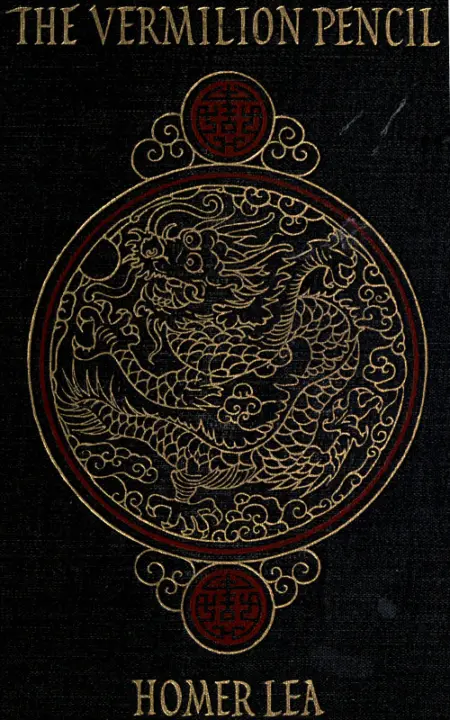
"The Vermilion Pencil: A Romance of China" by Homer Lea is a novel written in the early 20th century. The story explores themes of fate, desire, and the complexities of human relationships against the backdrop of China’s rich landscape and tumultuous history. The narrative introduces intriguing characters such as a passionate tea-farmer's daughter, a determined mandarin, and two priests from the French Mission in Yingching, each entangled in their destinies within a beautifully and vividly described Chinese setting. The opening of the book begins with a prolog that sets the stage dramatically through a typhoon, signaling significant change and upheaval. It quickly shifts to the serene yet captivating Valley of the Fountain, introducing the vibrant and independent daughter of a tea farmer, who captures the attention of a mandarin longing for her talent and presence. The narrative is imbued with rich descriptions of the landscape, cultural elements, and the characters' inner thoughts, establishing an atmosphere of tension and anticipation that will likely draw readers into the unfolding romance and conflict as they navigate personal desires and societal expectations. The complex interplay of fate and individual will is suggested as central to the storyline, promising a thoughtful exploration of these themes.
Introduction adapted from the source catalogue; source summaries may be automatically generated.
Free to read · English · 66,959 words · No account needed
MAKE TIME FOR A GOOD BOOK
On by default. Untick to stop anonymous reading totals. Each page counts after 10 seconds in view. How this works.
Anonymous counting is on unless you have switched it off.
One day not long after they had taken up their abode in this pearl-shell, Tsang’s wife, smiling and chattering, bustled about the fire. Tsang sat on his heels and smoked contentedly by her side. While on a high couch of marble, the wife directed, commenting, sometimes with laughter, sometimes with the gayest mockery. The Breton sat at her feet, smiling at last and at all times, for since the night of the Propitiation of the Gods of the Waters he had at no time ceased to do this.
Suddenly the wife’s laughter stopped and she knelt down beside him.
“What is the matter?” she demanded fearfully.
The Breton had laughed.
“Did you ever do that before?” Her demure anxiety and troubled looks brought another uncertain, low laugh from his lips.
“Tsi, did you hear him?” she demanded, turning to Tsang’s wife.
“Yes, Your Excellency.”
“Tsang, did you hear him?”
“Yes, Your Excellency.”
Then she turned to him and said beseechingly.
“Do it again.”
In gayest hours, however, it seems that moments of sadness or foreboding must inevitably intrude, as sea-fogs slink in and envelop sunlit meadows. In such a manner one day there came into the song and laughter of the wife this uneasy unrest. She appeared trying to escape from something, but it overtook her and her song-laughter stopped.
She moved closely to the Breton.
“Why were you and Tsang gone so long to-day?”
“We were looking for the treasure of Yu N——”
“Treasure!” she interrupted indignantly, drawing away from him. “And I thought you different.” She drew farther away.
“I do not know why men care for nothing else,” she complained, half sorrowfully, half angrily. “From children to old age they think of nothing else. They go into war for it, and temples and jails and yamens; no mud can cover it, nor filth stick so closely but what they fondle it more than—than——”
The Breton reached out his hand toward her, but she drew back.
“You would rather——” Tears were creeping into her complaint.
“But, Your Excellency,” commented Tsang opportunely, “what can you do without money? Fate is the only thing on earth that cannot be marketed for it.”
She turned on him scornfully.
“Oyah! This whole Ming treasure cannot coax one lark to sing.”
“It could persuade kingdoms.”
“It cannot open a single night-closed lotus bud.”
“It could turn night into day.”
“It cannot stop a tear.”
“Some it could.”
“It cannot add one hour to life.”
“Life is spanned by its pleasures; the rich have three lives to the poor
man’s one.”
“It cannot buy——” She hesitated and nervously picked the hem of her
jacket.
Your reading position is saved on this browser. Take it to another device with a library code. Reading pages adapt to text, rather than matching a printed edition.
BEHIND THE BOOK
This eBook is for the use of anyone anywhere in the United States and most other parts of the world at no cost and with almost no restrictions whatsoever. You may copy it, give it away or re-use it under the terms of the Project Gutenberg License included with this eBook or online at www.gutenberg.org. If you are not located in the United States, you will have to check the laws of the country where you are located before using this eBook. Read the source licence.
The original source file, including credits and licence, is retained by this library. Request an original-format copy at no charge. Please include the book title and Project Gutenberg identifier #54950.
KEEP YOUR CURIOSITY GOING
Coulson Kernahan

Maurice Baring
Frances Wright
Cécile Tormay

Frederic Jesup Stimson

W. H. P. (William Henry Pope) Jarvis