Nietzsche and Other Exponents of Individualism
Paul Carus
THE CLASSIC COLLECTION · 1916
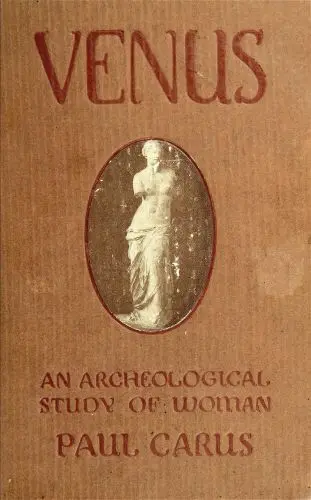
"The Venus of Milo: An Archeological Study of the Goddess of Womanhood" by Paul Carus is a scholarly work that delves into the history and significance of the famous ancient statue, likely written in the early 20th century. The text provides a detailed account of the statue's discovery on the Greek island of Melos, its subsequent journey to France, and the various interpretations and restorations that have been proposed over the years. The book offers insights into the cultural and artistic aspects of the goddess Aphrodite, represented by the Venus of Milo, exploring themes of beauty, femininity, and the impact of religious changes on its legacy. The opening of the work presents the backstory of the statue's discovery in 1820 by a Greek peasant named Yorgos Bottonis and details the challenges faced by French authorities in securing the statue for the Louvre, including negotiations and claims of ownership amidst competing interests. It introduces significant figures involved in the acquisition process, such as M. Dumont d'Urville and Count Marcellus, while providing context about Melos’s historical significance. Initial descriptions of the statue itself are provided, highlighting its beauty and the debates surrounding its original form and meaning, setting the stage for a broader exploration of the goddess's representation through art and culture in subsequent chapters.
Introduction adapted from the source catalogue; source summaries may be automatically generated.
Free to read · English · 27,139 words · No account needed
MAKE TIME FOR A GOOD BOOK
On by default. Untick to stop anonymous reading totals. Each page counts after 10 seconds in view. How this works.
Anonymous counting is on unless you have switched it off.
Thiers, 45, 47.
T’ien Hou, 116.
Titian, 66, 67.
Tiumman, 79, 80;
Head of, 82.
Tomb of Aphrodite, 76.
Toulon, 5.
Tralles, Head of, 19, 20, 21.
Tree of life, 127.
Trinities, 98.
Turkish brig, 43, 46, 48.
Unguent jar, Venus with the, 165, 166.
Uranus and Gaia, 62.
Urville, Dumont d’, 3, 13, 14, 42-43, 44, 47;
Report of, 5-9.
Valentin, Veit, 25;
Restoration by, 37, 41.
Vatican, 152, 160-163, 164, 165.
Venice, Doves of, 103.
Venus Erycina, 77n;
Genetrix, 69, 75, 159;
Kalypygos, 166;
of Milo; full figure, 16, 23;
of Milo; head, fr., 18, 57, 59;
of Milo; restored, 29, 30, 31, 32, 33, 34, 35, 38;
on the swan, 55, 56;
Proserpina, 154;
Urania, 74;
Victrix, 75, 77, 78, 79;
Victrix, Statue called, 45, 47, 48;
Vulgaris, 74.
Victory, Venus of Milo as, 31.
War, Goddess of, 77-82.
Wings, 99.
Woermann, 102n.
Woman, Origin of, 127-132.
Zealotry, Outbursts of, 58.
Zeus, 65.
[1] Published under the title “Relation d’une expédition hydrographique dans le Levant et la mer-Noire de la gabarre de Sa Majesté la Chevrette, commandée par M. Gauttier, capitaine de vaisseau, dans l’année 1820,” in Annales maritimes et coloniales de Bajot, 1821, and reprinted in Archives de l’art français, publiés sous la direction de M. A. Montaiglon, II series, Vol. II, 1863, pp. 202ff.
[2] “Un dernier mot sur la Venus de Milo,” in the Revue Contemporaine, 1839, XIII, pp. 289ff.
[3] These fragments are preserved in a glass case at the window in the same room of the Louvre where the Venus of Milo stands.
[4] Geskel Saloman, Die Restauration der Venus von Milo, den Manen de Claracs gewidmet. Stockholm, 1895. Plate IV.
[5] Conze, Die Ergebnisse der Ausgrabungen zu Pergamon.
[6] The Venus di Milo, Its History and Its Art. New York, Cambridge
Encyclopedia Co., 1900.
[7] As we might suppose in reading Hesiod, Th., 195ff, and Plato,
Crat., 406 c.
[8] Taylor mentions this Maori legend in his New Zealand, 119. Cf. Andrew Lang, Myth, Ritual and Religion, I, 302, and Roscher, Lex., s. v. “Kronos,” col. 1542.
[9] H. Steinthal, “Die Sage von Prometheus,” in Zeitschrift für Völkerpsychologie und Sprachwissenschaft, II, ii, 8-9.
[10] Διὸς κούρη.
[11] As reported in Roscher’s Lexikon, s. v. “Aphrodite.”
[12] Preller, Griechische Mythologie, I, p. 364.
[13] The original is written in a Sumerian dialect with a translation into the Semitic Babylonian. See Records of the Past, New Series, Vol. I, p. 85.
[14] Literally, “I do not take counsel, myself I am not wise.”
[15] Records of the Past, Vol. VII, p. 67.
[16] II, Pl. XLVIII, p. 697.
[17] For further details see Dr. Alfred Jeremias, who publishes the text of the passages here quoted and offers a literal German translation with editorial notes and other explanations. The conception of the document as set forth in the quoted passages is based upon the interpolation of Dr. Jeremias, which he justifies in his critical notes. Dr. Jeremias’s interpretation of the concluding words is justified by another cuneiform tablet which while relating a conjuration of the dead begins with the same description of Sheol as does the legend of Istar’s descent to Hell.
Your reading position is saved on this browser. Take it to another device with a library code. Reading pages adapt to text, rather than matching a printed edition.
BEHIND THE BOOK
This eBook is for the use of anyone anywhere in the United States and most other parts of the world at no cost and with almost no restrictions whatsoever. You may copy it, give it away or re-use it under the terms of the Project Gutenberg License included with this eBook or online at www.gutenberg.org. If you are not located in the United States, you will have to check the laws of the country where you are located before using this eBook. Read the source licence.
The original source file, including credits and licence, is retained by this library. Request an original-format copy at no charge. Please include the book title and Project Gutenberg identifier #56934.
KEEP YOUR CURIOSITY GOING
Cécile Tormay

Moritz Busch
John L. Ransom
Frances Wright
Cécile Tormay

Mabel Potter Daggett