
Nietzsche and Other Exponents of Individualism
Paul Carus
THE CLASSIC COLLECTION · 1916
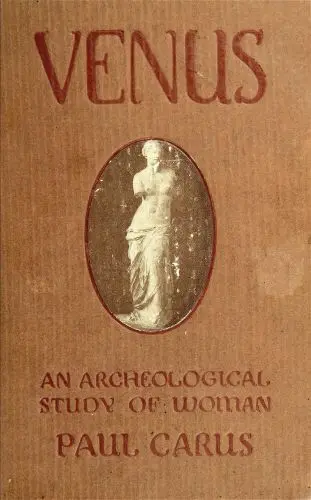
"The Venus of Milo: An Archeological Study of the Goddess of Womanhood" by Paul Carus is a scholarly work that delves into the history and significance of the famous ancient statue, likely written in the early 20th century. The text provides a detailed account of the statue's discovery on the Greek island of Melos, its subsequent journey to France, and the various interpretations and restorations that have been proposed over the years. The book offers insights into the cultural and artistic aspects of the goddess Aphrodite, represented by the Venus of Milo, exploring themes of beauty, femininity, and the impact of religious changes on its legacy. The opening of the work presents the backstory of the statue's discovery in 1820 by a Greek peasant named Yorgos Bottonis and details the challenges faced by French authorities in securing the statue for the Louvre, including negotiations and claims of ownership amidst competing interests. It introduces significant figures involved in the acquisition process, such as M. Dumont d'Urville and Count Marcellus, while providing context about Melos’s historical significance. Initial descriptions of the statue itself are provided, highlighting its beauty and the debates surrounding its original form and meaning, setting the stage for a broader exploration of the goddess's representation through art and culture in subsequent chapters.
Introduction adapted from the source catalogue; source summaries may be automatically generated.
Free to read · English · 27,139 words · No account needed
MAKE TIME FOR A GOOD BOOK
On by default. Untick to stop anonymous reading totals. Each page counts after 10 seconds in view. How this works.
Anonymous counting is on unless you have switched it off.
The temples of Aphrodite lie in ruins, and her worship is abandoned; but the ideal of womanhood which she represented has remained to this day, and will remain so long as mankind will continue to exist on earth. The artist of the statue of Milo has left us an unsurpassed interpretation of this ideal which even in its mutilated condition is noble and beautiful. At the same time nature does not cease to actualize the type in every living woman that has been born into the world. Each one of them with all her individual traits, her preferences and even her feminine faults is a specimen of the eternal ideal of womanhood--the divinity of love, of grace, of charm, of beauty, a source of inspiration as well as of physical and intellectual creativeness.
The ancient paganism has passed away and will never come back, but because its superstitions are gone we need no longer scorn its gods. We can recognize their grandeur, their nobility, their beauty, yea their truth; and if we contemplate the representation of their ideals in Greek art, we must own that the Venus of Milo is not the least among them.
Adonis, Death of, 76.
Æneas, 74.
Æschylus, 74.
Agesander or Alexander of Antioch, 14, 17, 20, 21, 51.
Alcamenes, 154, 157-159.
Alcard, 44.
Alcuin Bible, 133-135.
Amazon, Etymology of, 63.
Anchises, 68;
and Aphrodite, 74, 75.
Antiochus Euergetes, 150.
Antiochus Soter, 17.
Aphrodite, and Ares, 155-157;
as a universal principle, 65, 73;
Birth of, 62, 69;
Cypris, 65;
Etymology of the name, 62, 64;
Euploia, 162;
Pandemos, 67;
Sosandra, 154, 156;
Urania, 67, 74;
Worship of, 55, 68-75.
Apple, emblem of mother-goddess, 98;
emblem of Venus, 25;
held in hand, 7, 9, 10, 12, 14, 25, 30, 33, 44, 45, 47;
Melos means, 1, 25;
of empire, 39-40.
Archaic Venus, 154-155.
Ares, Aphrodite and, 155-157.
Artemis, 149.
Astarte, 69, 107;
A later, 105;
and the Dove, 100;
in Cyprus, 106, 110;
Sargent’s, 108, 110;
Worship of, 55.
Asurbanipal, 79, 80.
Athene, 69, 77, 79;
Worship of, 56.
Athens, 54, 56, 67.
Babylon, Trinity in, 98.
Bacchus, 14.
Bain, F. W., 128.
Bajot, 5n.
Bardos, 168, 169.
Battle on the beach, 43, 46-47, 49.
Bell, T., 31.
Bellona, 77.
Beltis, 73, 145, 151.
Benten, 110, 113.
Bethel, 148-150.
Birth, of Aphrodite, 62, 69, 70;
of Syrian goddess, 71.
Boghaz-Köi, 103-105.
Bottonis, Antonio, 2, 45.
Bottonis, Yorgos, a Greek peasant, 2, 5, 9, 10, 11, 13, 44.
Bottonis, Yorgos, Jr., 45.
Brassempouy, Venus of, 146.
Brest, Louis, 3, 46.
Buddha, Kwan-Yon as the, 112, 115.
Cæsar, 74, 75.
Capua, 55.
Carolsfeld, Schnorr von, 140-141.
Carus, The Bride of Christ, 107;
Soul of Man, 126.
Castro in Melos, 2, 12, 45, 46.
Century Magazine, 2, 6.
Charm of statue, 26, 27.
“Chevrette,” 3, 5.
Christian Trinity, 98-99.
Christianity, 56, 74, 144.
Chthonian Venus, 75, 83, 85.
Clarac, Count de, 13, 15, 50;
Report of, 48.
Cnidian Venus, 160-163, 172.
Cnidos, 73, 163.
Condition of statue, 9-10, 24, 43, 45, 48, 49.
Conybeare, F. C., 56.
Conze, 21.
Corinth, Hierodules in, 74.
Coronet, 24.
Creation, Greek legend of, 62;
Maori legend of, 63n.
Creuzer, 36.
Crouching Venus, 163, 164, 166.
Cyprian Aphrodite, 154.
Cyprus, 76, 107;
Astarte in, 106, 110.
Date of statue, 20, 52.
David, 15.
Debay, Auguste, 15;
Drawing of, 16, 21.
Del Mar, Alexander, 37, 39-40.
Del Mar, Francisca Paloma, 37, 38.
Demeter, 69.
Descent into Hades, 76, 83-95.
Description of statue, 6-8, 22-25, 41, 42, 45, 51, 52.
Diana of Ephesus, 149, 152-153.
Dionæa, 67.
Dione, 65.
Discovery of statue, 2, 5-6, 44.
Dodona, 67.
Doré, Gustave, 139, 141.
Dove, 98, 102;
Astarte and the, 100;
Venus sending out the, 36, 37.
Your reading position is saved on this browser. Take it to another device with a library code. Reading pages adapt to text, rather than matching a printed edition.
BEHIND THE BOOK
This eBook is for the use of anyone anywhere in the United States and most other parts of the world at no cost and with almost no restrictions whatsoever. You may copy it, give it away or re-use it under the terms of the Project Gutenberg License included with this eBook or online at www.gutenberg.org. If you are not located in the United States, you will have to check the laws of the country where you are located before using this eBook. Read the source licence.
The original source file, including credits and licence, is retained by this library. Request an original-format copy at no charge. Please include the book title and Project Gutenberg identifier #56934.
KEEP YOUR CURIOSITY GOING
Cécile Tormay

Moritz Busch
John L. Ransom
Frances Wright
Cécile Tormay

Mabel Potter Daggett