THE CLASSIC COLLECTION✦Lost DiariesCLASSIC FREE BOOKS
Lost Diaries
Maurice Baring
THE CLASSIC COLLECTION · 1902
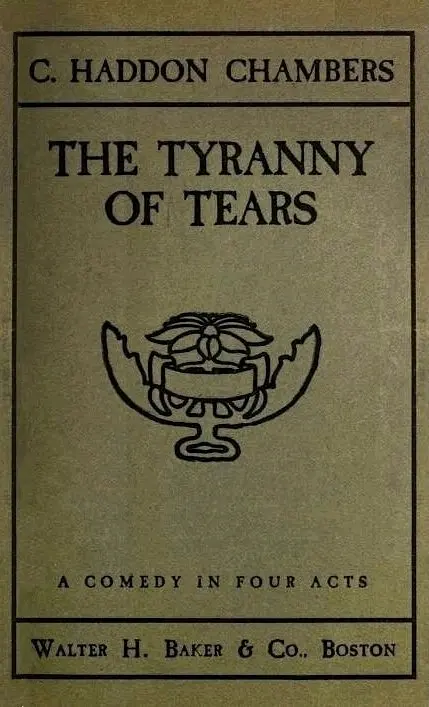
"The Tyranny of Tears: A Comedy in Four Acts" by C. Haddon Chambers is a comedic play written in the late 19th century. It focuses on the complexities of domestic life and emotional manipulation within marriage, particularly examining the relationship between Mr. Clement Parbury and his wife, Mabel. The narrative delves into the struggles of Parbury, who feels stifled by Mabel's emotional demands, portraying a mix of humor and poignancy in its exploration of gender dynamics and personal freedom. The opening of the play introduces Mr. Parbury, a harried literary figure trying to work while dealing with the disruption caused by street singers and the inevitable presence of his affectionate but needy wife, Mabel. As tensions rise, Mabel expresses her desire for closeness, leading to a misunderstanding about her being a distraction during his work. The interactions set the stage for the unfolding conflict, highlighting Parbury's frustration and Mabel's longing for connection, all suffused with a blend of lighthearted humor and underlying emotional truth. This dynamic between the couple forms the foundation for the drama that is to come, promising an insightful look at marriage’s trials and tribulations.
Introduction adapted from the source catalogue; source summaries may be automatically generated.
Free to read · English · 24,081 words · No account needed
MAKE TIME FOR A GOOD BOOK
On by default. Untick to stop anonymous reading totals. Each page counts after 10 seconds in view. How this works.
Anonymous counting is on unless you have switched it off.
[Kisses him, and goes to door, L. She looks across the room at her husband, and then whispers to herself.] He'll never let me go.
[Exit, L.
[To GUNNING.] She'll not go, my dear fellow.
Humph! You think not? Anyway, I must,
Don't.
The domestic atmosphere is volcanic, and I feel remorseful.
Nonsense, it had to come. You must see me through it now.
How beastly selfish you married men are!
[They come down.
Clement, I'm in a difficulty.
You mean about Mabel, Colonel?
Yes.
She proposes going home with you.
Yes.
[Smiling confidently.] I don't think she'll go.
Enter EVANS, L.
[To COLONEL.] Your carriage, sir. [PARBURY looks uneasy.]
[Exit EVANS, L.
[Whistles. Looks at his watch.] I think she means it. I ordered my man to wait in the Avenue till he was called. Mabel has evidently had him called.
[PARBURY is thoughtful.
I don't wish to be in the least degree meddlesome; but, well, there it
is!
The question, I suppose, is what's it all about?
Well, yes. I suppose that's it; although I don't in the least wish to
know.
You hear, George; what's it all about?
[Down R., almost angrily.] Now, how the deuce should I know? Colonel, you would be very kind if you would use your authority to prevent Clement dragging me into his domestic difficulties. Married men have a cowardly way of endeavouring to involve their friends. Perhaps you have noticed it.
I have, Mr. Gunning. My experience of married life extended over a
period of twenty-six years.
May one discreetly express the hope that they were very happy years?
Very happy years, with, however, I must admit, intermittent troubles. Mabel's mother was one of the best women in the world, but, if I may say so without disloyalty, she was just a little--a little--er--give me a word.
Would the word exigeant apply?
Admirably. Perhaps you have noticed in Mabel the slightest tendency?
Eh?
Well, well!
Her mother's jealousy, too, was something amazing. I hope I'm not conceited, but in those days I was just a little--er--popular, and perhaps I ought not to confess it, a little--er--give me a word.
Human.
[They laugh slightly.
[With affected severity.] Clement, I hope you are not too human?
Quite the contrary, I assure you, Colonel.
Then why--I suppose, after all, it is my duty to ask--why does Mabel
come home with me to-night?
Your reading position is saved on this browser. Take it to another device with a library code. Reading pages adapt to text, rather than matching a printed edition.
BEHIND THE BOOK
This eBook is for the use of anyone anywhere in the United States and most other parts of the world at no cost and with almost no restrictions whatsoever. You may copy it, give it away or re-use it under the terms of the Project Gutenberg License included with this eBook or online at www.gutenberg.org. If you are not located in the United States, you will have to check the laws of the country where you are located before using this eBook. Read the source licence.
The original source file, including credits and licence, is retained by this library. Request an original-format copy at no charge. Please include the book title and Project Gutenberg identifier #42068.
KEEP YOUR CURIOSITY GOING
Maurice Baring
W. B. (William Butler) Yeats
Edward Martyn

John Brougham & Charlotte Brontë
Marguerite Merington
Leonid Andreyev