THE CLASSIC COLLECTION✦Lost DiariesCLASSIC FREE BOOKS
Lost Diaries
Maurice Baring
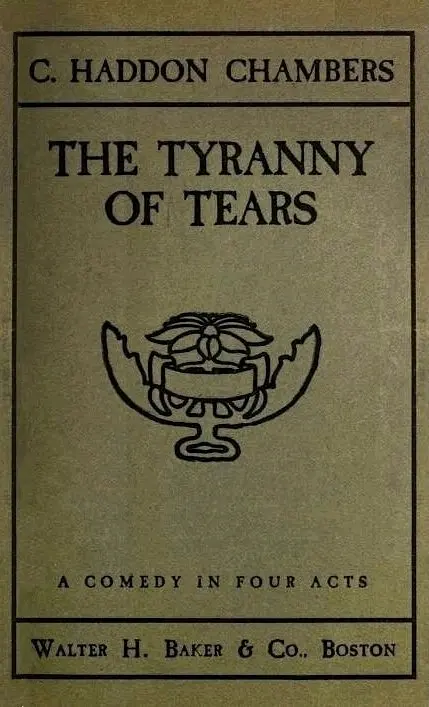
THE CLASSIC COLLECTION · 1902
"The Tyranny of Tears: A Comedy in Four Acts" by C. Haddon Chambers is a comedic play written in the late 19th century. It focuses on the complexities of domestic life and emotional manipulation within marriage, particularly examining the relationship between Mr. Clement Parbury and his wife, Mabel. The narrative delves into the struggles of Parbury, who feels stifled by Mabel's emotional demands, portraying a mix of humor and poignancy in its exploration of gender dynamics and personal freedom. The opening of the play introduces Mr. Parbury, a harried literary figure trying to work while dealing with the disruption caused by street singers and the inevitable presence of his affectionate but needy wife, Mabel. As tensions rise, Mabel expresses her desire for closeness, leading to a misunderstanding about her being a distraction during his work. The interactions set the stage for the unfolding conflict, highlighting Parbury's frustration and Mabel's longing for connection, all suffused with a blend of lighthearted humor and underlying emotional truth. This dynamic between the couple forms the foundation for the drama that is to come, promising an insightful look at marriage’s trials and tribulations.
Introduction adapted from the source catalogue; source summaries may be automatically generated.
Free to read · English · 24,081 words · No account needed
MAKE TIME FOR A GOOD BOOK
On by default. Untick to stop anonymous reading totals. Each page counts after 10 seconds in view. How this works.
Anonymous counting is on unless you have switched it off.
[MISS WOODWARD goes to desk; PARBURY follows her to desk.]
Let me.
[Assists MRS. PARBURY with the tea service.
[To MISS WOODWARD in a low voice.] I think I can finish the article in three sentences. Take your notes into the other room; I'll join you in a moment.
[MISS WOODWARD gathers her notes and exits R.]
[Pouring out a fresh cup of tea for GUNNING.] But of course it's not in the nature of things that college friendships, however strong, can last always. Time estranges, doesn't it, Mr. Gunning, and fate drives people into different--well, different ways of life, doesn't it? Some men marry soon. Are you married, Mr. Gunning?
Alas, no, Mrs. Parbury!
He has too much respect for your sex, dear. Forgive me for three
minutes.
[Exit PARBURY, R.
Not married! Well, I should have thought----
That I'm old enough to know better. I admit it.
[Sits R.C.
Well, I was going to say that in marriage a man changes so much. He
becomes more--more----
[Gently.] Respectable?
Well, I wasn't going to say quite that; though, as you suggest it, no doubt it is true. I was going to say more responsible. He enters into a broader, a fuller life; he gains in nobility, don't you think?
[Amused.] Oh, no doubt Clement has improved enormously!
I'm so glad you recognise that. You may smoke, Mr. Gunning, if you
care to.
Thank you. I'll steal one of Clement's cigarettes if I may?
[Takes cigarette from box on desk.
Of course Clement was always good and strong and clever. It only
wanted marriage to--to----
To perfect him!
Well, I was going to say to complete him; but it comes to the same
thing, doesn't it?
Quite, quite!
I found my happiness when I married Clement.
You had been looking for it?
Of course; isn't that every woman's duty?
Yes, yes; and every man's?
[Less confidently.] Well, yes, I should think so.
And one's happiness once found is worth fighting for?
[Firmly.] Worth fighting very hard for!
[Drily.] Of course. [Aside.] Poor Burleigh!
[Lights cigarette.
You, I suppose, have never met a woman who could make you happy?
I have never met a woman whom I was sure of being able to make happy.
[Slightly embarrassed.] Oh!
And, anyway, the state of marriage has always appeared to me to be a
state of warfare.
Mr. Gunning, you little know----
Your reading position is saved on this browser. Take it to another device with a library code. Reading pages adapt to text, rather than matching a printed edition.
BEHIND THE BOOK
This eBook is for the use of anyone anywhere in the United States and most other parts of the world at no cost and with almost no restrictions whatsoever. You may copy it, give it away or re-use it under the terms of the Project Gutenberg License included with this eBook or online at www.gutenberg.org. If you are not located in the United States, you will have to check the laws of the country where you are located before using this eBook. Read the source licence.
The original source file, including credits and licence, is retained by this library. Request an original-format copy at no charge. Please include the book title and Project Gutenberg identifier #42068.
KEEP YOUR CURIOSITY GOING
Maurice Baring
W. B. (William Butler) Yeats
Edward Martyn

John Brougham & Charlotte Brontë
Marguerite Merington
Leonid Andreyev