
The Sun of Saratoga: A Romance of Burgoyne’s Surrender
Joseph A. (Joseph Alexander) Altsheler
THE CLASSIC COLLECTION · 1916
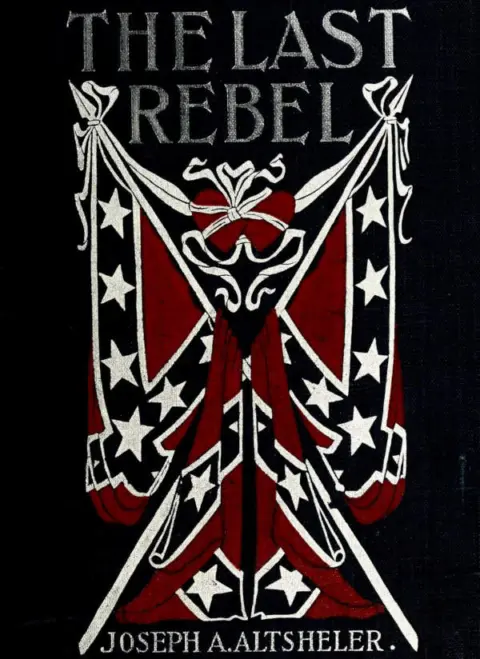
"The Tree of Appomattox" by Joseph A. Altsheler is a historical novel written in the early 20th century. This narrative serves as a conclusion to a series focused on the American Civil War, following characters like Dick Mason and his cousin Harry Kenton, who find themselves on opposite sides of the conflict. The story explores themes of family loyalty, the horrors of war, and the eventual exhaustion of both Northern and Southern forces as their fates converge. At the start of the novel, we meet Dick Mason, a young Union officer, who longs for the delicious apples hanging on the branches of a towering tree amidst the conflict of war. As he chats with comrades, the narrative shifts to the stark realities of their surroundings—trenches of Petersburg, the remains of a tumultuous battlefield, and the emotional toll that war exacts on both sides. The foreboding presence of his Southern cousin, Harry, looms over Dick's thoughts, adding complexity to his experiences. As the chapter unfolds, Dick's tension builds, culminating in his realization that soon he may confront not just enemy soldiers, but family, underscoring the harsh personal conflicts wrought by civil strife.
Introduction adapted from the source catalogue; source summaries may be automatically generated.
Free to read · English · 95,651 words · No account needed
MAKE TIME FOR A GOOD BOOK
On by default. Untick to stop anonymous reading totals. Each page counts after 10 seconds in view. How this works.
Anonymous counting is on unless you have switched it off.
The sergeant raised his rifle, but, as the man came on without fear, he dropped it again. Some strange effect of the moonlight exaggerated the rider and his horse, making both look gigantic, blending them together in such manner that a tremendous centaur seemed to be riding them down. In an instant or two the general effect vanished and as a clear beam fell upon the man's face Dick uttered an exclamation of relief.
"Shepard!" he said, and he felt then that he should have known before that it was Shepard who was coming. He, alone of all men, seemed to have the gift of omniscience and omnipresence. The spy drew his horse to a halt directly in front of him and saluted:
"Lieutenant Mason, sir?" he said.
"I'm glad it's you, Mr. Shepard," said Dick. "I think that in this wood we'll need the hundred eyes that once belonged to Argus, but which he has passed on to you."
"Thank you, sir," said Shepard.
But the man at whom he looked most was the sergeant, and the sergeant looked most at him. One was a sergeant and the other was a spy, but each recognized in the other a king among men. Eyes swept over powerful chests and shoulders and open, bold countenances, and signified approval. They had met before, but they were more than well met here in the loneliness and the dark, amid dangers, where skill and courage, and not rank, counted. Then they nodded without speaking, as an Indian chief would to an Indian chief, his equal.
"You were coming to meet us, Mr. Shepard?" said Dick.
"I expected to find you on this path."
"And you have something to tell?"
"A small Confederate force is in the mountains, awaiting Colonel Hertford. It is inferior to his in numbers, but it knows the country thoroughly and has the sympathy of all the inhabitants, who bring to it news of everything."
"Do you know these Confederate troops?"
"Yes, sir. Their corps is a regiment called in General Lee's army the Invincibles, but it includes two other skeleton regiments. Colonel Talbot who leads the Invincibles is the commander of them all. He has, I should say, slightly less than a thousand men."
"You know a good deal about this regiment called the Invincibles, do
you not, Mr. Shepard?"
"I do, sir. Its colonel, Talbot, and its lieutenant-colonel, St. Hilaire, are as brave men as any that ever lived, and the regiment has an extraordinary reputation in the Southern army for courage. Two of General Lee's young staff officers are also with them now."
"Who are they?"
"Lieutenant Harry Kenton and Lieutenant George Dalton."
Your reading position is saved on this browser. Take it to another device with a library code. Reading pages adapt to text, rather than matching a printed edition.
Joseph A. (Joseph Alexander) Altsheler
Joseph A. (Joseph Alexander) Altsheler
Joseph A. (Joseph Alexander) Altsheler
Joseph A. (Joseph Alexander) Altsheler
BEHIND THE BOOK
This eBook is for the use of anyone anywhere in the United States and most other parts of the world at no cost and with almost no restrictions whatsoever. You may copy it, give it away or re-use it under the terms of the Project Gutenberg License included with this eBook or online at www.gutenberg.org. If you are not located in the United States, you will have to check the laws of the country where you are located before using this eBook. Read the source licence.
The original source file, including credits and licence, is retained by this library. Request an original-format copy at no charge. Please include the book title and Project Gutenberg identifier #17677.
KEEP YOUR CURIOSITY GOING
Cécile Tormay

Moritz Busch
Coulson Kernahan
John L. Ransom

Maurice Baring
Frances Wright