
The Sun of Saratoga: A Romance of Burgoyne’s Surrender
Joseph A. (Joseph Alexander) Altsheler
THE CLASSIC COLLECTION · 1916
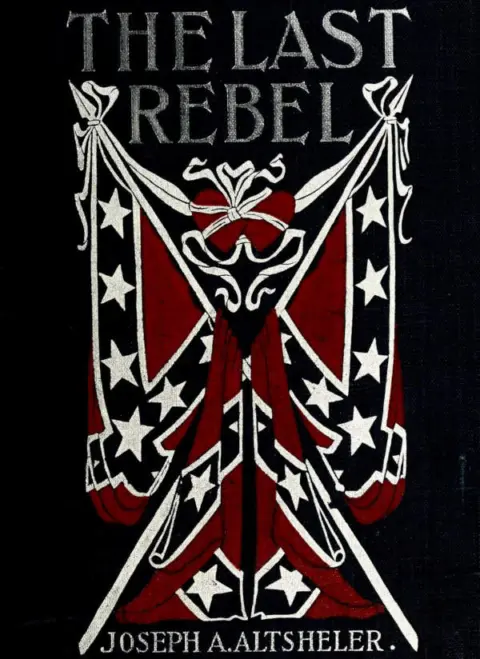
"The Tree of Appomattox" by Joseph A. Altsheler is a historical novel written in the early 20th century. This narrative serves as a conclusion to a series focused on the American Civil War, following characters like Dick Mason and his cousin Harry Kenton, who find themselves on opposite sides of the conflict. The story explores themes of family loyalty, the horrors of war, and the eventual exhaustion of both Northern and Southern forces as their fates converge. At the start of the novel, we meet Dick Mason, a young Union officer, who longs for the delicious apples hanging on the branches of a towering tree amidst the conflict of war. As he chats with comrades, the narrative shifts to the stark realities of their surroundings—trenches of Petersburg, the remains of a tumultuous battlefield, and the emotional toll that war exacts on both sides. The foreboding presence of his Southern cousin, Harry, looms over Dick's thoughts, adding complexity to his experiences. As the chapter unfolds, Dick's tension builds, culminating in his realization that soon he may confront not just enemy soldiers, but family, underscoring the harsh personal conflicts wrought by civil strife.
Introduction adapted from the source catalogue; source summaries may be automatically generated.
Free to read · English · 95,651 words · No account needed
MAKE TIME FOR A GOOD BOOK
On by default. Untick to stop anonymous reading totals. Each page counts after 10 seconds in view. How this works.
Anonymous counting is on unless you have switched it off.
General Sheridan permitted the Winchester men to rest a long time, or rather he ordered them to do so. No regiment had distinguished itself more at Cedar Creek or in the previous battles, and it was best for it to lie by a while, and recover its physical strength--strength of the spirit it had never lost. It also gave a needed chance to the sixteen slight wounds accumulated by Dick, Pennington and Warner to heal perfectly.
"Unless something further happens," said Warner, regretfully, "I won't have a single honorable scar to take back with me and show in Vermont."
"I'll have one slight, though honorable, scar, but I won't be able to show it," said Pennington, also with regret.
"I trust that it's in front, Frank," said Dick.
"It is, all right. Don't worry about that. But what about you, Dick?"
"I had hopes of a place on my left arm just above the elbow. A bullet, traveling at the rate of a million miles a minute, broke the skin there and took a thin flake of flesh with it, but I'm so terribly healthy it's healed up without leaving a trace."
"There's no hope for us," said Warner, sighing. "We can never point to the proof of our warlike deeds. You didn't find your cousin among the prisoners?"
"No, nor was he among their fallen whom we buried. Nor any of his
friends either. I'm quite sure that he escaped. My intuition tells me
so."
"It's not your intuition at all," said Warner reprovingly. "It's a reasonable opinion, formed in your mind by antecedent conditions. You call it intuition, because you don't take the trouble to discover the circumstances that led to its production. It's only lazy minds that fall back upon second sight, mind-reading and such things."
"Isn't he the big-word man?" said Pennington admiringly. "I tell you what, George, General Early is still alive somewhere, and we're going to send you to talk him to death. They say he's a splendid swearer, one of the greatest that ever lived, but he won't be able to get out a single cuss, with you standing before him, and spouting the whole unabridged dictionary to him."
"At least when I talk I say something," replied Warner sternly. "It seems strange to me, Frank Pennington, that your life on the plains, where conditions, for the present at least, are hard, has permitted you to have so much frivolity in your nature."
"It's not frivolity, George. It's a gay and bright spirit, in the rays of which you may bask without price. It will do you good."
"Do you know what's to be our next duty?"
Your reading position is saved on this browser. Take it to another device with a library code. Reading pages adapt to text, rather than matching a printed edition.
Joseph A. (Joseph Alexander) Altsheler
Joseph A. (Joseph Alexander) Altsheler
Joseph A. (Joseph Alexander) Altsheler
Joseph A. (Joseph Alexander) Altsheler
BEHIND THE BOOK
This eBook is for the use of anyone anywhere in the United States and most other parts of the world at no cost and with almost no restrictions whatsoever. You may copy it, give it away or re-use it under the terms of the Project Gutenberg License included with this eBook or online at www.gutenberg.org. If you are not located in the United States, you will have to check the laws of the country where you are located before using this eBook. Read the source licence.
The original source file, including credits and licence, is retained by this library. Request an original-format copy at no charge. Please include the book title and Project Gutenberg identifier #17677.
KEEP YOUR CURIOSITY GOING
Cécile Tormay

Moritz Busch
Coulson Kernahan
John L. Ransom

Maurice Baring
Frances Wright