
List, Ye Landsmen! A Romance of Incident
William Clark Russell
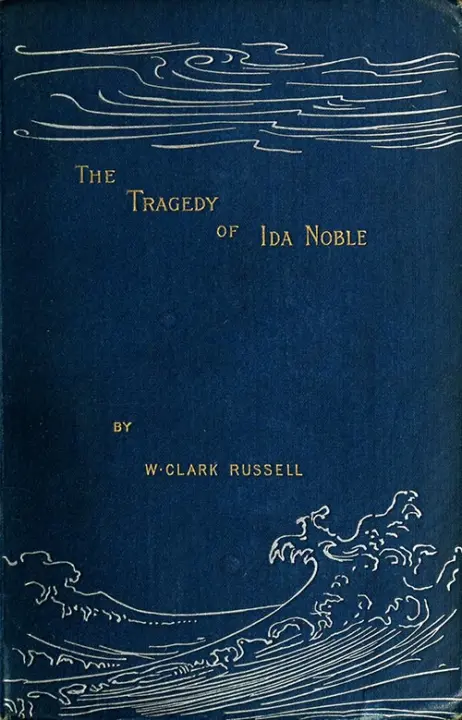
THE CLASSIC COLLECTION · 1891
"The Tragedy of Ida Noble" by William Clark Russell is a novel written in the late 19th century. The story begins aboard the ship Ocean Ranger, introducing characters like the second mate, James Portlack, and hints at an intense maritime adventure involving a particularly distressing event. The novel explores themes of betrayal, love, and the lengths one might go to reclaim what was lost, as highlighted by the mysterious circumstances involving Captain Noble's daughter, Ida. At the start of the novel, we find the ship Ocean Ranger sailing under a gloomy sky, as Portlack comes on watch. He observes an American ship signaling for help, which leads him to uncover a plot involving the ship's crew and a potential mutiny. Tensions rise as Portlack grapples with the confusing situation aboard the American vessel, ultimately leading to his abandonment at sea. This opening portion sets the stage for a compelling tale of desperation and survival on the high seas, where Portlack’s fate becomes entwined with the complexities of love and loyalty as the story unfolds.
Introduction adapted from the source catalogue; source summaries may be automatically generated.
Free to read · English · 58,570 words · No account needed
MAKE TIME FOR A GOOD BOOK
On by default. Untick to stop anonymous reading totals. Each page counts after 10 seconds in view. How this works.
Anonymous counting is on unless you have switched it off.
While I stood looking along the deck, Don Christoval arrived. He was haggard and blanched, as though risen from a bed of sickness. The fire of his fine eyes was quenched, and his gaze was extraordinarily melancholy and spiritless. He saluted me gravely, but stood for some time as though lost in thought, meanwhile taking a slow view of the whole compass of the sea, as though in search of some object he expected to behold upon the horizon. I believed he would return to the cabin without addressing me; but I was mistaken.
"Good morning, Captain Portlack."
"Good morning, sir."
"The bad weather is passed, I hope. The schooner is sailing very fast. It rejoices me to reflect that every hour diminishes, by something, the tedious miles we have to traverse."
He paused, eying me steadfastly, with the air of a man soliciting sympathy. He then beckoned to me with one of his grand gestures and went a little way forward, out of the hearing of the fellow who stood at the tiller.
"Captain Portlack," said he, "I am in great grief."
"I am sorry to hear it," said I, looking at him.
"My poor wife is mad."
"Mad!" I echoed, in an accent of concern and astonishment, not choosing, by appearing aware of the fact, that he should suspect I had been spying upon him or making inquiries.
"Mad," he repeated, in a low, hoarse voice. "When she recovered from her swoon she did not know me. She began to sing, she laughed--Mother of God, a diabolic laugh! She is now speechless, never lifting her eyes, never changing her countenance, and she sits thus:" he clasped his hands before him, bent his head, fixed his eyes upon the deck, and thus dramatically represented her condition for at least a minute.
I sought in vain in his voice, in his face, in his air, for some hint, some color, some expression of such grief of affection, of such emotion of sorrow, as the love he had spoken of as existing between them would naturally cause one to look for; instead, I seemed to find nothing but alarm, uncertainty, irritability, subdued by fear.
"We must hope," said I, "that she will speedily recover her mind."
"Will you descend into the cabin and see her?" said he, shortly, as though he had talked this invitation over and settled it.
I was slightly startled, and answered, "What good can I do, Don
Christoval?"
"You are her countryman," said he; "your accent, that is far purer than mine when I discourse in your tongue, may excite her attention. Nor, perhaps, may it be wholly with her as I fear."
Your reading position is saved on this browser. Take it to another device with a library code. Reading pages adapt to text, rather than matching a printed edition.
William Clark Russell

William Clark Russell
William Clark Russell

William Clark Russell
BEHIND THE BOOK
This eBook is for the use of anyone anywhere in the United States and most other parts of the world at no cost and with almost no restrictions whatsoever. You may copy it, give it away or re-use it under the terms of the Project Gutenberg License included with this eBook or online at www.gutenberg.org. If you are not located in the United States, you will have to check the laws of the country where you are located before using this eBook. Read the source licence.
The original source file, including credits and licence, is retained by this library. Request an original-format copy at no charge. Please include the book title and Project Gutenberg identifier #50372.
KEEP YOUR CURIOSITY GOING
Coulson Kernahan

Maurice Baring
Frances Wright
Cécile Tormay

Frederic Jesup Stimson

W. H. P. (William Henry Pope) Jarvis