
List, Ye Landsmen! A Romance of Incident
William Clark Russell
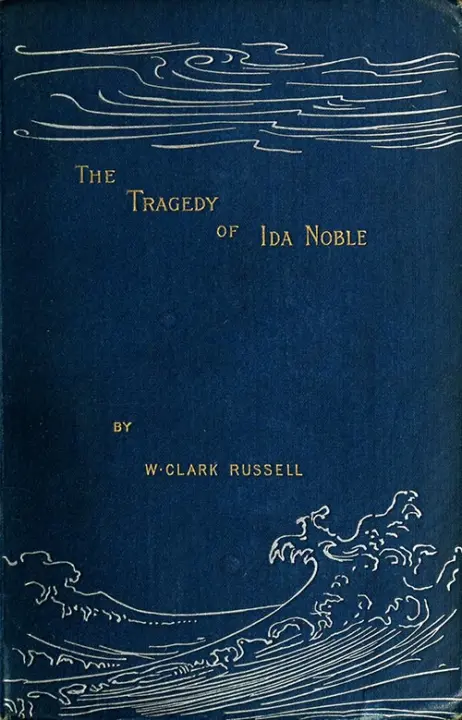
THE CLASSIC COLLECTION · 1891
"The Tragedy of Ida Noble" by William Clark Russell is a novel written in the late 19th century. The story begins aboard the ship Ocean Ranger, introducing characters like the second mate, James Portlack, and hints at an intense maritime adventure involving a particularly distressing event. The novel explores themes of betrayal, love, and the lengths one might go to reclaim what was lost, as highlighted by the mysterious circumstances involving Captain Noble's daughter, Ida. At the start of the novel, we find the ship Ocean Ranger sailing under a gloomy sky, as Portlack comes on watch. He observes an American ship signaling for help, which leads him to uncover a plot involving the ship's crew and a potential mutiny. Tensions rise as Portlack grapples with the confusing situation aboard the American vessel, ultimately leading to his abandonment at sea. This opening portion sets the stage for a compelling tale of desperation and survival on the high seas, where Portlack’s fate becomes entwined with the complexities of love and loyalty as the story unfolds.
Introduction adapted from the source catalogue; source summaries may be automatically generated.
Free to read · English · 58,570 words · No account needed
MAKE TIME FOR A GOOD BOOK
On by default. Untick to stop anonymous reading totals. Each page counts after 10 seconds in view. How this works.
Anonymous counting is on unless you have switched it off.
Don Christoval and Don Lazarillo were seated at the table drinking coffee; the atmosphere was charged with the delicate aroma of the berry, blended with the perfume of choice Cuba tobacco. The hour was somewhere about seven. The sunset made the little space of heaven that showed through the skylight resemble a square of gilt. Spite, however, of there being some half-hour of twilight left, the two polished and gleaming silver cabin-lamps were burning.
"Pray sit," said Don Christoval. "I want to talk to you on an affair of
business."
I took a chair. Captain Dopping seated himself opposite me. Don Lazarillo watched me with a fiery gaze of excitement and expectation.
"I will tell you plainly and at once, Mr. Portlack," said Don Christoval, fastening his fine, burning, liquid eyes upon my face, "what the object of our expedition is. In a word, it is this: I am going to England to recover my wife, who has been feloniously stolen from me."
He paused to observe the effect of his words. I could only look blankly, for there was really nothing to be thought so far, and therefore nothing to be said.
"You will have suspected that our excursion was a singular one," said he smiling, with a note of sweetness threading his voice.
"I confess, sir," said I, "that I supposed this schooner to be on an errand which might be something a little out of the way."
"What does he say?" said Don Lazarillo in Spanish. Don Christoval patiently translated and then resumed, addressing me now with an air of melancholy and in tones curiously plaintive. "It is fit that my story should be told to you, because I shall desire your willing assistance. That story is well known to my friend, Captain Dopping, who did not engage the crew until he had made them acquainted with the object of this expedition. Captain Noble was in your Royal Navy, but he no longer serves. My mother, who I may tell you was an English woman, was distantly related to Captain Noble on his mother's side. I met the captain and his daughter Ida in Paris, and," said he, with a graceful flourish of his hand, "I fell in love with the young lady. Captain Noble's wife is a woman of distinction. She is Lady Ida Noble, and her father is an earl. She did not favor my addresses, nay," said he, with his face darkening--and I observed that the countenance of Don Lazarillo, who was eying him steadfastly, darkened too in manifest sympathy with his friend's mood--"she was rude; she was repellent; she was insulting. She had high desires for her child, higher," he cried, smiting his breast, and rearing his form, and looking at his friend, "than Don Christoval del Padron." He gesticulated again. "Enough!--the lady, passionately adoring me, consented to elope. I had followed them to Madrid, and from Madrid my charming girl and I fled to London, where we were secretly married. The father tracked us. We were man and wife ere he discovered us. But, two days before we had arranged to leave England for Cuba, where I have an estate, I returned to the hotel where I had left my wife, and found her gone. I made inquiries, and gathered from the description given to me by the people of the hotel that Captain Noble and his son had called, had had an interview with my wife, and that she had driven away with them in the carriage in which they had arrived. I easily guessed," he continued, speaking plaintively, without the least temper, with an expression of melancholy that wonderfully heightened the beauty of his face, "that she had been made the victim of some cruel stratagem. I knew she would write to me when the chance was permitted her, and week after week I lingered at the hotel, believing she would address me there or return to me there.
Your reading position is saved on this browser. Take it to another device with a library code. Reading pages adapt to text, rather than matching a printed edition.
William Clark Russell

William Clark Russell
William Clark Russell

William Clark Russell
BEHIND THE BOOK
This eBook is for the use of anyone anywhere in the United States and most other parts of the world at no cost and with almost no restrictions whatsoever. You may copy it, give it away or re-use it under the terms of the Project Gutenberg License included with this eBook or online at www.gutenberg.org. If you are not located in the United States, you will have to check the laws of the country where you are located before using this eBook. Read the source licence.
The original source file, including credits and licence, is retained by this library. Request an original-format copy at no charge. Please include the book title and Project Gutenberg identifier #50372.
KEEP YOUR CURIOSITY GOING
Coulson Kernahan

Maurice Baring
Frances Wright
Cécile Tormay

Frederic Jesup Stimson

W. H. P. (William Henry Pope) Jarvis