
List, Ye Landsmen! A Romance of Incident
William Clark Russell
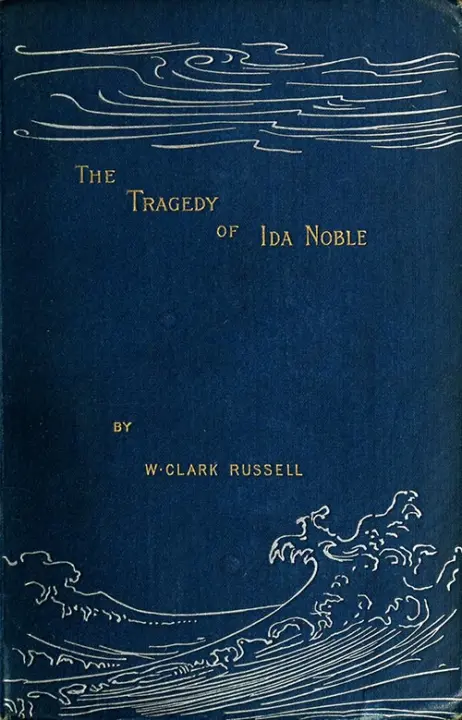
THE CLASSIC COLLECTION · 1891
"The Tragedy of Ida Noble" by William Clark Russell is a novel written in the late 19th century. The story begins aboard the ship Ocean Ranger, introducing characters like the second mate, James Portlack, and hints at an intense maritime adventure involving a particularly distressing event. The novel explores themes of betrayal, love, and the lengths one might go to reclaim what was lost, as highlighted by the mysterious circumstances involving Captain Noble's daughter, Ida. At the start of the novel, we find the ship Ocean Ranger sailing under a gloomy sky, as Portlack comes on watch. He observes an American ship signaling for help, which leads him to uncover a plot involving the ship's crew and a potential mutiny. Tensions rise as Portlack grapples with the confusing situation aboard the American vessel, ultimately leading to his abandonment at sea. This opening portion sets the stage for a compelling tale of desperation and survival on the high seas, where Portlack’s fate becomes entwined with the complexities of love and loyalty as the story unfolds.
Introduction adapted from the source catalogue; source summaries may be automatically generated.
Free to read · English · 58,570 words · No account needed
MAKE TIME FOR A GOOD BOOK
On by default. Untick to stop anonymous reading totals. Each page counts after 10 seconds in view. How this works.
Anonymous counting is on unless you have switched it off.
"Lads," said Captain Dopping, placing his hand upon my arm, "this here is Mr. James Portlack. He was second mate of the bark, Ocean Ranger, a ship I know."
"And I know her, too," said one of the men.
"Mr. Portlack," continued Captain Dopping, "holds a master's certificate, which is more than I do, and he tops me by that. But I'm your captain, and your captain I remain. Mr. Portlack consents to act as the mate of the Casandra. Is this agreeable to you, lads?"
"Ay, ay; agreeable enough," was the general answer.
"Well, then, Butler, you're displaced, d'ye see? No call for you to
relieve me any longer."
"And a good job too," said the man, a heavy, sturdy, powerfully built fellow with small, honest, glittering blue eyes, and immense bushy whiskers; "there was nothin' said about my taking charge of the deck in the agreement."
"Well, you're out of it," exclaimed Captain Dopping, "and the ship's company's stronger by a hand, which is as it should be. D'ye hear me, cook?"
"Yash, yash, I hear all right, capitan," answered the swarthy creature from the door of his galley, contorting his countenance into the aspect of a horrid face beheld by one in a high fever, in his struggle to articulate in English.
"That'll do, my lads," said the captain.
The men leisurely rounded and went forward again. There was nothing unusual in this proceeding. It was customary, it may still be customary at sea, to invite the decision of the crew before electing a man to fill a vacant post as first or second mate. All that I found singular lay in the behavior of the men. There was something in their bearing I find it impossible to convey--a suggestion of resolution struggling with reluctance, or it might be that they gave me the impression of fellows who had entered upon an undertaking without wholly understanding its nature or without fully believing in the sincerity of its promoters. But be their manner what it might, its effect upon me was to greatly sharpen my curiosity as to the object of this schooner's voyage from Cadiz to the north as she was now heading.
I said to Captain Dopping, "I will take charge at once if you wish to
go below."
"Very well," said he, "I will relieve you at four bells, and that will give you the first watch to stand," by which he meant the watch from eight o'clock till midnight.
"But I do not know your destination," said I. "How is the schooner to
be steered?"
Your reading position is saved on this browser. Take it to another device with a library code. Reading pages adapt to text, rather than matching a printed edition.
William Clark Russell

William Clark Russell
William Clark Russell

William Clark Russell
BEHIND THE BOOK
This eBook is for the use of anyone anywhere in the United States and most other parts of the world at no cost and with almost no restrictions whatsoever. You may copy it, give it away or re-use it under the terms of the Project Gutenberg License included with this eBook or online at www.gutenberg.org. If you are not located in the United States, you will have to check the laws of the country where you are located before using this eBook. Read the source licence.
The original source file, including credits and licence, is retained by this library. Request an original-format copy at no charge. Please include the book title and Project Gutenberg identifier #50372.
KEEP YOUR CURIOSITY GOING
Coulson Kernahan

Maurice Baring
Frances Wright
Cécile Tormay

Frederic Jesup Stimson

W. H. P. (William Henry Pope) Jarvis