
List, Ye Landsmen! A Romance of Incident
William Clark Russell
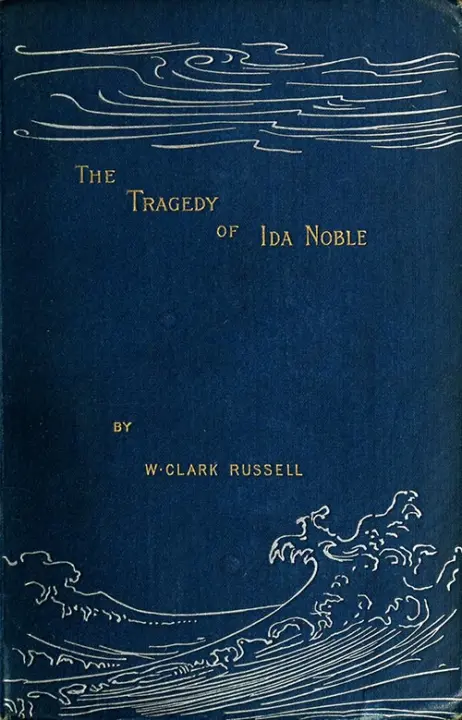
THE CLASSIC COLLECTION · 1891
"The Tragedy of Ida Noble" by William Clark Russell is a novel written in the late 19th century. The story begins aboard the ship Ocean Ranger, introducing characters like the second mate, James Portlack, and hints at an intense maritime adventure involving a particularly distressing event. The novel explores themes of betrayal, love, and the lengths one might go to reclaim what was lost, as highlighted by the mysterious circumstances involving Captain Noble's daughter, Ida. At the start of the novel, we find the ship Ocean Ranger sailing under a gloomy sky, as Portlack comes on watch. He observes an American ship signaling for help, which leads him to uncover a plot involving the ship's crew and a potential mutiny. Tensions rise as Portlack grapples with the confusing situation aboard the American vessel, ultimately leading to his abandonment at sea. This opening portion sets the stage for a compelling tale of desperation and survival on the high seas, where Portlack’s fate becomes entwined with the complexities of love and loyalty as the story unfolds.
Introduction adapted from the source catalogue; source summaries may be automatically generated.
Free to read · English · 58,570 words · No account needed
MAKE TIME FOR A GOOD BOOK
On by default. Untick to stop anonymous reading totals. Each page counts after 10 seconds in view. How this works.
Anonymous counting is on unless you have switched it off.
"I am glad. We were not too soon. I believe that another twenty-four hours of your desperate situation must have killed you," said this tall Don, delivering his words slowly, and looking very stately, and speaking in English so correctly that I wondered at his foreign accent.
"Vot ees secon' mate?" inquired the shorter man, pronouncing the words
with difficulty.
"Why, you might call it second lieutenant, Don Lazarillo," replied
Captain Dopping.
"It is a position of trust; it is a position of distinction on board ship?" exclaimed Don Christoval.
"Oh yes," said Captain Dopping.
"Do you know navigation?" asked the tall Don.
"I hold a master's certificate," I replied, smiling.
"Explain," said Don Lazarillo sharply, as though his mind were under some constant strain of unhealthy anxiety.
"I do not speak a word of Spanish," said I, turning to Captain Dopping.
"No need for it," said he, in his harsh accents. "A master's certificate, Don Christoval, enables the holder of it to take charge of a ship, and in order to take charge of a ship a man is supposed to know everything that concerns the profession of the sea."
"Explain," cried Don Lazarillo with impatience.
His tall companion translated; on which the other, nodding vehemently, stroked his mustaches while he again surveyed me from head to foot, letting his eyes, full of fire, settle with the most searching look that can be imagined upon my face. I caught Don Christoval exchanging a glance with Captain Dopping. There was a brief pause while the tall Don lighted his cigar. He then said, with a smile:
"You have lost your ship, sir?"
"I have, I am sorry to say."
"What will you do, sir?"
"It is for you to dispose of me. I should be glad to make myself useful to you until you transfer me or land me."
"But then--but then?"
"Then I must endeavor to obtain another berth," said I.
"Explain," cried Don Lazarillo.
Don Christoval spoke to him in Spanish.
"You are a gentleman by birth?" said the tall Don.
"My father was a clergyman," I answered.
"Yes, sir, that is very good. Your speech tells me you are genteel. To speak English well you must be genteel. Education will enable you to speak English grammatically, but it will not help you to pronounce it properly. For example, a man vulgarly born, who is educated too, will omit his h's, and he will neglect his g's. He will say nothin', and he will say 'ouse instead of house. Yes, I know it--I know it," said he, smiling. "Well, you shall tell me now all about your adventure."
Your reading position is saved on this browser. Take it to another device with a library code. Reading pages adapt to text, rather than matching a printed edition.
William Clark Russell

William Clark Russell
William Clark Russell

William Clark Russell
BEHIND THE BOOK
This eBook is for the use of anyone anywhere in the United States and most other parts of the world at no cost and with almost no restrictions whatsoever. You may copy it, give it away or re-use it under the terms of the Project Gutenberg License included with this eBook or online at www.gutenberg.org. If you are not located in the United States, you will have to check the laws of the country where you are located before using this eBook. Read the source licence.
The original source file, including credits and licence, is retained by this library. Request an original-format copy at no charge. Please include the book title and Project Gutenberg identifier #50372.
KEEP YOUR CURIOSITY GOING
Coulson Kernahan

Maurice Baring
Frances Wright
Cécile Tormay

Frederic Jesup Stimson

W. H. P. (William Henry Pope) Jarvis