
List, Ye Landsmen! A Romance of Incident
William Clark Russell
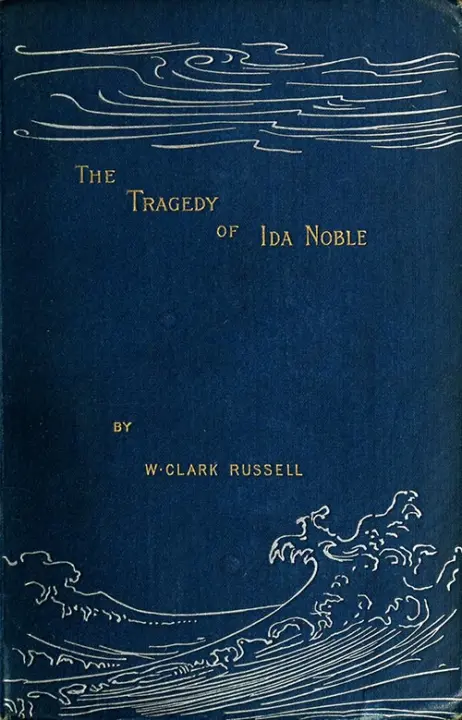
THE CLASSIC COLLECTION · 1891
"The Tragedy of Ida Noble" by William Clark Russell is a novel written in the late 19th century. The story begins aboard the ship Ocean Ranger, introducing characters like the second mate, James Portlack, and hints at an intense maritime adventure involving a particularly distressing event. The novel explores themes of betrayal, love, and the lengths one might go to reclaim what was lost, as highlighted by the mysterious circumstances involving Captain Noble's daughter, Ida. At the start of the novel, we find the ship Ocean Ranger sailing under a gloomy sky, as Portlack comes on watch. He observes an American ship signaling for help, which leads him to uncover a plot involving the ship's crew and a potential mutiny. Tensions rise as Portlack grapples with the confusing situation aboard the American vessel, ultimately leading to his abandonment at sea. This opening portion sets the stage for a compelling tale of desperation and survival on the high seas, where Portlack’s fate becomes entwined with the complexities of love and loyalty as the story unfolds.
Introduction adapted from the source catalogue; source summaries may be automatically generated.
Free to read · English · 58,570 words · No account needed
MAKE TIME FOR A GOOD BOOK
On by default. Untick to stop anonymous reading totals. Each page counts after 10 seconds in view. How this works.
Anonymous counting is on unless you have switched it off.
"Two Spaniards," said I, "the master of this schooner, and four seamen. You were attacked by seven."
"Seven!" he cried. "Seven against two! for as to my coachman and footman--what do you think? They drove away--by heavens! they lashed the horses and bolted! I should like to go below; I should like to examine this blackguard craft. A fine, stout vessel all the same. A pirate in her day, no doubt."
We descended into the cabin, which he at once made the round of, peering at the pictures, staring at the looking-glasses, examining the chairs, as though he were in a museum and every object was extraordinarily curious.
"And pray, how is Miss Noble, sir?" said I. "I have not seen her since
Tuesday."
"Very well; wonderfully well," he answered.
"How do you find her in looks after her terrible experience?"
"Why, neither her mother nor I see any change. She is a shade paler than she commonly is. But the girl has the heart of a lioness."
"So she has, sir."
"Now," said he, "Mr. Portlack, tell me about those two cursed
Spaniards. I want to get at them."
He flung his stick upon the table and threw himself into an arm-chair.
"What did your daughter tell you about those two men?" said I.
"Why, she was insensible, she says, for the greater part of the time, and you informed her that, on the day of her recovery, you transshipped the two miscreants at their request. What vessel received them?" and here he pulled out a pocket-book and a pencil-case, with the intention of taking notes.
"Your daughter told you that she was insensible, sir, and that she continued insensible for many days?"
"Yes," said he, flourishing his pencil with an irritable gesture, clearly annoyed at my not answering his question.
"That," said I, "is all that she would be able to tell you."
My manner caused him to view me steadfastly, and the odd expression of expectation in his eyes grew more defined.
"When your daughter awoke from her first swoon, Captain Noble, she
awoke--mad."
"What do you mean by mad?" he said.
"She was a maniac," said I. "And I wish that were all."
"Out with it--out with it all, then, man, for God's sake!" he
exclaimed.
"Only one Spaniard, along with the Spanish steward, left the schooner. The body of the other Spaniard we dropped overboard."
He put his note-book on the table and tightly folded his arms on his breast. I believe, though I could not be sure, that he then guessed what I was about to tell him.
Your reading position is saved on this browser. Take it to another device with a library code. Reading pages adapt to text, rather than matching a printed edition.
William Clark Russell

William Clark Russell
William Clark Russell

William Clark Russell
BEHIND THE BOOK
This eBook is for the use of anyone anywhere in the United States and most other parts of the world at no cost and with almost no restrictions whatsoever. You may copy it, give it away or re-use it under the terms of the Project Gutenberg License included with this eBook or online at www.gutenberg.org. If you are not located in the United States, you will have to check the laws of the country where you are located before using this eBook. Read the source licence.
The original source file, including credits and licence, is retained by this library. Request an original-format copy at no charge. Please include the book title and Project Gutenberg identifier #50372.
KEEP YOUR CURIOSITY GOING
Coulson Kernahan

Maurice Baring
Frances Wright
Cécile Tormay

Frederic Jesup Stimson

W. H. P. (William Henry Pope) Jarvis