THE CLASSIC COLLECTION✦Joan of ArcCLASSIC FREE BOOKS
Joan of Arc
Ronald Sutherland, Lord Gower
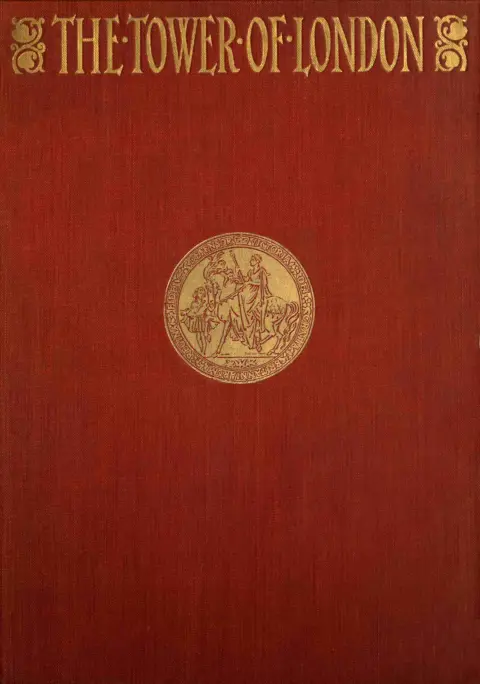
THE CLASSIC COLLECTION · 1902
"The Tower of London, (Vol. 2 of 2)" by Lord Ronald Sutherland Gower is a historical account written in the early 20th century. The work delves into the rich and often tumultuous history of the Tower of London, exploring notable prisoners, royal events, and key historical figures associated with this iconic fortress. This volume covers significant periods during the reigns of the Stuart kings, including the intrigues and conflicts of the political landscape of the time. The opening of the volume introduces the early years of King James I and his interactions with the Tower, highlighting the political machinations involving figures such as Sir Walter Raleigh and Lady Arabella Stuart. It recounts a series of conspiracies and imprisonments that took place within the Tower's walls, detailing the fraught relationship between James and various nobles, particularly regarding Arabella's claim to the throne. As the text unfolds, it paints a vivid picture of the societal tensions and personal tragedies that unfolded within this historic site, setting the stage for deeper explorations into the right relations and conflicts that would continue through successive reigns, leading into the turbulent times of Charles I and beyond.
Introduction adapted from the source catalogue; source summaries may be automatically generated.
Free to read · English · 66,657 words · No account needed
MAKE TIME FOR A GOOD BOOK
On by default. Untick to stop anonymous reading totals. Each page counts after 10 seconds in view. How this works.
Anonymous counting is on unless you have switched it off.
Returning to the Tower, where she had already been on several occasions, she pretended to be the bearer of good news. On this occasion she only remained long enough to tell Lord Nithsdale the plan she had formed for effecting his deliverance, after which she returned to her lodgings in Drury Lane. There she confided her plan to her landlady, a worthy soul, named Mills, and prevailed upon her to accompany her to the Tower, together with Mrs Morgan, after some arrangement had been made in their costumes, to which “their surprise and astonishment made them consent,” writes Lady Nithsdale, “without thinking of the consequences.” On their way to the fortress Lady Nithsdale entered into the details of her plan. Mrs Morgan was to wear a dress belonging to Mrs Mills over her own clothes, and in this dress Lady Nithsdale would disguise her husband, and so transformed, he could make his way out of the Tower. It was a bold scheme, and was admirably carried out in every detail.
On arriving at the Governor’s, now the King’s, House, where Lord Nithsdale was imprisoned, Lady Nithsdale was only allowed to bring one friend in at a time, and first introduced Mrs Morgan, a friend, she said, of her husband, who had come to bid him farewell. Mrs Morgan, when she had come into the prisoner’s room, took off the outer dress she was wearing over her own, and into this Lord Nithsdale was duly introduced. Then Lady Nithsdale asked Mrs Morgan to go out and bring in her maid Evans. “I despatched her safe,” she writes, “and went partly downstairs to meet Mrs Mills, who held her handkerchief to her face, as was natural for a person going to take a last leave of a friend before his execution; and I desired her to do this that my lord might go out in the same manner. Her eyebrows were inclined to be sandy, and as my lord’s were dark and thick, I had prepared some paint to disguise him. I had also got an artificial headdress of the same coloured hair as hers, and rouged his face and cheeks, to conceal his beard which he had not had time to shave. All this provision I had before left in the Tower. The poor guards, whom my slight liberality the day before had endeared me to, let me go out quietly with my company, and were not so strictly on the watch as they usually had been, and the more so, as they were persuaded, from what I had told them the day before, that the prisoners would obtain their pardon. I made Mrs Mills take off her own hood, and put on that which I had brought for her. I then took her by the hand, and led her out of my lord’s chamber; and in passing through the next room, in which were several people, with all the concern imaginable, I said, ‘My dear Mrs Catherine, go in all haste, and send me my waiting-maid; she certainly cannot reflect how late it is. I am to present my petition to-night, and if I let slip this opportunity, I am undone, for to-morrow it is too late. Hasten her as much as possible, for I shall be on thorns till she comes.’ Everybody in the room, who were chiefly the guards’ wives and daughters, seemed to compassionate me exceedingly, and the sentinel officiously opened me the door. When I had seen her safe out, I returned to my lord, and finished dressing him. I had taken care that Mrs Mills did not go out crying, as she came in, that my lord might better pass for the lady who came in crying and afflicted; and the more so that as he had the same dress that she wore. When I had almost finished dressing my lord, I perceived it was growing dark, and was afraid that the light of the candle might betray us, so I resolved to set off. I went out leading him by the hand, whilst he held his handkerchief to his eyes. I spoke to him in the most piteous and afflicted tone, bewailing the negligence of my maid Evans, who had ruined me by her delay. Then I said, ‘My dear Mrs Betty, for the love of God, run quickly and bring her with you; you know my lodging, and if ever you made despatch in your life, do it at present; I am almost distracted with this disappointment.’ The guards opened the door, and I went downstairs with him, still conjuring him to make all possible dispatch. As soon as he had cleared the door, I made him walk before me, for fear the sentinel should take notice of his walk, but I continued to press him to make all the despatch he possibly could. At the bottom of the stairs I met my dear Evans, into whose hands I confided him. I had before engaged Mr Mills to be in readiness before the Tower, to conduct him to some place of safety in case we succeeded. He looked upon the affair as so very improbable to succeed, that his astonishment, when he saw us, threw him into such a consternation, that he was almost out of himself, which, Evans perceiving, with the greatest presence of mind, without telling Lord Nithsdale anything, lest he should mistrust them, conducted him to some of her own friends on whom she could rely, and so secured him, without which we certainly should have been undone. When she had conducted him, and left him with them, she returned to Mr Mills, who by this time recovered himself from his astonishment. They went home together, and having found a place of security, brought Lord Nithsdale to it. In the meantime, as I had pretended to have sent the young lady on a message, I was obliged to return upstairs and go back to my lord’s room in the same feigned anxiety of being too late, so that everybody seemed sincerely to sympathise in my distress. When I was in the room I talked as if he had been really present. I answered my own questions in my lord’s voice, as nearly as I could imitate it, and walked up and down as if we were conversing together, till I thought they had time enough thoroughly to clear themselves of the guards. I then thought proper to make off also. I opened the door and stood half in it, that those in the outward chamber might hear what I said, but held it so close that they could not look in. I bade my lord formal farewell for the night, and added, that something more than usual must have happened to make Evans negligent, on this important occasion, who had always been so punctual in the smallest trifles; that I saw no other remedy than to go in person; that if the Tower was then open, when I had finished my business, I would return that night; but that he might be assured I would be with him as early in the morning as I could gain admittance into the Tower, and I flattered myself I should bring more favourable news. Then, before I shut the door, I pulled through the string of the latch, so that it could only be opened on the inside. I then shut it with some degree of force, that I might be sure of its being well shut. I said to the servant, as I passed by (who was ignorant of the whole transaction), that he need not carry in candles to his master, till my lord sent for them, as he desired to finish some prayers first.” What an admirable wife was Lady Nithsdale, and what a devoted maid to her was her “dear Evans.”
Your reading position is saved on this browser. Take it to another device with a library code. Reading pages adapt to text, rather than matching a printed edition.
Ronald Sutherland, Lord Gower
BEHIND THE BOOK
This eBook is for the use of anyone anywhere in the United States and most other parts of the world at no cost and with almost no restrictions whatsoever. You may copy it, give it away or re-use it under the terms of the Project Gutenberg License included with this eBook or online at www.gutenberg.org. If you are not located in the United States, you will have to check the laws of the country where you are located before using this eBook. Read the source licence.
The original source file, including credits and licence, is retained by this library. Request an original-format copy at no charge. Please include the book title and Project Gutenberg identifier #68039.
KEEP YOUR CURIOSITY GOING
Cécile Tormay

Moritz Busch
John L. Ransom
Frances Wright
Cécile Tormay

Mabel Potter Daggett